

Air-dry wet leather dress shoes at room temperature for 24 to 48 hours, stuffed with unprinted paper or a cedar shoe tree to draw moisture out from the inside. Skip the hair dryer, the radiator, and direct sunlight — fast heat, not the water itself, is what actually ruins leather, curing it stiff and pulling at stitching and adhesive in a single afternoon.
- Air-dry wet leather shoes for 24-48 hours stuffed with paper towel or cedar shoe trees, never a heater or hair dryer.
- Heat, not water, is what actually ruins leather — it cracks and shrinks the hide.
- Swap damp stuffing every 2 to 3 hours until the shoe stops feeling cool inside.
- Condition the leather once fully dry to replace the natural oils lost to soaking.
- Salt-stained or heavily soaked shoes need an extra cleaning step before they dry.
Why this matters
Leather that dries the wrong way rarely fails right away. It stiffens at the vamp crease, the outsole starts separating from the welt, and creasing lines that used to fall naturally along the toe box turn permanent. Rushing a wet shoe next to a heater or wearing it before it's fully dry compounds the damage, and cracked leather can't be fully repaired — only replaced.
Handmade Italian leather shoes, the kind carried across MensItalianShoes, are more vulnerable to fast heat than mass-market synthetic footwear because the vegetable-tanned and aniline-dyed leathers many brands use are finished to stay supple, not stiff. That flexibility is also what makes them react badly to a quick blast of heat. Stuffing a wet shoe properly the moment you notice it's damp, using cedar shoe trees to maintain Italian leather shoes, is the single biggest factor in whether the shoe recovers cleanly in 2026 or ends up at a cobbler.
How do you dry wet leather dress shoes without damaging them?
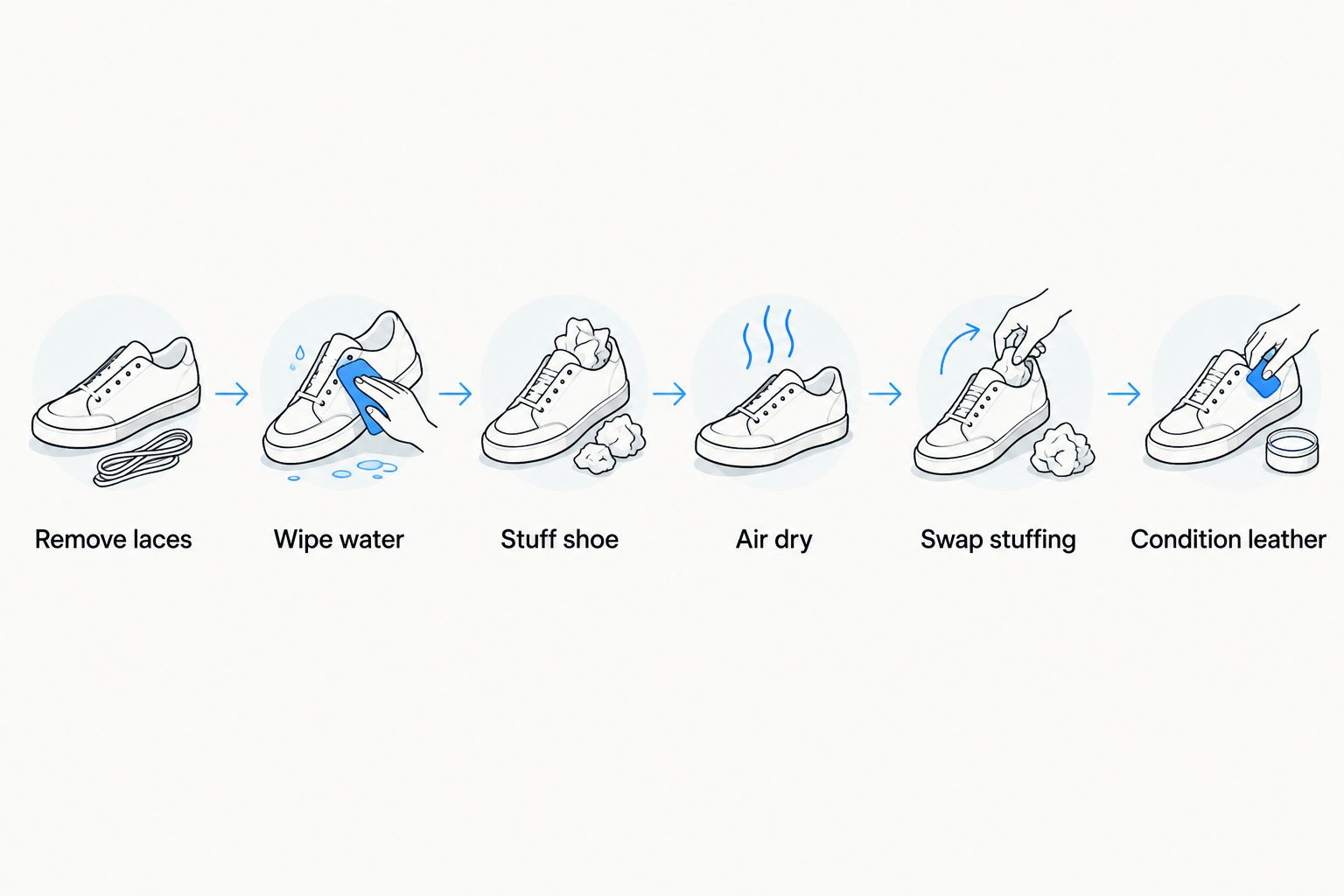
- Remove the laces and open the shoe fully. Pulling the tongue back lets air reach the lining and insole, where most trapped moisture sits.
- Blot surface water immediately with a soft, dry cloth. Don't rub — rubbing pushes water further into the grain and lining stitching.
- Stuff the shoe with unprinted paper or a cedar shoe tree. Crumpled packing paper pulls moisture out of the lining and holds the shoe's shape while it dries; a well-fitted cedar shoe tree does both jobs at once and adds a mild deodorizing effect.
- Set the shoes at room temperature, away from any heat source. A closet shelf, a countertop away from a window, or a mudroom bench all work fine. Radiators, forced-air vents, car dashboards, and direct sun all dry leather too fast.
- Swap out damp stuffing every 2 to 3 hours for the first stretch, then once or twice daily until the shoe no longer feels cool or damp inside.
- Condition the leather once it's completely dry. Soaking pulls natural oils out of the hide, and a leather conditioner restores flexibility before the shoes go back into rotation, a step covered in this guide to cleaning and polishing Italian leather shoes. The same principle applies across every category of Italian leather shoes at MensItalianShoes, from calfskin oxfords to exotic-skin loafers.
What if the shoes are soaked through, not just damp?
A shoe caught in a light drizzle and a shoe that stepped into an ankle-deep puddle don't dry on the same timeline. Fully soaked leather shoes need stuffing changed more often — every hour or two for the first half of the day — and can take the full 48 hours or longer to dry completely, especially if the insole board under the sock lining absorbed water.
Pull the insole out if it's removable and let it dry separately. Leaving it in place traps moisture against the outsole and slows the whole process down. Lined dress shoes, which have an extra layer of leather or fabric between the outer and the foot, generally take longer to dry than unlined loafers or sneakers because water has two layers to escape instead of one.
How do you dry leather shoes after snow or salted sidewalks?
Snow and road salt add a second problem on top of the moisture: a chalky white residue called salt bloom that forms as the water evaporates and leaves mineral deposits behind in the grain. Wipe the shoe down with a cloth dampened in a mild vinegar-and-water solution before it fully dries — this pulls the salt out rather than letting it set into the leather, a step detailed in this guide to removing salt stains from leather shoes. Skip this step and the residue can permanently discolor darker leathers once it's fully dried in.
Dry the shoe using the same room-temperature method above, then condition once it's dry. Salt exposure strips oils from leather faster than plain water does, so shoes worn through a salted winter commute in 2026 typically need conditioning more often than shoes that only see rain.
Why drying time for wet leather shoes varies
- Leather type — smooth calfskin dries faster than suede or nubuck, which hold water in the nap and need more air circulation to release it.
- How much water was absorbed — a light rain shower dries in under 24 hours; a submerged shoe can take 48 hours or more.
- Construction — lined shoes and Goodyear-welted soles trap moisture longer than unlined, cemented-sole shoes.
- Stuffing material — cedar shoe trees and unprinted paper draw moisture out faster than leaving a wet shoe unstuffed on a shelf.
- Room conditions — a humid bathroom or a sealed closet slows drying compared with a ventilated room at normal indoor temperature.
- Whether the leather was conditioned beforehand — well-conditioned leather resists water penetration better than dry, uncared-for leather, and often dries faster as a result.
Can a hair dryer or space heater dry wet leather shoes faster?
A hair dryer or space heater can dry wet leather shoes in under an hour, but that speed causes the exact damage slow air-drying avoids. The leather cures stiff, edges curl, and stitching or adhesive along the welt can loosen as the hide contracts unevenly. Reserve heat sources for synthetic athletic shoes, not the hides used in dress shoes, loafers, or boots.
Does newspaper work as well as cedar shoe trees for drying wet shoes?
Newspaper pulls moisture out of a wet leather shoe nearly as well as a cedar shoe tree for the first few hours, but it doesn't hold the shoe's shape the way a properly sized shoe tree does. Printed ink can also transfer onto pale linings, so plain unprinted paper is the safer stand-in when a shoe tree isn't available.
How do you know when leather dress shoes are completely dry?
Leather dress shoes are completely dry when the insole, lining, and welt area no longer feel cool or damp to the touch, usually after the full 24-to-48-hour window. Pressing a dry cloth against the interior and checking for moisture transfer is a reliable last check before the shoes go back into a rotation of Italian leather shoes.
FAQ
How long does it take to dry wet leather shoes?
Wet leather shoes take 24 to 48 hours to dry fully at room temperature when stuffed with paper or a cedar shoe tree. Suede, exotic skins, or fully soaked shoes can take longer.
Is it OK to wear leather shoes while they're still damp?
No — wearing leather shoes before they're fully dry flexes the softened hide unevenly and speeds up creasing at the vamp. Wait until the insole and lining no longer feel cool or damp.
Will wet leather shoes shrink as they dry?
Leather shoes can shrink slightly if dried too fast near a heat source, since rapid moisture loss pulls the fibers tight. Slow, room-temperature drying keeps the fit close to what it was before getting wet.
Can you put leather dress shoes in a clothes dryer?
No — a clothes dryer's heat and tumbling action cracks leather, warps the sole, and can separate stitching at the welt. Air-drying at room temperature is the only safe method for leather.
Should you condition leather shoes after they get wet?
Yes — soaking pulls natural oils out of leather, so conditioning once the shoe is fully dry restores flexibility and helps prevent cracking. Skipping this step leaves the leather drier and more brittle than before.
What should you do if leather shoes get soaked in heavy rain?
Blot the surface water immediately, remove the insole if possible, and stuff the shoe with unprinted paper or a cedar shoe tree. Change the stuffing every hour or two and expect up to 48 hours before the shoe is fully dry.
Does road salt damage leather shoes permanently?
Road salt causes a white residue called salt bloom that can permanently discolor leather if it's allowed to dry into the grain. Wiping the shoe with a mild vinegar-and-water solution before it dries prevents lasting staining.
Can suede shoes be dried the same way as smooth leather shoes?
Suede shoes follow the same room-temperature, stuffed-drying method as smooth leather, but suede holds moisture in its nap longer and needs more air circulation. Brushing the nap gently once dry restores its texture.
One last thing
Most water damage blamed on rain actually happens after the rain, once the shoe gets parked next to a heating vent to "help it along." Slow, unremarkable, room-temperature drying is the correct answer nearly every time, whether the shoe is an everyday calfskin derby or a hand-finished crocodile pair. If a pair has already dried stiff or cracked from fast heat, a cobbler can sometimes recondition the leather, but the original suppleness rarely comes all the way back. In 2026, the fastest way to lose a good pair of Italian leather shoes to water isn't the puddle — it's the impatience afterward.