

Italian leather dress shoes and loafers crack for one reason above all others: the leather loses its natural oils faster than you replace them. Conditioning on a schedule — not just when the shoes already look dry — is what stops it.
Condition smooth calfskin Italian shoes every 60 to 90 days if you wear them regularly, and always after exposure to rain, snow, or road salt. Suede, nubuck, and most exotic skins need separate treatments, not the cream or oil-based conditioner made for smooth calfskin — using the wrong product on those is a common way owners damage a pair while trying to protect it.
- Condition smooth Italian calfskin every 60 to 90 days with regular wear; more often in dry winter heat.
- Clean before you condition — dirt trapped under cream seals in the grime that dries leather out.
- Suede, nubuck, and most exotic skins need their own products, not standard leather conditioner.
- Over-conditioning softens leather structure almost as fast as under-conditioning dries it out.
- Shoe trees between wears cut how often you need to condition at all.
Why this matters
A pair of handmade Italian dress shoes represents real construction — full-grain or top-grain leather, often Blake or Goodyear welted, built to be resoled rather than replaced. Cracked vamp leather is one of the few failures a good cobbler can't fully fix, because once the fiber structure at the flex point splits, resoling won't restore it.
Cracking in 2026 is still overwhelmingly a moisture problem, not an age problem. Leather that keeps its oil content stays flexible through thousands of flex cycles at the toe box; leather that dries out splits there first, usually within a season of neglect in a home with forced-air heating.
A smooth calfskin shoe like the Bruno Magli Trieste horse-bit loafer is a good reference point: full-grain calf leather like this responds well to conditioning because the surface hasn't been sanded or heavily corrected, so oil actually penetrates instead of sitting on a sealed finish.
How to condition Italian leather shoes to prevent cracking
The process is the same for any smooth-finish Italian leather shoe, whether it's an oxford, loafer, or leather sneaker. Skip straight to conditioner without cleaning first and you're just working dirt deeper into the pores.
- Clean the leather with a slightly damp cloth to lift dirt, salt, and surface oil, then let the shoe dry fully before touching it again.
- Apply conditioner in a thin, even coat with a soft cloth — a small amount worked in circles, not a heavy layer, and never a horsehair brush at this stage.
- Let it absorb for about 15 to 20 minutes. This is where the oils actually move into the leather; rushing this step just means you buff off product that never did its job.
- Buff off any excess with a clean, dry cloth until the surface loses the greasy look and returns to a natural sheen.
- Rest the shoes for 24 hours before wearing them again, so the leather finishes absorbing instead of flexing while still saturated.
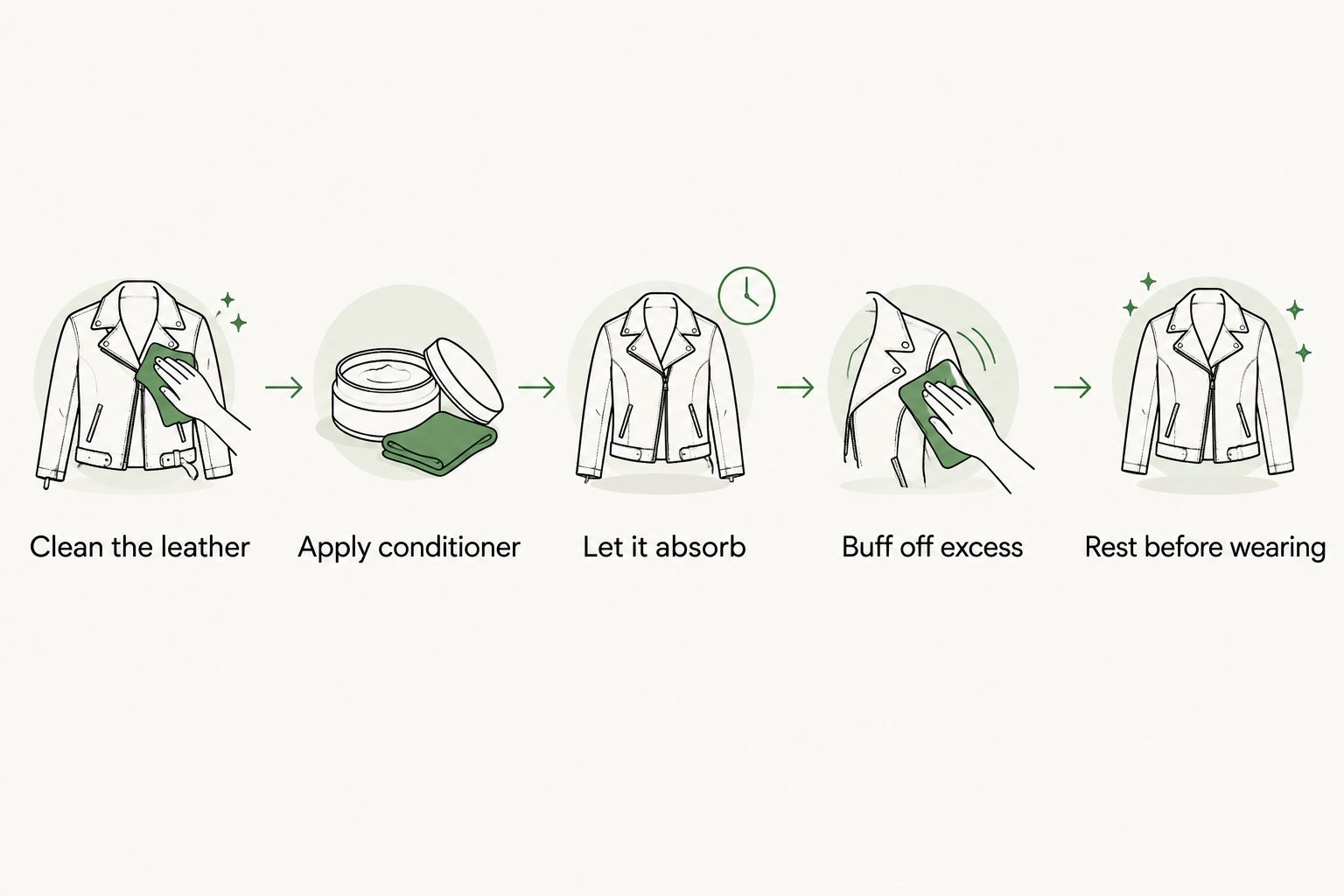
Before conditioning, most owners get more mileage out of a proper cleaning pass than they expect — see the full routine in clean and polish Italian leather shoes if the shoes haven't been touched in a while.
Smooth calfskin: condition every 60 to 90 days
This is the baseline for the majority of Italian dress shoes and leather sneakers — oxfords, derbies, loafers, and smooth leather sneakers built on full-grain or top-grain calfskin. Shoes worn two or three times a week hold up fine on a 60 to 90 day cycle; shoes worn daily, or worn through a dry winter with indoor heating running constantly, need conditioning closer to the 60-day end.
A calfskin sneaker like the Zelli Italia Bravo burnished high-top or a woven loafer like the Ambrogio by Mezlan Solomeo penny loafer both fall into this category — smooth, uncorrected leather that takes conditioner evenly across the surface.


Exotic skins: condition every 90 to 120 days with a specialized cream
Alligator, crocodile, and python behave differently from calfskin. The scales and the boundary lines between them are thinner points that dry out and split faster than flat calf leather, but the skins also don't need conditioning as frequently — over-handling exotic leather with a standard conditioner can soften it past the point of holding its shape.
Stretch the interval to every 90 to 120 days and use a cream formulated for exotic skins specifically. Full guidance on products and technique for these leathers is covered in caring for alligator leather shoes.
Suede and nubuck: skip conditioner entirely
Don't apply oil-based leather conditioner to suede or nubuck at all. These are napped finishes, not smooth leather — conditioner flattens the nap, darkens the surface unevenly, and does nothing to address what actually damages suede, which is moisture and abrasion rather than drying out.
Suede needs a spray protectant and a suede brush, not cream. The full routine, including how often to reapply protectant, is in waterproofing suede dress shoes.
Why Italian leather cracks in the first place
Cracking is almost always the end result of one or more of these, not a single event:
- Lost natural oils from heat and sun exposure — leather left near a radiator, heating vent, or car dashboard dries from the inside out.
- Dry indoor air in winter, when forced-air heating pulls moisture out of leather faster than most owners condition it back in.
- Skipping shoe trees, which lets the leather at the vamp collapse into a hard crease every time the shoe sits unworn.
- Harsh or alcohol-based cleaning products that strip the same oils a conditioner is meant to restore.
- Long storage with zero conditioning, even in a closet, since leather still loses moisture slowly over months of no wear.
- Wearing the same pair daily without rotation, so the leather never gets a full day to release moisture and recover its shape before flexing again.
How long does it take for Italian leather shoes to crack?
There's no fixed timeline, but cracks show up first at the vamp's flex point, where the leather bends every step — not on flat surfaces like the toe cap or heel counter. Dry climates and daily wear without rotation speed this up considerably; conditioning on the 60 to 90 day schedule and rotating pairs slows it down.
Can you use olive oil or Vaseline on Italian leather shoes?
No — household oils and petroleum jelly aren't formulated for leather and can go rancid, darken the leather unevenly, or leave a tacky residue that attracts dirt. A proper leather conditioner is pH-balanced for hide and won't break down the tannins the way food-grade oils can over time.
Is conditioning the same as polishing?
No. Conditioning replaces oils and moisture inside the leather; polish adds a wax or cream finish on top for shine and color touch-up. Shoes need both, but conditioning comes first — polishing dry leather just seals in the dryness underneath.
FAQ
How often should you condition Italian leather shoes?
Condition smooth calfskin Italian shoes every 60 to 90 days with regular wear, and closer to 60 days during dry winter months with indoor heating running. Exotic skins stretch to every 90 to 120 days with a specialized cream.
What is the best way to condition Italian leather shoes?
Clean the leather first, apply a thin even coat of conditioner with a soft cloth, let it absorb for 15 to 20 minutes, then buff off the excess and let the shoes rest 24 hours before wearing. Skipping the cleaning step traps dirt under the conditioner.
Can you over-condition leather shoes?
Yes — too much conditioner, applied too often, oversaturates the fibers and softens the structure the leather needs to hold its shape. Stick to a 60 to 90 day interval for smooth calfskin rather than conditioning every time the shoes look dull.
Should you condition suede shoes the same way as smooth leather?
No, suede and nubuck should never get oil-based conditioner meant for smooth calfskin. They need a spray protectant and a suede brush instead, since conditioner flattens the nap and darkens the surface unevenly.
Does conditioning Italian leather shoes actually prevent cracking?
Yes, conditioning replaces the natural oils that keep leather fibers flexible, which is what prevents cracking at flex points like the vamp. Shoes that go a year or more without conditioning are far more likely to crack there first.
Can you use mink oil on Italian dress shoes?
Mink oil conditions leather but can darken lighter colors like cognac or tan permanently, so it's better suited to black or dark brown shoes. For lighter smooth calfskin, a neutral cream conditioner is the safer choice.
How long should conditioner sit before buffing it off?
Let conditioner absorb for about 15 to 20 minutes before buffing with a clean, dry cloth. Buffing too soon removes product that hasn't penetrated the leather yet.
Is conditioning necessary if you already use shoe trees?
Yes, shoe trees and conditioning solve different problems. Shoe trees keep the shape and reduce creasing between wears, but they don't replace the oils that conditioner restores to prevent cracking.
One last thing
The crack that ruins a shoe almost never starts on the visible surface — it starts inside the fold at the vamp, where repeated flexing without enough oil breaks the fibers from underneath before it ever shows on top. By the time you can see a crack, the damage has usually been building for months. Pairing a 60 to 90 day conditioning routine with a cedar shoe tree after every wear, so the leather has a day to release moisture before it flexes again, does more to prevent cracking in 2026 than any single conditioning product.