

Light scuff marks lift off Italian leather shoes with a soft cloth, a dab of color-matched cream polish, and firm buffing — most disappear in under two minutes with no special tools. Deeper scuffs that cut through the finish into the grain need a leather conditioner applied first to soften the area, because polish alone will not blend a mark that has gone past the surface.
- Remove scuff marks from leather shoes with a soft cloth and matching cream polish for light marks.
- Deep scuffs need leather conditioner first, then color-matched polish, before you buff out the mark.
- Suede and nubuck scuffs come off with a suede eraser or brush, never with cream polish.
- Exotic-skin leather needs a skin-specific cleaner in 2026 — standard shoe polish can crack the scales.
- Shoe trees and rotation prevent most future scuffs on smooth Italian calfskin.
Why This Matters
A scuff on a full-grain Italian leather shoe is not the same problem as a scuff on a mass-market dress shoe. Every calfskin oxford, loafer, and sneaker sold at Men's Italian Shoes is finished to be conditioned and polished, not just wiped down — treat it like a cheaper shoe and you strip the finish or grind the scuff in deeper.
Suede, nubuck, and exotic skins each need a different technique, and using the wrong one is the most common way a small scuff turns into a permanent mark. Getting this right in 2026 protects a shoe built to be resoled and reconditioned for years, not replaced after one season.
How to Remove Scuff Marks from Leather Shoes
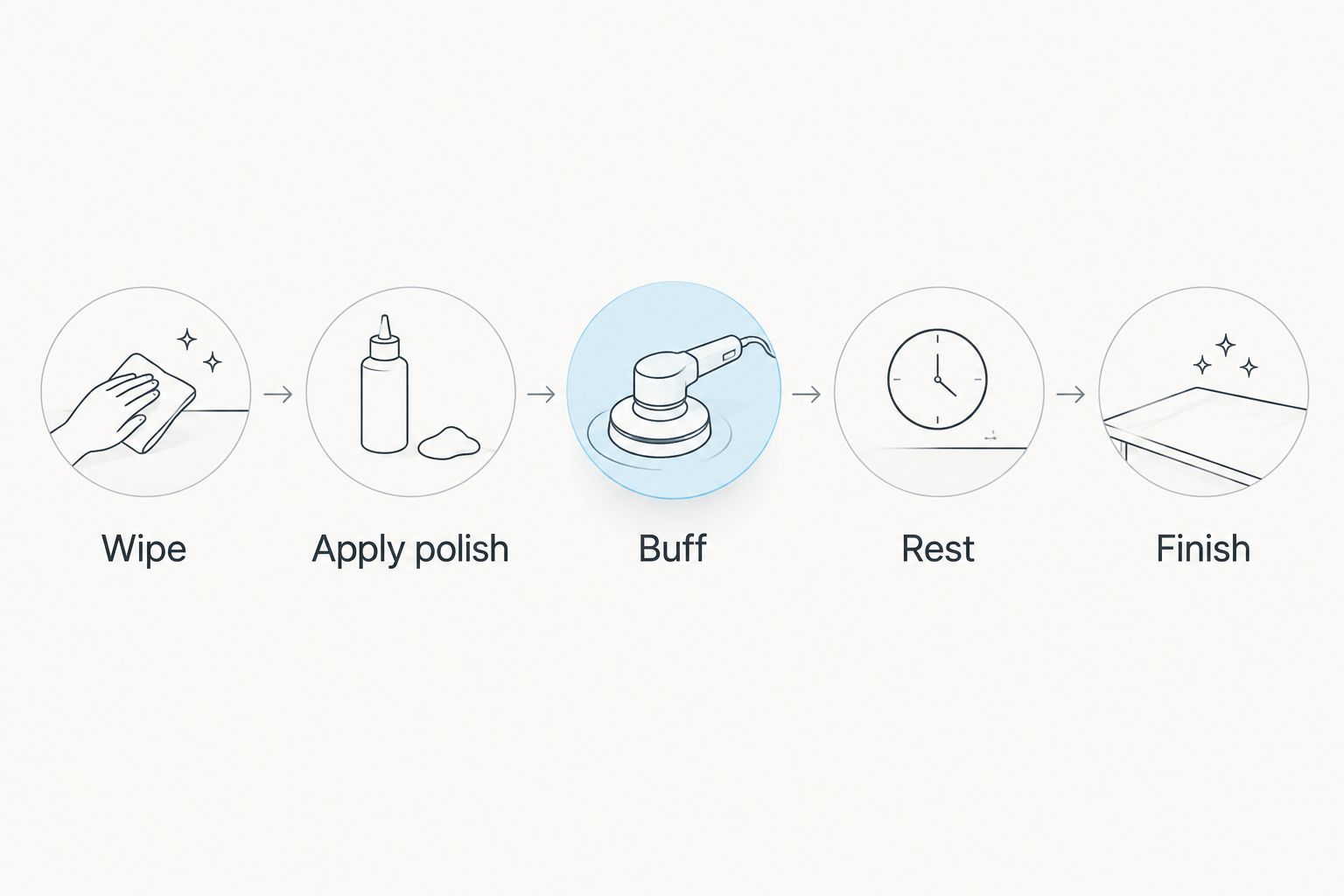
- Wipe the area with a slightly damp microfiber cloth to clear dust and grit before touching polish to the leather.
- Apply a small amount of color-matched cream polish or a dedicated leather scuff-removal balm directly onto the mark with a fingertip or applicator cloth.
- Buff in tight circles with a horsehair brush or soft cotton cloth for 30 to 60 seconds until the polish blends into the surrounding leather.
- Let the leather rest for five minutes, then repeat steps 2 and 3 if the mark is still visible — deep scuffs often need a second pass.
- Finish with a neutral or matching wax polish across the whole shoe, not just the scuffed spot, so the sheen looks even.
If cream polish alone will not blend the mark, the scuff has cut through the finish into the grain. Apply a leather conditioner first, let it absorb for 10 minutes, then repeat the polish-and-buff sequence above.
Removing Scuffs from Smooth Calfskin Shoes
Smooth calfskin — the leather used on most oxfords, loafers, and casual sneakers — responds best to the cream-polish method above. A black calfskin casual sneaker like the Magnanni Arco shows scuffs along the toe cap and heel counter first, since those areas take the most contact with curbs, pedals, and door frames. Buff those high-contact zones a little more often than the rest of the shoe and marks get caught before they set into the finish.
Removing Scuffs from Suede and Nubuck
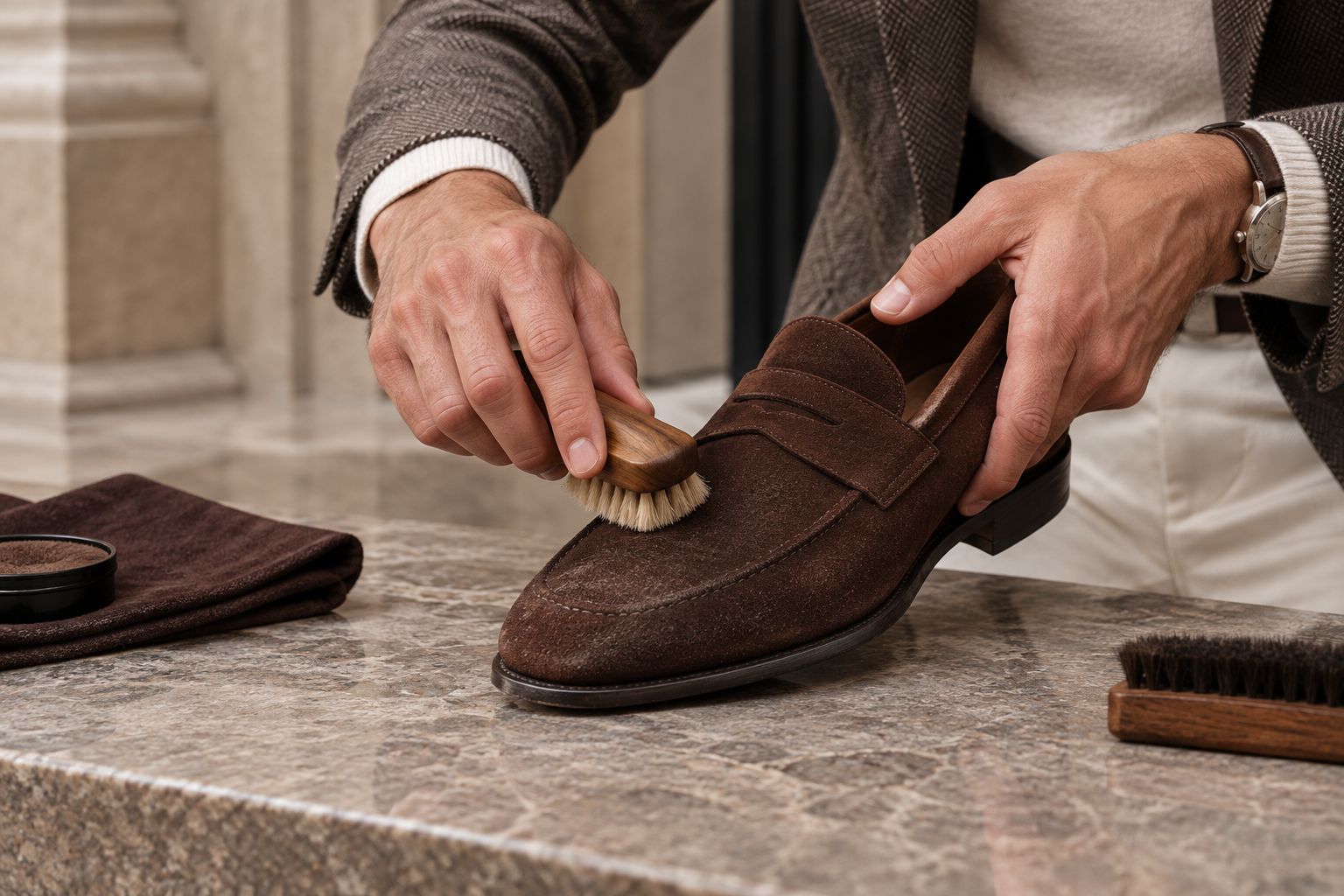
Suede and nubuck do not take cream polish — it flattens the nap and leaves a shiny patch that never fully un-mats. Instead, let the scuff dry completely, then work it with a suede brush or a suede eraser in one direction to lift the mark and restore the texture. For scuffs that leave a waxy residue from contact with plastic or vinyl, a dry sponge eraser removes the residue before brushing. Waterproofing suede dress shoes before wear also reduces how deep future scuffs sink into the nap.
Removing Scuffs from Exotic-Skin Leather
Crocodile, alligator, and python-embossed leathers scuff differently because the scale structure sits on top of the hide rather than being part of a flat grain. A standard cream polish can settle into the scale gaps and discolor them, so exotic skins need a cleaner and conditioner made for that skin type, applied with a soft cloth and minimal pressure. The same caution applies across crocodile, alligator, and python-embossed styles — the related guide on alligator leather care below covers the full cleaning routine before attempting a scuff repair on exotic skin.
Why Some Scuffs Are Harder to Remove
- Leather type — smooth calf takes cream polish; suede and exotic skins need an entirely different method.
- Depth of the mark — surface scuffs sit in the finish; deep scuffs cut into the grain and need conditioner first.
- Color — scuffs show up faster on black, burgundy, and navy leather than on cognac or tan tones.
- Leather condition — dry, under-conditioned leather scuffs more easily and holds the mark longer.
- Cause of the scuff — a scrape against concrete leaves a rougher mark than contact with a car pedal or door frame.
“A scuff that a cream-polish buff will not blend has cut through the finish and needs conditioner before more polish will help.”
Does toothpaste remove scuff marks from leather shoes?
Toothpaste can lift a very light scuff on smooth calfskin in a pinch, but it strips the leather's natural oils and dulls the finish with repeat use. Cream polish and a horsehair brush do the same job in 2026 without drying out the leather, which makes polish the better habit to build into a regular care routine.
Can you use a magic eraser on Italian leather shoes?
A melamine eraser removes scuffs fast, but it works like fine sandpaper and strips wax and pigment along with the mark. It's a last resort for a mass-market shoe, not a technique for full-grain Italian calfskin, suede, or exotic skins.
FAQ
What's the best way to remove scuff marks from leather shoes?
The best way to remove scuff marks from leather shoes is a soft cloth, a dab of color-matched cream polish, and 30 to 60 seconds of buffing. Deeper scuffs need a leather conditioner applied first so the polish can blend into the grain.
Is petroleum jelly safe for buffing out leather shoe scuffs?
Petroleum jelly can soften a light scuff on smooth calfskin, but it leaves an oily residue that attracts dust and can darken the leather permanently. Color-matched cream polish achieves the same softening effect without the residue.
How often should Italian leather shoes be polished to prevent scuffing?
Polishing every two to three wears keeps the finish conditioned enough that light scuffs buff out without needing conditioner. Shoes worn daily in 2026 scuff faster and need more frequent attention on the toe cap and heel.
Do suede shoes scuff differently than smooth leather?
Yes, suede scuffs show as flattened or discolored nap rather than a scraped finish, and they come out with a suede brush or eraser, never cream polish. Smooth calfskin scuffs are fixed with polish and buffing instead.
Can scuffed exotic-skin shoes be repaired at home?
Light scuffs on crocodile, alligator, or python-embossed leather can be cleaned at home with a cleaner made for that skin type and a soft cloth. Deep scuffs that crack a scale are best handled by a leather specialist rather than store-bought polish.
How do you fix a deep scratch in leather dress shoes?
A deep scratch needs leather conditioner worked into the cut first, followed by color-matched polish applied in thin layers and buffed between each layer. One pass rarely hides a deep scratch completely, so plan on two or three light applications.
What causes scuff marks on Italian leather shoes?
Scuffs come from friction against curbs, car pedals, door frames, and bike pedals, plus everyday contact that wears through the topcoat. Dry, under-conditioned leather scuffs faster and holds the mark longer than leather that is polished regularly.
One Last Thing
Most scuffs on Italian leather shoes happen in the same three spots: the toe cap, the heel counter, and the outer edge of the vamp where shoes brush against each other in a closet. Keeping shoe trees in place between wears holds the leather's shape and cuts down on scuffing from shoes touching in storage — a cheaper fix than any polish, and one worth adopting before the 2026 dress season gets busy. The related guide on shoe trees below covers cedar versus plastic and correct insertion.