

Italian sneakers for casual Friday at a startup are dress-down leather sneakers, built with proper Italian shoemaking, that read as intentional in an office where nobody wears a tie but everyone still notices footwear. The startup dress code is rarely written down, which is exactly why the shoe matters more, not less: it is one of the few style signals left once the blazer and the dress shoe are off the table.
This segment differs from the guy shopping for a wedding or a boardroom pitch. He needs a shoe that survives a walk to the coffee shop, a stand-up meeting, and a founder happy hour, without looking like a running shoe that wandered into the office by accident. That is a narrower lane than "casual sneaker" sounds like on paper.
- Italian sneakers for casual friday work best in leather or suede, not mesh or knit performance builds.
- A single low-top in black, navy, or cognac covers most startup wardrobes through 2026.
- Mezlan and Magnanni casual sneakers sit in the sweet spot between dress shoe and streetwear for office use.
- Skip logo-heavy or chunky sneakers for client-facing days; save the bolder pairs for after-hours.
Why Italian sneakers matter for the startup casual Friday crowd
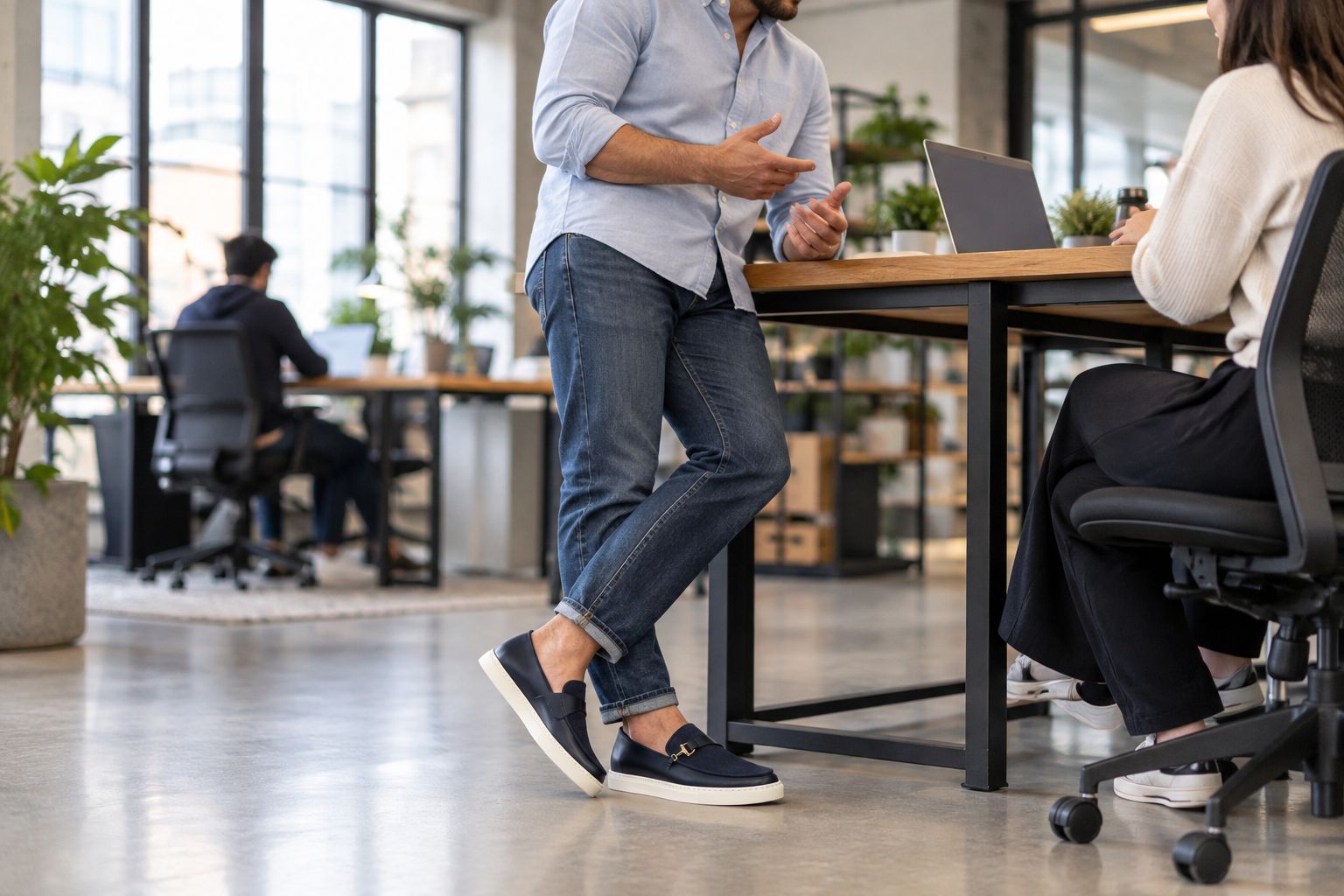
Most startups have dropped the formal dress code entirely, but the informal one is stricter than people admit. Founders and early hires are judged in fundraising meetings, investor demo days, and client calls where a hoodie is fine and a beat-up trainer is not. A well-made Italian sneaker signals the same thing a good loafer does for tech executives: effort without a suit.
Leather and suede sneakers also age differently than synthetic ones. A canvas or mesh trainer looks tired after six months of daily wear; a full-grain leather sneaker develops a patina and can be reconditioned, which matters for anyone wearing the same three or four pairs on rotation all year.
Read the actual dress code, not the memo
Most startup handbooks say "casual" and stop there. The real dress code is set by what the founders and the sales team wear on Zoom and in the office, not by HR copy.
- Watch what senior people wear on client-facing days versus internal days
- Note whether anyone still wears a blazer with sneakers on pitch days
- Check if the office skews toward sneakers-and-jeans or sneakers-and-chinos
- Assume investor meetings call for a step up from the daily rotation
- Default to leather over canvas until you have three weeks of observation
Pick a silhouette that reads considered, not sporty
A chunky trainer with a visible logo reads as athletic. A low-profile leather sneaker with a clean toe box reads as dressed-down, not sloppy.
- Choose a low-top over a high-top for daytime office wear
- Avoid oversized soles and exaggerated tread patterns
- Pick a minimal branding sneaker for client meetings
- Save high-tops and bold color-blocking for after-work events
- Look for a rounded or slightly squared toe over an aggressively pointed or bulbous one
Choose leather or suede over performance mesh
The material decides whether a sneaker looks like an office shoe or a gym shoe on day two. Full-grain calfskin and suede hold their shape through a standing meeting or a walk between buildings; mesh and knit collapse and wrinkle.
- Full-grain leather for the most durable, most reconditionable option
- Suede for a softer, more casual finish that still reads dressed-down
- Nubuck as a middle ground between suede texture and leather durability
- Avoid canvas and synthetic mesh for anything worn more than twice a week
- Check the insole material if you are on your feet most of the day
A sneaker like the Mezlan 20730 in blue and cognac calf-skin leather is built for exactly this: a leather sneaker that reads dressed-down without reading athletic.
Match color to your existing wardrobe rotation
Most startup wardrobes rotate around three or four colors: navy, gray, olive, and denim blue. A sneaker that only pairs with one outfit gets worn once a month and stops being worth the closet space.
- Black leather sneakers pair with almost every pant color in 2026 office wardrobes
- Cognac and tan work with denim, chino, and lighter suiting
- Navy suede splits the difference between formal and weekend
- Skip white leather if you are standing or walking outdoors daily
- Buy the neutral first, the statement color second
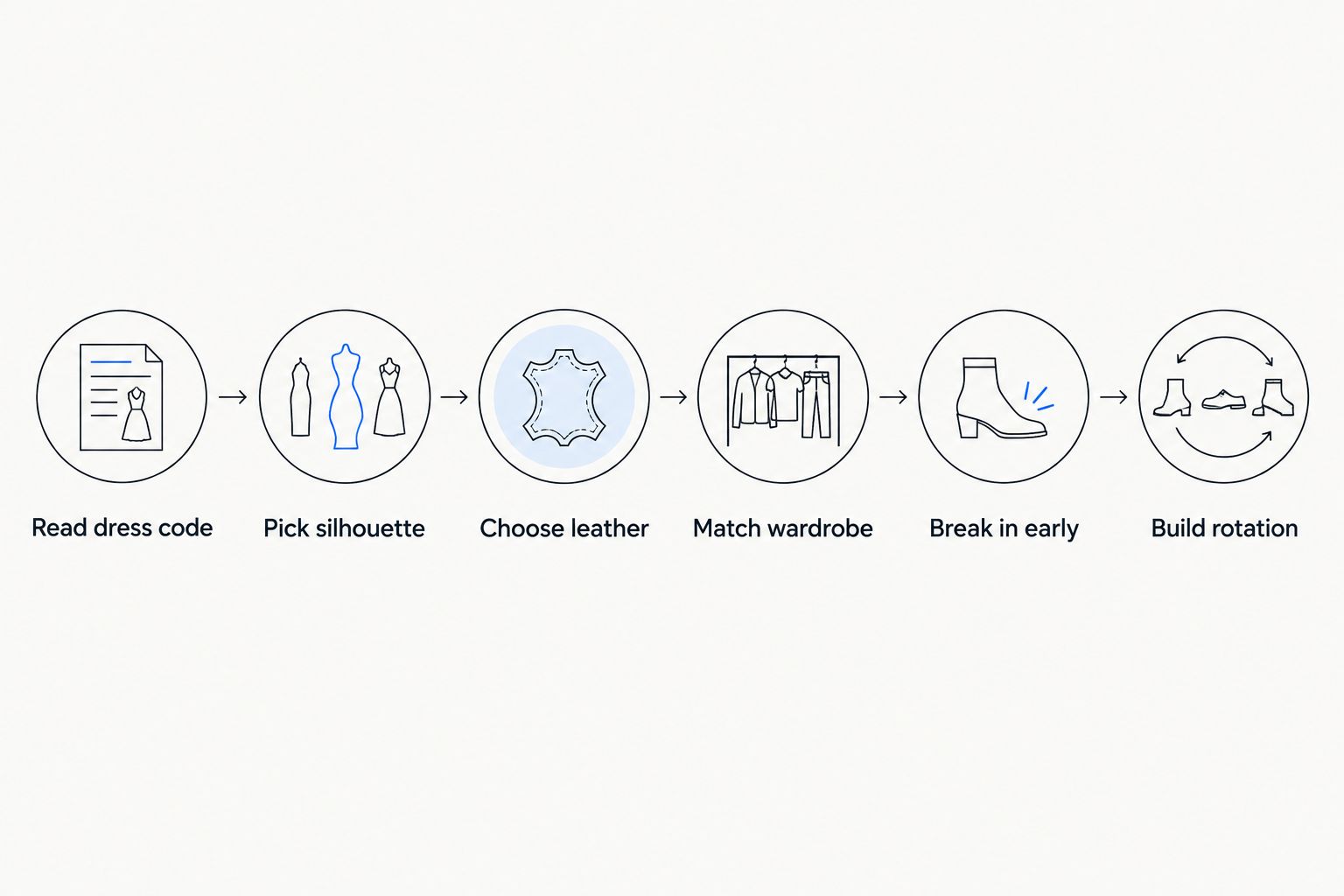
Size and break them in before your first casual Friday
Italian leather sneakers often run narrower through the toe box than American athletic brands, since the lasts are built on a European foot shape. Buying the day before you need them is the most common mistake in this segment.
- Order at least two to three weeks before you need the sneaker in rotation
- Wear them around the house or on short errands first
- Use a shoe horn to protect the heel counter during break-in
- Check for heel slip after 20-30 minutes of walking, not just standing
- Have a backup pair ready if the new sneaker needs a week to soften
A black leather casual sneaker such as the Magnanni Arco is a reasonable first purchase for this segment: a neutral that works from Monday stand-up to a Friday happy hour without a wardrobe change.
Build a two-pair rotation instead of buying one perfect sneaker
One sneaker worn five days a week breaks down inside a year regardless of construction quality. A rotation of two pairs, worn on alternating days, roughly doubles the useful life of each pair because the leather and insole get time to dry out and recover their shape between wears.
- Keep one neutral leather sneaker for client-facing days
- Keep one suede or bolder-color pair for internal, low-stakes days
- Alternate daily rather than wearing one pair until it wears out
- Use cedar shoe trees between wears to hold shape and pull moisture
- Budget for a second pair before the first one shows real wear
Care for the leather between wears
Leather sneakers need less maintenance than dress shoes, but they still need some. A quick brush and an occasional conditioning pass keeps the upper from cracking at the flex points around the toe.
- Brush off dust and debris after each wear with a soft-bristle brush
- Condition full-grain leather every few weeks, more often in dry winter air
- Use a suede brush and eraser for suede sneakers, never water or polish
- Let sneakers air out for a day between wears rather than back-to-back
- Store with shoe trees to prevent creasing at the toe box
Comparison: sneaker options for the startup casual Friday wardrobe
| Option | Best for | Material | Key limitation |
|---|---|---|---|
| Low-top calf leather sneaker | Daily office wear, client days | Full-grain calfskin | Needs regular conditioning to avoid cracking |
| Suede skate-style sneaker | Internal days, casual meetings | Suede or nubuck | Vulnerable to rain and water stains |
| High-top leather sneaker | After-hours, weekend crossover | Leather with zip or lace closure | Reads more casual, less suited to investor meetings |
| Bold-color low-top sneaker | Personal expression on low-stakes days | Full-grain leather | Limited outfit pairing, one-note wardrobe fit |


Common mistakes startup employees make with casual Friday sneakers
- Buying one loud pair and wearing it every day. A bold color-blocked sneaker gets noticed once, then reads repetitive by week three.
- Choosing performance mesh because it looks comfortable in photos. Mesh sneakers wrinkle and stain faster than leather and cannot be reconditioned.
- Skipping break-in before an investor meeting. New leather sneakers can rub and blister exactly when you need to look composed, not distracted.
- Wearing the same pair with no rotation. One sneaker worn daily loses its shape and support well before its leather wears out.
- Ignoring the fit difference between European and American lasts. Italian sneakers often run narrower in the toe box, and guessing the usual US size leads to returns.
FAQ
What are the best italian sneakers for casual friday at a startup?
A low-top leather sneaker in black, navy, or cognac is the safest daily choice for a startup casual Friday in 2026. Suede works for internal, lower-stakes office days but shows water spots faster than full-grain leather.
Are leather sneakers too formal for a startup office?
No. A low-profile leather sneaker without heavy branding reads as dressed-down, not formal, and pairs with jeans or chinos the same way a canvas sneaker would.
How many pairs of sneakers do I need for a work rotation?
Two pairs worn on alternating days is enough for most office schedules. Rotating gives the leather and insole time to dry and recover shape, which roughly doubles the useful life of each pair.
Do Italian sneakers run true to size?
Many Italian sneaker lasts run narrower through the toe box than American athletic sizing. Order two to three weeks ahead of when you need the shoe so there is time to exchange for a different size if needed.
Can suede sneakers handle daily office wear?
Suede sneakers hold up fine for regular office wear but are more vulnerable to rain and water stains than full-grain leather. Keep a suede brush on hand and avoid wearing them on wet-weather commute days.
What sneaker color works with the most outfits?
Black and cognac leather sneakers pair with the widest range of pants, from denim to lighter suiting, and are the most reasonable first purchase for a startup wardrobe.
Should I wear sneakers to an investor meeting?
A clean, minimal leather sneaker in a neutral color is acceptable at most startups for investor meetings in 2026, provided the rest of the outfit is put together. Save bold colors and high-tops for internal or after-hours settings.
One last thing
The detail most guys miss is that a leather sneaker's toe box shape does more work than its color. A slightly squared or rounded toe reads office-appropriate at a glance, while a sharply pointed or oversized rounded toe pulls the whole look toward either dress shoe or basketball sneaker, neither of which is what casual Friday calls for. Check the toe shape before the color when narrowing choices for 2026.
For a broader survey of options beyond sneakers, italian leather sneakers for smart casual style covers pairing rules that extend past the office.