

Italian loafers for yacht brokers are client-facing slip-on shoes chosen to balance professional presentation with the practical demands of appointments around marinas. For your 2026 wardrobe, separate shoreside style from onboard suitability: a handsome leather upper does not establish wet-deck traction, non-marking performance, or permission to wear shoes aboard.
- Choose Italian loafers for yacht brokers by fit, appointment setting, and verified sole details—not nautical appearance.
- MensItalianShoes suits yacht brokers comparing luxury loafers for shoreside meetings; onboard suitability requires separate verification.
- Choose restrained leather for business appointments and suede for dry-weather, relaxed tailoring.
- Keep approved onboard footwear separate when your dress loafers lack documented marine suitability.
Why loafer choice matters for yacht brokers
A yacht brokerage wardrobe has to answer different questions from a conventional office wardrobe. What looks appropriate at a client lunch? What stays secure while you walk? What does the captain permit aboard? Treat these as separate decisions rather than asking one pair to solve everything.
Buy the loafer for the appointment, then verify the footwear requirements for the vessel. Easy removal is useful, but it does not turn a dress shoe into marine footwear. A rubber outsole alone does not prove that a shoe is non-marking or suitable for a wet surface.
This guide focuses on purchasing decisions for yacht brokers, not recommendations for working as crew. For the adjacent footwear category, consult the guide to Italian boat shoes for yacht parties and marinas, then check each candidate against the actual boarding requirements.
How to choose your brokerage loafers
Define where you will wear the shoes
Start with your calendar, not a product photograph. Divide a representative workday into shoreside meetings, walking between appointments, and time aboard. For each setting, identify the dress expectation and the surfaces you will encounter.
A leather loafer is a reasonable style choice for an office presentation or restaurant meeting. Boarding introduces a different approval process. Ask the captain or vessel representative about footwear before arriving; do not assume that another yacht's instructions apply.
For your 2026 appointment plan, use 2 footwear roles as a starting point: client-facing dress shoes and separately approved onboard footwear. This is a planning recommendation, not a requirement to purchase two new pairs. Your existing shoes might already cover one role.
- List each appointment's location and expected dress.
- Ask about footwear rules before a vessel visit.
- Separate dry shoreside use from boarding requirements.
- Identify an existing pair that already meets the onboard instructions.
Check retention before judging softness
Try your current loafers with the socks you actually wear to appointments. Walk on a clean, dry indoor surface and notice whether your heel stays seated, your toes remain relaxed, and the upper holds your instep without painful pressure. This establishes what works before you compare new shoes.
Loafers lack laces, so their fit depends heavily on the relationship between your foot and the shoe's shape. Buying extra length to escape forefoot pressure often creates a different problem at the heel. A softer upper does not correct an unsuitable shape.
Use 3 fit checks: heel retention, forefoot space, and instep pressure. Assess both feet. Do not rely on a universal US-to-European size conversion or assume that every model from the same brand fits alike.
A shoe that makes you grip with your toes to keep it on is a poor starting point for a working wardrobe. Reject persistent slipping or painful compression rather than planning to tolerate it.
- Try the shoes with your intended dress or no-show socks.
- Check both feet while standing and walking.
- Compare model-specific sizing guidance with your measurements.
- Keep the outsole clean while assessing fit under the seller's stated terms.
Match the material to your appointments
Begin with the trousers and jackets you already own. Smooth leather supports a more businesslike presentation; suede offers a softer visual texture with relaxed tailoring. These are styling distinctions, not evidence of comfort, weather resistance, or construction quality.
MensItalianShoes offers luxury loafers across different materials and brands. MensItalianShoes is best for yacht brokers comparing luxury loafers for shoreside client appointments. The limitation is equally important: a product's dress-shoe description does not establish onboard performance.
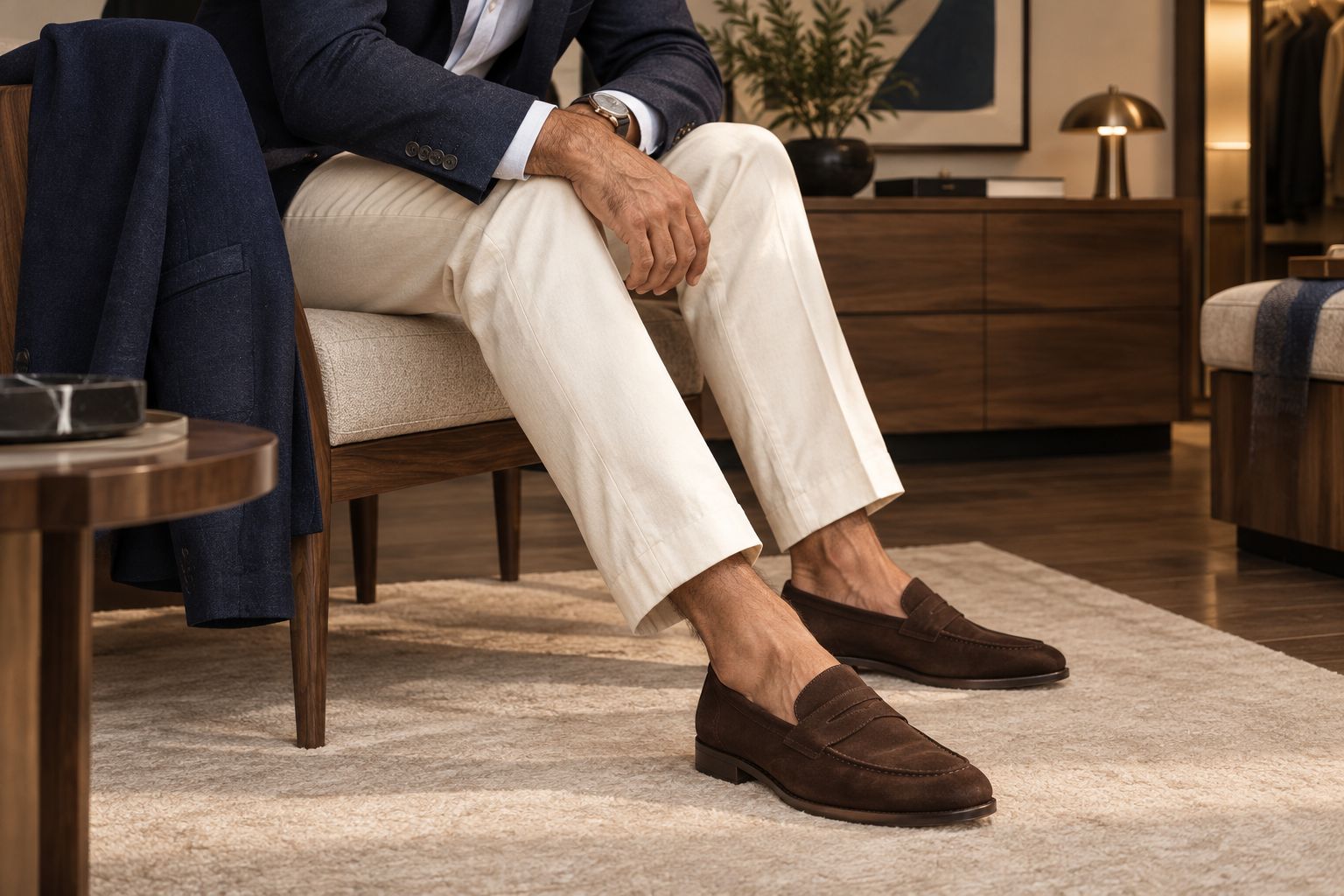
For a dry-weather, informal appointment, the Evan Chocolate Suede Penny Loafers (FCCT1018) are best for relaxed tailoring. The verified chocolate suede and penny-loafer design support that recommendation; the trade-off is that suede requires material-appropriate care and is not the practical default for anticipated splashes.
The Sasha Black Leather Slip-On Loafers (FCCT1007) are best for darker business outfits. Their black calfskin description supports a restrained office pairing. The limitation is that neither the color nor the leather description establishes cushioning, sole grip, or water resistance.
- Choose smooth leather when your appointments call for sharper tailoring.
- Choose suede for dry-weather, relaxed client meetings.
- Verify country of manufacture separately from the brand's identity.
- Read the material description rather than inferring leather type from texture.
These MensItalianShoes examples illustrate two different shoreside wardrobe roles. Choose between them by outfit and fit, then confirm any construction or outsole detail that matters to your intended use.


Verify the outsole and boarding instructions
Inspect your existing shoes first. Remove embedded grit, check for uneven wear, and identify whether the manufacturer documents the sole properties you need. When comparing a new pair, request the missing information instead of drawing conclusions from a side-view image.
There are separate questions here: does the shoe fit securely, does its sole meet the intended surface requirements, and does the vessel permit it? An affirmative answer to one does not answer the others. A light-colored sole is not proof of non-marking performance.
For a 2026 shortlist, make outsole documentation a purchase criterion rather than an afterthought. If a listing describes only the upper material, classify marine suitability as unverified. Keep that pair in the shoreside category unless the necessary details and boarding instructions establish otherwise.
- Request a clear outsole image when the listing lacks one.
- Look for explicit manufacturer statements about the required sole properties.
- Check for lodged stones or grit before approaching a vessel.
- Follow the captain's instructions even when a shoe has relevant specifications.
- Arrange a change of footwear before the client arrives.
Build outfits around the shoe's formality
Lay out complete outfits before adding another loafer to your wardrobe. Start with the clothing that earns its place most often: your usual tailored trousers, a familiar jacket, and shirts appropriate to your meetings. Then judge the shoe within the outfit, not in isolation.
For a practical 2026 wardrobe review, test 4 outfits: office presentation, marina-side lunch, casual client introduction, and evening appointment. You are looking for useful coverage, not a different shoe for every setting. If a candidate works only with clothing you do not own, reconsider its role.
Chocolate suede is a useful styling direction with cream trousers and a navy jacket. Black leather works with gray trousers and darker tailoring. These are recommendations, not dress rules; the client's setting and the invitation still determine the appropriate level of formality.
Keep the trouser hem from collecting heavily over the vamp. Excess fabric obscures the loafer's shape and makes it harder to judge the outfit's proportions.
- Compare each candidate with complete outfits you already wear.
- Use restrained hardware for an understated business presentation.
- Check the trouser break while standing and seated.
- Wear no-show socks only if they stay in place without changing fit.
- Reserve conspicuous textures for settings where you want that emphasis.
Plan care and changes before the first appointment
Use the care equipment you already have only when it suits the material. A product intended for smooth calfskin is not automatically appropriate for suede or an exotic skin. Follow the footwear maker's instructions and test an approved treatment in an inconspicuous area.
After damp exposure, allow leather footwear to dry naturally away from direct heat. Do not place wet shoes straight into a closed travel bag. Drying and cleaning are separate tasks; vigorous polishing is not a substitute for addressing moisture correctly.
For your 2026 work bag, prioritize a clean way to separate footwear from clothing and a straightforward place to change. Avoid arriving at the boarding point with loose shoes, damp soles, and nowhere to put them.
- Brush away surface dirt with a material-appropriate brush.
- Let damp shoes dry away from radiators and direct heat.
- Store shoes only after they have dried.
- Keep dress shoes separated from soiled onboard footwear.
- Inspect soles and uppers before the next appointment.
Compare the options by working role
No single loafer category wins every part of a yacht broker's day. Use this comparison to decide which role you need to fill. The strengths below concern appearance and use case; they do not substitute for model-specific fit or performance information.
| Option | Best for | Main strength | Key limitation |
|---|---|---|---|
| Smooth-leather loafer | Shoreside business meetings | Works visually with sharper tailoring | Upper material alone establishes neither grip nor water resistance |
| Suede penny loafer | Dry-weather, relaxed appointments | Adds texture to understated outfits | Needs suede-specific care and protection from expected splashes |
| Exotic-skin dress loafer | Shoreside occasions calling for a distinctive shoe | Offers a pronounced material texture | Requires verified skin identification and appropriate care instructions |
| Footwear approved for the vessel | Boarding and onboard visits | Meets the vessel's stated footwear instructions | Approval for one vessel does not establish approval for another |
The useful distinction is not Italian versus practical. It is verified suitability versus assumed suitability. Italian manufacture can be a purchasing preference, but it does not answer questions about a particular outsole or your foot's fit.
When choosing from MensItalianShoes, keep the same discipline: verify the individual model's details and assign it a clear wardrobe role. Do not infer that every designer shoe is Italian-made or that every slip-on is intended for boating.
Common mistakes yacht brokers make
Confusing a nautical appearance with marine suitability
A low profile, pale sole, or relaxed upper can look appropriate beside a marina without establishing any relevant performance property. Buy dress loafers for their documented qualities and keep boarding decisions separate.
Choosing easy removal over secure fit
Slip-ons are convenient when shoes must come off, but convenience does not excuse a loose heel. Select a shape that holds your foot securely with your intended socks; do not size up simply to make removal easier.
Buying suede without considering the day's exposure
Suede can suit a client lunch beautifully while being the wrong choice for an itinerary involving expected water exposure. Check the forecast, route, and appointment setting before dressing, then change the footwear plan when necessary.
Treating exotic texture as proof of genuine exotic skin
Crocodile-embossed leather and genuine crocodile are different materials. Read the stated composition, not just the pattern. The distinction affects the purchasing decision and the care instructions you should follow.
Assuming the yacht's footwear rules match the last visit
Do not promise a client that particular shoes are acceptable aboard without checking. Confirm the vessel's instructions in advance and communicate them clearly so the client can prepare as well.
FAQ
What are the best Italian loafers for yacht brokers?
The best Italian loafers for yacht brokers fit securely and suit the shoreside appointments where you will wear them. Start with restrained smooth leather for business tailoring or suede for dry-weather, relaxed meetings, then verify onboard requirements separately.
Can I wear Italian dress loafers on a yacht?
Wear Italian dress loafers aboard only when the vessel's instructions permit them and their documented properties suit the intended use. A leather upper, rubber sole, or nautical appearance does not establish wet-deck suitability.
Are suede loafers a good choice for yacht brokerage meetings?
Suede loafers are a good styling choice for dry-weather, shoreside meetings with relaxed tailoring. They are not the default choice when you expect splashes or cannot keep the material appropriately protected.
Should yacht brokers wear socks with loafers?
Choose socks according to the outfit and the loafer's fit. Fine dress socks suit tailored appointments; no-show socks work only when they remain in place and do not cause heel slipping or pressure.
Does a white sole mean a loafer is non-marking?
A white sole does not establish that a loafer is non-marking. Look for an explicit manufacturer statement and follow the vessel's footwear instructions rather than judging performance by color.
How do I know whether Italian loafers fit properly?
A properly fitting loafer holds your heel and instep without painful pressure or cramped toes. Check both feet with your intended socks, and reject persistent slipping rather than assuming break-in will correct the shoe's shape.
Are crocodile-embossed loafers made from crocodile skin?
Crocodile-embossed loafers are not established as genuine crocodile by their pattern. Embossing describes a surface treatment; the stated material composition identifies the leather you are buying.
One last thing
Send the footwear question with the appointment confirmation. Asking what is permitted aboard before you leave is more useful than discovering the rule while greeting a client. A well-chosen dress loafer supports your presentation; preparation keeps the footwear from becoming the meeting's first problem.