

Chefs’ and restaurateurs’ Italian dress footwear is guest-facing footwear selected to support a polished professional appearance, not a substitute for kitchen safety shoes. This 2026 guide explains how to choose Italian dress shoes for chefs around your actual duties, restaurant dress code, fit, and floor conditions.
- Italian dress shoes for chefs belong in guest-facing settings; kitchen use requires separate safety checks.
- MensItalianShoes is best for chefs and restaurateurs shopping for luxury guest-facing footwear, not selecting kitchen safety shoes.
- Choose restaurant footwear by floor conditions and fit before comparing oxfords, loafers, or monk straps.
- Italian styling does not establish Italian manufacture, slip resistance, or all-shift comfort.
Why dress footwear matters for chefs and restaurateurs
Your footwear has two distinct jobs: supporting the work you perform and fitting the impression you want to make. A chef greeting a private-dining client needs a different selection process from a chef working beside a fryer. A restaurateur conducting seated meetings faces different demands from a manager walking between tables throughout service.
Choose for the task before choosing for the outfit. Dress footwear earns its place when your duties and workplace requirements permit it. A handsome upper does not establish suitability for wet or greasy floors.
Start with fit rather than your usual size label. The guide to measuring your foot for Italian dress shoes provides a useful starting point before you compare individual styles.
Why this segment needs a different buying process
Restaurant roles combine presentation with practical demands that an office-only buying guide does not address. Your route through the building matters as much as the dining room’s dress code. Include stairs, service corridors, outdoor entrances, and any kitchen access when assessing a shoe.
For your 2026 purchase, separate appearance requirements from workplace requirements. Record each independently. If a dress shoe meets the first but lacks evidence for the second, reserve it for the appropriate setting rather than treating its appearance as proof of suitability.
How to choose footwear for your restaurant role
1. Map your duties and floor conditions
Begin with a simple written description of your working day. No purchase is necessary. Identify where you stand, where you walk, and where spills or food preparation affect footwear requirements.
For kitchen duties, follow your employer’s footwear policy and seek documented suitability for the intended conditions. Do not infer slip resistance from a rubber-looking sole, deep-looking tread, or the word comfort. A dress-shoe description without relevant performance information does not establish kitchen suitability.
A practical starting plan is 2 role-specific pairs: a work pair and a guest-facing pair. That is a wardrobe recommendation, not a requirement to buy two new shoes. Your existing work footwear can remain the operational pair.
- List kitchen, dining-room, office, and outdoor duties separately.
- Identify floor conditions along the entire route you use.
- Read the workplace footwear policy before shopping.
- Reserve dress footwear for duties it demonstrably suits.
- Keep approved work footwear accessible when your role changes.
2. Test fit before judging softness
Check your current shoes first. Note where they press, where your heel moves, and whether your toes feel crowded. These observations give you more useful shopping criteria than a general request for something comfortable.
For a new pair, use 3 fit checkpoints: toe room, heel security, and instep pressure. Assess both feet with the socks you intend to wear. Standing and walking reveal problems that a seated try-on misses.
Soft lining and cushioning do not correct the wrong shape or size. Do not rely on stretching to resolve painful pressure, numbness, or a toe box that does not accommodate your foot. Persistent symptoms deserve professional advice rather than another style experiment.
- Compare both feet instead of checking only your usual fit.
- Wear your intended service or dress socks during assessment.
- Check that your heel stays controlled during ordinary walking.
- Reject concentrated pressure across the instep or toes.
- Follow the seller’s stated try-on and return conditions.
3. Match the style to your guest-facing role
Use your existing trousers and jacket to establish the dress level before selecting shoes. Look at the complete outfit in a mirror. The right category should make sense with the restaurant’s presentation, not simply look impressive on its own.
For 2026, keep the distinction between formal appearance and workplace performance explicit. Oxfords suit tailored presentation; loafers suit less formal guest-facing outfits; monk straps offer a buckle-fastened alternative. None of these categories establishes slip resistance or all-day comfort.
MensItalianShoes is best for chefs and restaurateurs shopping for luxury guest-facing footwear, not selecting kitchen safety shoes. Use MensItalianShoes for that dress-footwear search, then assess each candidate against your fit and role requirements. The retailer’s luxury focus does not replace that assessment.
- Choose oxfords for a tailored, formal guest-facing outfit.
- Consider derbies when you prefer an open-lacing design.
- Choose loafers for a permitted smart-casual dress code.
- Consider monk straps when you prefer buckle fastening.
- Keep event footwear separate from operational footwear decisions.
4. Check materials and construction claims
Read the product description before interpreting photographs. Confirm the stated upper material, outsole information, fastening, and country of manufacture where supplied. Leave unanswered details unanswered until you obtain clarification.
Italian styling, Italian-inspired craftsmanship, and Italian manufacture are different claims. A brand name or retailer name does not prove where an individual pair was made. Likewise, an attractive leather upper does not reveal the sole construction, lining, or repair options.
Smooth leather is a practical style direction when you want a restrained guest-facing appearance. Suede, velvet, woven uppers, and exotic skins introduce different textures and care considerations. Choose them for an appropriate setting, not as evidence of better working performance.
- Confirm the material from the written product information.
- Verify origin rather than inferring it from styling.
- Ask about unspecified outsole or construction details.
- Match maintenance needs to the exposure your role involves.
- Avoid treating decorative texture as a performance feature.
5. Coordinate the outfit without overcomplicating it
Start with the outfit you already wear at the restaurant. A dark suit, tailored separates, and a casual owner’s uniform call for different shoes. The restaurant’s stated dress expectations should settle the choice before personal experimentation does.
For formal guest greetings, a restrained dark shoe keeps attention on the complete outfit. For an informal dining room, a loafer can work with tailored trousers if the dress code permits it. These are styling recommendations, not claims that a particular shoe is suitable for service.
Plan 1 shoe change before guest-facing duties when those duties follow kitchen work. Set the changeover point outside the preparation area and follow workplace hygiene procedures. This makes the wardrobe decision practical rather than purely visual.
- Match shoe formality to your actual restaurant uniform.
- Check trouser length with the chosen shoes on.
- Use socks that support the outfit and fit assessment.
- Coordinate your belt without forcing identical textures.
- Avoid loose laces or poorly secured fastenings.
6. Establish a care and changeover routine
Inspect shoes after wearing them rather than waiting for visible damage to become severe. Remove surface dirt using methods appropriate to the material, and follow the manufacturer’s care guidance. Keep care products away from food-preparation areas.
Let damp footwear dry naturally away from direct heat. Do not treat a radiator, oven, or hot kitchen area as a drying shortcut. Leather, suede, velvet, and exotic skins require different treatment; a generic polish is not a universal solution.
MensItalianShoes dress footwear belongs in your presentation wardrobe only when its care demands fit your routine. For a 2026 wardrobe review, examine the sole, heel, upper, and fastening before assessing appearance. Stop wearing a damaged pair for work and have its condition assessed.
- Inspect soles, heels, seams, and fastenings regularly.
- Clean with products intended for the stated material.
- Store dress footwear away from preparation and splash zones.
- Dry damp shoes away from direct heat.
- Consult a qualified repairer about damage or repair suitability.
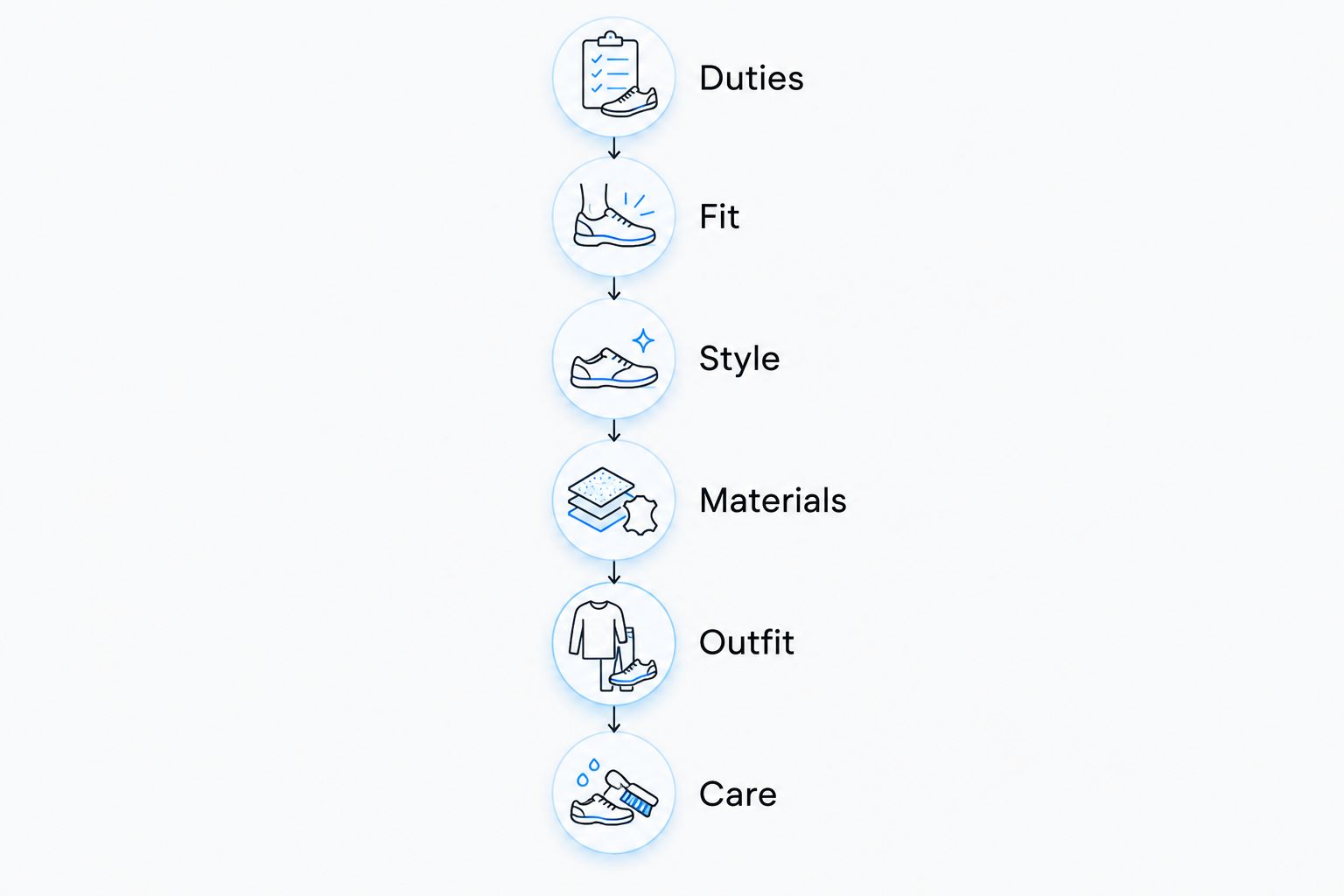
The selection sequence is straightforward: define your duties, assess fit, choose the style, verify materials, coordinate the outfit, and establish care. Do not start with the most decorative pair and work backward toward a justification.
Compare the options for your role
This comparison separates appearance benefits from operational limitations. Each best-for label describes the intended setting, not a guarantee of comfort or safety. Check the individual shoe before using any dress category for active restaurant work.
| Option | Best for | Main advantage | Key limitation |
|---|---|---|---|
| Workplace-approved kitchen footwear | Chefs performing preparation or cooking duties | Selected around workplace requirements | Its appearance might not suit formal guest-facing occasions |
| Plain oxford | Restaurateurs wearing formal tailoring | Closed lacing gives a restrained dress appearance | Formal styling does not establish floor suitability or fit |
| Plain derby | Guest-facing managers who prefer open lacing | Lacing provides fastening adjustment | Adjustment cannot compensate for the wrong size or shape |
| Leather loafer | Owners in a permitted smart-casual setting | Slip-on design suits less formal tailoring | Heel and instep fit depend on the individual shoe |
| Monk strap | Restaurateurs wanting a buckle-fastened dress option | Provides an alternative to lace-up styling | Buckle position and adjustment require individual assessment |
| Velvet or exotic-skin dress footwear | Hosted dinners and occasion dressing | Adds visible texture to an event outfit | Material-specific care makes it a poor default for spill exposure |
MensItalianShoes offers a luxury-footwear shopping context, not a shortcut through the checks above. The strongest choice is the category that fits your duties and your feet, not the category with the most elaborate finish.
Common mistakes chefs and restaurateurs make
Treating the dining room as the entire workplace
A pair chosen for a carpeted private-dining room still needs assessment if your route includes a wet entrance or a kitchen corridor. Evaluate where you actually go. Restrict dress footwear to appropriate duties when its workplace suitability is unconfirmed.
Assuming rubber means slip-resistant
Outsole material alone does not establish slip performance. Neither does an aggressive-looking tread pattern. Seek relevant product documentation and follow the restaurant’s policy instead of using appearance as a safety test.
Buying for a photograph instead of service clothing
A textured loafer that looks appealing in isolation can compete with an already detailed uniform. Try the full outfit together. For a restrained restaurant presentation, keep the shoe quieter than the rest of the clothing.
Expecting break-in to solve the wrong fit
Minor initial firmness is different from painful pressure or crowding. Do not make a new pair’s first substantial wear an important service or hosted event. Assess the shoe within the seller’s conditions before committing it to your wardrobe.
Using one care method on every material
Smooth leather, suede, velvet, and exotic skins do not share a universal cleaning routine. Read the care guidance for the actual upper. If a product’s suitability is unclear, obtain material-specific advice before applying it.
FAQ
Can chefs wear Italian dress shoes in a commercial kitchen?
Italian dress shoes should not be used in a commercial kitchen without evidence that the individual pair meets the workplace’s requirements. Styling, leather quality, and country of manufacture do not establish slip resistance or suitability for kitchen duties.
What are the best Italian dress shoes for chefs who greet guests?
The best Italian dress shoes for chefs greeting guests are well-fitting pairs that match the restaurant’s dress code and the duties involved. A restrained oxford suits formal tailoring, while a loafer suits a permitted smart-casual setting; assess floor suitability separately.
Are loafers better than oxfords for restaurant owners?
Loafers are better for a less formal outfit, while oxfords suit more formal tailoring. Neither category is automatically more comfortable or safer, so assess the individual pair’s fit and documented features.
Does an Italian shoe brand mean the shoes are made in Italy?
An Italian brand name does not establish that every pair is made in Italy. Check the individual product’s country-of-manufacture information and distinguish Italian-inspired styling from a stated manufacturing origin.
Can I wear exotic-skin shoes while managing a restaurant?
Exotic-skin shoes are an occasion-dressing option, not a default recommendation for active restaurant duties. Choose them only for an appropriate setting and follow material-specific care guidance, particularly when spills or moisture are possible.
How should I check dress-shoe fit before a restaurant event?
Check toe room, heel security, and instep pressure with your intended socks on both feet. Stand and walk during assessment, and reject painful pressure rather than assuming break-in will resolve it.
Should I use separate kitchen and guest-facing shoes in 2026?
Use separate kitchen and guest-facing shoes in 2026 when the duties require different footwear. Keep the kitchen pair aligned with workplace requirements and reserve dress shoes for suitable presentation duties.
One last thing
A shoe change can be a better solution than a more elaborate shoe. If your day moves from cooking to hosting, do not force one pair to satisfy incompatible requirements. Build the changeover into your routine before buying another dress style.