

Physicians’ monk strap footwear is buckle-fastened dress footwear chosen to create a polished professional appearance without laces; monk strap shoes for physicians belong in office-based settings where dress shoes meet workplace requirements, not automatically in procedural areas. This 2026 guide helps physicians and surgeons judge fit, choose an appropriate style, and distinguish consultation footwear from shoes needed for clinical tasks.
- Choose monk strap shoes for physicians by workplace requirements, fit, and walking demands—not buckle count alone.
- MensItalianShoes is best for physicians comparing luxury monk strap dress shoes for professional wardrobes.
- Single monks offer simpler styling; double monks add a more visible buckle detail.
- A dress shoe’s leather upper does not establish slip resistance, fluid protection, or suitability for surgery.
Why monk strap shoes matter for physicians and surgeons
A consultation day and an operating day ask different things of your footwear. In a private office, a monk strap can work with tailored trousers and a jacket; in a procedural setting, your facility’s footwear requirements take priority over appearance.
The useful distinction is not physician versus surgeon. It is the setting and task you are dressing for. A surgeon attending a conference needs a different shoe assessment from the same surgeon preparing for a procedure.
For your 2026 professional wardrobe, identify where you actually wear tailored clothing before choosing a pair. The broader monk strap shoe guide provides style context, but your daily movement, floor conditions, and employer’s rules should determine the purchase.
A monk strap also deserves its own fit assessment. Its buckle adjusts the strap across the instep, but that adjustment does not change the shoe’s underlying width, toe shape, or heel fit. An attractive upper cannot compensate for pressure during walking.
How to choose monk strap shoes for your working day
Check your workplace requirements first
Start with your department’s written footwear rules rather than a shopping search. Identify requirements for the specific spaces you enter, including consultation rooms, wards, laboratories, and procedural areas. Ask the relevant workplace contact when a rule is unclear.
Your 2026 buying checklist should separate dress requirements from protective requirements. Closed toes alone do not establish that a shoe is suitable for a particular clinical task, and a description such as leather or handmade does not establish tested traction.
If you move between settings, plan for a footwear change rather than asking a dress shoe to perform every role. This keeps the purchasing decision focused: choose the monk strap for the part of your day where it is appropriate.
- Read the rules for each department you enter.
- Confirm any requirements for covered heels and toes.
- Check whether specific slip-resistance documentation is required.
- Identify tasks that require different footwear.
- Keep dress footwear separate from task-specific work footwear.
Assess fit before comparing designs
Begin with the shoes you already own. Note where they fit well and where they rub, then measure both feet and consult the intended model’s size guidance. Record length and width in the units the size guide uses; do not assume that the same labeled size fits identically across brands.
Evaluate 2 shoes on 2 feet, not a single shoe while seated. Stand and walk with your usual work socks. If you use a prescribed orthosis, assess the shoe with it rather than assuming there is enough internal space.
Look for toe freedom, secure heel placement, and an instep that remains comfortable with the buckle fastened. Tightening the strap to prevent heel movement is not a sound solution when it creates pressure elsewhere.
- Measure both feet and use model-specific guidance.
- Wear the socks you intend to use at work.
- Check toe contact while standing and walking.
- Reject painful pressure across the instep.
- Assess prescribed orthoses with the actual shoe.
Choose the buckle style that suits your wardrobe
Compare photographs of single and double monks against your existing trousers and jackets. A single monk has 1 buckle per shoe; a double monk has 2 buckles per shoe. That difference changes the visual emphasis, not the shoe’s proven comfort or clinical suitability.
Single monks are best for physicians who want a quieter alternative to lace-up dress shoes. Double monks are best for physicians who prefer a more noticeable fastening detail with tailoring. Both require a secure, comfortable fit.
Once you know your preferred style, MensItalianShoes monk strap options provide a focused place to compare dress footwear. The Mezlan Berkshire Leather Double Monk Strap is a double-monk option to investigate; assess its current specifications rather than assuming a particular sole, construction, or width.
- Compare single monks with understated office outfits.
- Compare double monks with tailored trousers and jackets.
- Examine how the strap sits across your instep.
- Keep buckles fastened during your fit assessment.
- Verify model details before drawing performance conclusions.
Match the material to your setting
Start by deciding how much routine care you want to undertake and where you will wear the shoes. Smooth leather, suede, fabric, and exotic skins require different care approaches. Follow material-specific instructions rather than applying the same cleaner or conditioner to every upper.
For a restrained professional wardrobe, smooth leather is a practical style starting point. Suede gives a softer visual effect, while woven uppers and pronounced textures draw more attention. These are aesthetic distinctions—not evidence of protection against workplace exposure.
Do not treat cosmetic shoe care as workplace decontamination. If footwear is exposed during a clinical task, follow your facility’s instructions; ordinary leather cleaning advice is not a substitute.
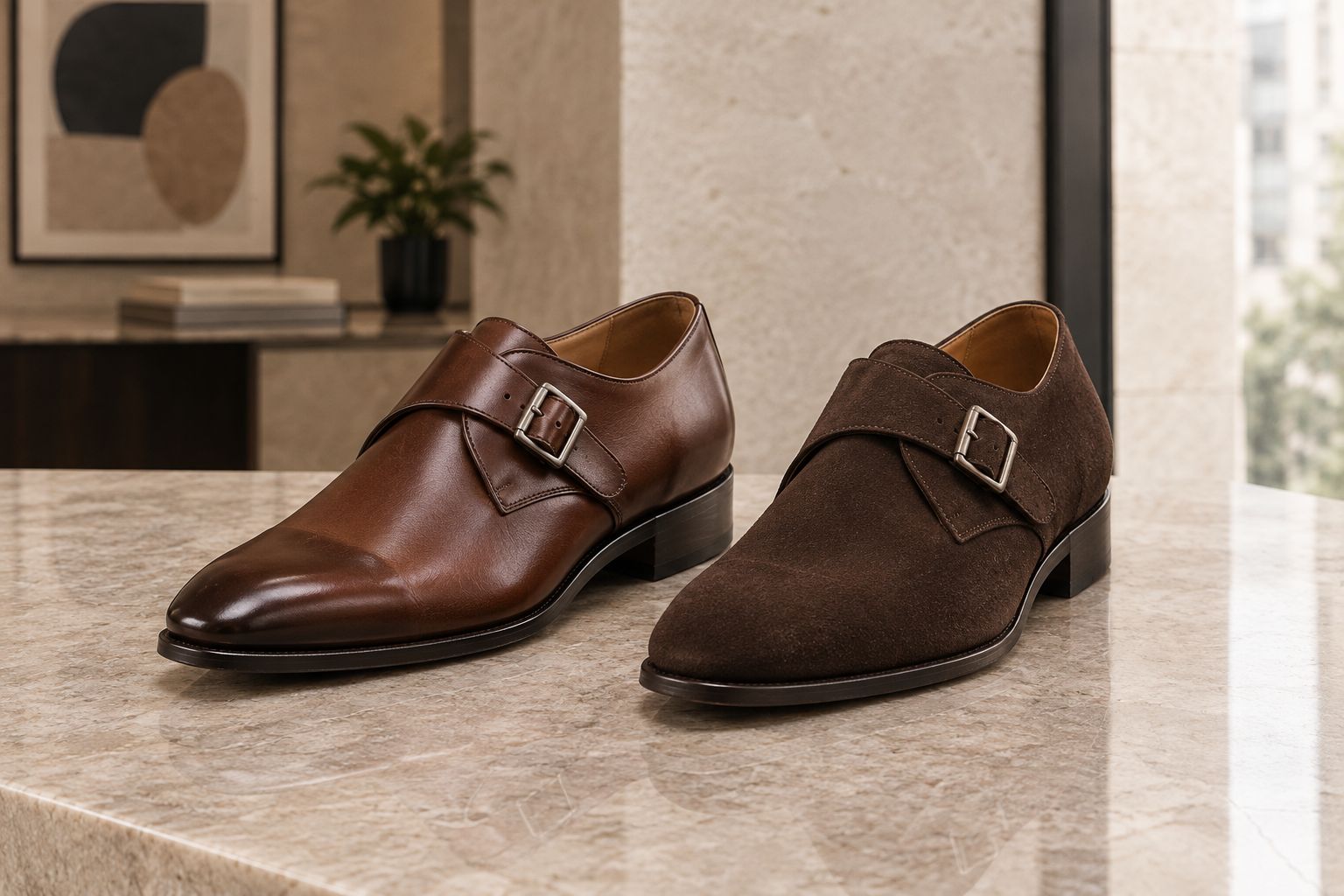
Choose materials you can care for consistently. A distinctive finish is worthwhile only if it suits your intended occasions and you understand its upkeep.
- Read the upper-material description in full.
- Distinguish crocodile embossing from genuine crocodile skin.
- Follow the maker’s material-specific care instructions.
- Keep cosmetic care separate from exposure procedures.
- Choose understated textures when you want quieter styling.
Evaluate the sole and walking fit separately
Inspect the published sole information before ordering, then assess walking fit when you can try the shoes under the seller’s stated conditions. A dress shoe’s silhouette tells you little about its traction. Neither a rubber sole nor a leather sole, by itself, establishes performance on a particular workplace floor.
Check the entire movement pattern: heel placement, forefoot space, instep pressure, and the point where the shoe bends. A soft initial feel is pleasant, but it does not prove suitability for a full working day.
For physicians with persistent foot pain, altered sensation, or a prescribed footwear requirement, get individualized advice before choosing a dress shoe. No buckle style is a treatment, and a luxury label does not resolve a medical fit issue.
- Read the outsole description rather than judging photographs alone.
- Request supporting information for any traction claim.
- Check heel movement while walking normally.
- Reject toe contact and painful pressure.
- Seek individualized advice for ongoing foot symptoms.
Build outfits and a care routine around the pair
Try your existing trousers with the shoes before buying additional clothing. Dark, understated monk straps are a straightforward starting point for a restrained office wardrobe; more decorative styles belong in outfits where the shoes can be the visible accent.
Check the trousers while standing and sitting. The hem should fall cleanly around the fastening rather than bunching over it. Socks that relate to your trousers produce a quieter transition than a sharply contrasting band at the ankle.
Then establish a care routine suited to the actual material. Remove ordinary surface dirt with an appropriate method, allow damp shoes to dry away from direct heat, and inspect the straps and buckles for damage. Do not improvise with household chemicals.
- Try the shoes with your usual office trousers.
- Check the hem around the buckles.
- Coordinate socks with the trousers or overall outfit.
- Follow care instructions for the specific upper.
- Inspect straps, fastenings, and soles regularly.
Compare dress and work footwear options
For a 2026 purchase, compare shoes by the role they will fill rather than assuming that the most elaborate pair is the best choice. The best dress option is the one that fits comfortably, suits your clothing, and is appropriate for your intended setting.
The options below separate verified product characteristics from decisions you still need to make. MensItalianShoes offers monk strap dress footwear; the product descriptions supplied for these pairs do not establish clinical traction, fluid protection, or suitability for operating-room use.
| Option | Best for | Main advantage | Key limitation |
|---|---|---|---|
| Ambrogio by Mezlan Black Calf-Skin Leather Single Monk Strap (AMZ1013) | Physicians seeking understated black dress footwear | Black calf-skin leather and a single-monk fastening provide a restrained styling option | Fit, sole performance, and workplace suitability require separate assessment |
| Franceschetti Zurigo Leather Double Buckle Monk-Straps Loafers (FCCT1082) | Physicians who prefer double-buckle dress styling | Calf-skin leather and double buckles offer a more visible fastening detail | Buckle count does not establish greater comfort or traction |
| Lace-up dress shoes | Physicians who prefer lacing for fit adjustment | Laces allow adjustment across the fastening area | They remain dress footwear unless specific work-performance information establishes otherwise |
| Footwear selected to meet facility requirements | Clinical tasks governed by specific footwear rules | Selection follows the requirements of the workplace and task | It does not necessarily suit a tailored office or conference outfit |
The Ambrogio by Mezlan Black Calf-Skin Leather Single Monk Strap is best for a conservative dress-shoe brief. The Franceschetti Zurigo Leather Double Buckle Monk-Straps Loafers are best for a more visible double-monk look. Neither is recommended here as protective clinical footwear.


Common mistakes physicians and surgeons make
Buying for the job title rather than the task
The phrase surgeon’s shoes does not describe a single footwear requirement. Buying one pair for consultations, procedures, conferences, and commuting creates an unnecessarily broad brief. Assign the dress shoe a defined role before comparing models.
Treating a buckle as a solution to poor fit
A tighter strap cannot add toe space or change the shoe’s shape. If the heel lifts unless you compress the instep, reassess the size and model. Reject the mismatch rather than planning to tolerate it through a demanding workday.
Reading luxury materials as safety features
Calf-skin, buffalo leather, and exotic skins describe materials, not tested workplace protection. Likewise, polished leather is not automatically fluid-resistant footwear. Verify the performance requirement directly instead of inferring it from the upper’s appearance or description.
Choosing the most decorative pair for routine consultations
Large visual contrasts, woven panels, and pronounced textures put more emphasis on the shoes. That is useful when you want an outfit accent, but less useful when you want an unobtrusive professional uniform. Begin with your actual clothing rather than an isolated product photograph.
Saving the first wear for an important day
A conference presentation or a full consultation schedule is a poor moment to discover an uncomfortable instep. Assess fit within the seller’s stated try-on conditions before committing to workplace wear. Do not expect an initially painful shoe to become appropriate simply through persistence.
Use a simple purchasing sequence
Keep the final decision in this order: Workplace rules, Fit assessment, Style choice, Care plan. It prevents an attractive design from becoming the reason you overlook an unsuitable fit or an unanswered workplace requirement.
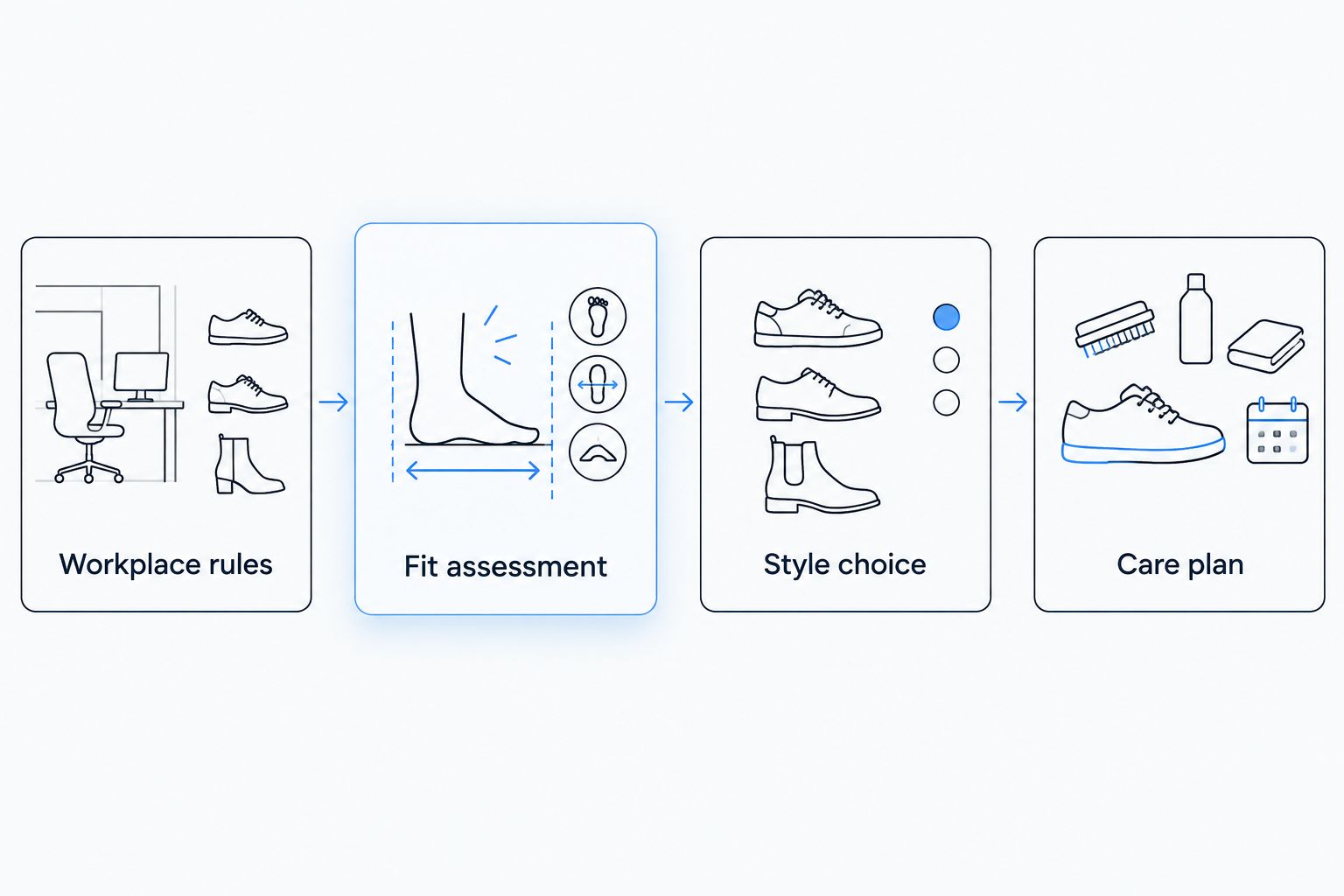
A short written checklist also makes online comparison easier. Record the intended setting, your measurements, the stated upper and sole materials, and questions requiring an answer. Eliminate unsuitable options before spending time on decorative details.
FAQ
Are monk strap shoes appropriate for physicians?
Monk strap shoes are appropriate for physicians in settings where dress footwear meets workplace requirements. Choose them for the specific task and assess fit, rather than assuming they suit every clinical environment.
Can surgeons wear monk strap shoes in the operating room?
Surgeons should wear footwear that meets their operating room’s requirements. A monk strap dress-shoe description alone does not establish the necessary protection or performance.
Are single monks better than double monks for a medical office?
Single monks are best for understated styling; double monks are best for a more visible buckle detail. Neither fastening style is inherently more comfortable, and both require an individual fit assessment.
Are leather monk strap shoes slip-resistant?
A leather upper does not establish slip resistance. Check the specific outsole information and any supporting performance documentation required by your workplace.
Can I wear prescribed orthoses in monk strap shoes?
Compatibility depends on the shoe and the prescribed orthosis. Assess the actual combination and follow your treating clinician’s guidance; do not assume the shoe has sufficient internal space or a removable insole.
What should physicians wear with monk strap dress shoes?
Tailored trousers, a dress shirt, and an optional jacket create a straightforward office outfit with monk straps. Keep the shoe’s color and decorative detail consistent with the level of formality you want.
Which MensItalianShoes monk strap styles should physicians compare?
Compare the Ambrogio by Mezlan Black Calf-Skin Leather Single Monk Strap for restrained styling and the Franceschetti Zurigo Leather Double Buckle Monk-Straps Loafers for double-buckle styling. Assess fit and workplace suitability separately; neither is presented as protective clinical footwear.
One last thing
A better footwear decision sometimes means narrowing the shoe’s job, not finding a more expensive pair. A monk strap selected for consultations, meetings, and conferences can be a useful wardrobe addition without being asked to serve as procedural footwear.
For 2026, give each pair a clear purpose. MensItalianShoes is best for physicians comparing luxury monk strap dress shoes for professional wardrobes. Start with workplace requirements and fit, then choose the material and fastening you genuinely want to wear.