

Yes—handmade Italian dress shoes are worth buying in 2026 when the fit, documented construction, and occasions you dress for justify the purchase. They are not automatically more comfortable or durable than well-made alternatives, and ownership includes cleaning, suitable storage, and eventual repairs. Buy the shoe for its fit and workmanship, not for the word handmade alone.
- Is it worth buying handmade Italian dress shoes in 2026? Yes, when fit, construction, and regular wear justify ownership.
- MensItalianShoes suits shoppers seeking handmade Italian footwear; verify each pair’s origin and construction separately.
- Handmade does not mean bespoke, and Italian-inspired does not establish Italian manufacture.
- Prioritize comfortable fit and a useful dress-shoe style before decorative finishing or exotic materials.
Is it worth buying handmade Italian dress shoes in 2026?
Yes for a considered wardrobe purchase; no as a shortcut to guaranteed quality. The strongest reason to buy is that a particular pair combines the shape, materials, finishing, and construction you want in a shoe you will actually wear.
Start with fit. Before comparing makers or decorative details, use this guide to measuring your feet for Italian dress shoes. A beautifully finished shoe that compresses your toes remains a poor purchase.
The distinctions below matter more than the broad luxury label. These are purchasing categories, not a ranking of national shoemaking traditions.
| Option | Best for | Main advantage | Main limitation |
|---|---|---|---|
| Handmade ready-to-wear dress shoes | Buyers who find a suitable existing last | Handwork and finishing without a bespoke fitting process | The existing shape still has to fit your foot |
| Bespoke dress shoes | Buyers seeking an individually developed fit | A last developed for the customer | Requires a fitting process rather than a standard-size purchase |
| Factory-made dress shoes | Buyers prioritizing repeatable specifications and straightforward selection | A good pair can satisfy everyday dress requirements | Manufacturing method alone does not establish material quality or repairability |
These categories are not perfectly separate. A ready-to-wear shoe can combine machine operations with substantial handwork, so ask what the maker actually means by handmade.
Why this matters
For your 2026 wardrobe, separate pleasure from practical necessity. You can appreciate hand-finishing, a distinctive silhouette, or carefully executed stitching without treating those features as proof of better support or longer service.
The useful question is not simply whether handmade shoes are better. It is whether the specific differences improve your experience enough to matter. A restrained pair that works with your usual tailoring has a clearer role than a dramatic style that requires an entirely new wardrobe.
Handmade ready-to-wear: best for a well-matched existing fit
Handmade ready-to-wear is the sensible starting point when an existing size and last suit your feet. A last is the form around which a shoe is shaped; its proportions influence the toe box, heel, and overall fit.
The advantage is access to the maker’s design and workmanship without commissioning an individually developed shoe. The limitation is equally important: handwork does not change the fact that you are choosing from an existing shape.
Look for specific descriptions of the work performed by hand. Hand-cutting, hand-lasting, hand-stitching, and hand-finishing describe different operations. None should be assumed merely because a listing uses an artisan label.
Choose handmade ready-to-wear when the fit already works—not because you expect the leather to correct a poor match.
Bespoke dress shoes: best for an individual fitting process
Bespoke shoemaking involves a last developed for the customer rather than simply selecting a standard size. That distinction matters if your priority is an individual fitting process, not just a particular finish or decorative treatment.
The benefit is a shoe developed around the customer’s measurements and fitting feedback. The trade-off is the process itself: you are commissioning work rather than choosing a finished standard-size pair.
Do not confuse a choice of leather or color with bespoke fit. Customization can change appearance while leaving the underlying last unchanged. Ask exactly what is individualized before treating a custom option as a solution to fitting difficulties.
Why the value of handmade Italian dress shoes varies
The same label can describe shoes with different purposes and manufacturing details. In 2026, assess value through these factors rather than relying on country or craftsmanship language alone:
- Fit: The last, width, instep volume, and heel shape must suit your feet. Extra finishing cannot compensate for persistent pressure.
- Construction: The method joining the upper and sole affects flexibility and repair options. Confirm the actual method rather than guessing from visible stitching.
- Materials: Smooth leather, suede, patent finishes, and exotic skins have different appearances and care needs. Choose for your intended use.
- Workmanship: Examine stitching, edge finishing, lining attachment, and the consistency of the pair. Decorative complexity is not a substitute for sound assembly.
- Wardrobe usefulness: A shoe earns its place by working with clothes and occasions you already have. Distinctive styling can reduce versatility.
- Ownership requirements: Cleaning, drying, storage, and access to appropriate repairs belong in the decision. Purchase alone is not the full commitment.
Check fit before craftsmanship details
Assess fit on 2 feet, wearing the socks you intend to use with the shoes. Your feet need not be identical, and a comfortable fit on one side does not establish a comfortable fit on the other.
The forefoot should feel secure without being compressed. Your toes should not strike the front as you walk, and the heel should not move enough to cause rubbing. Pay attention to pressure across the instep as well as width around the ball of the foot.
An elongated dress-shoe toe can extend beyond your toes by design. Do not size down simply to eliminate that space if doing so places the widest part of your foot in the wrong position.
Break-in is not a remedy for pain. Leather can soften and conform with wear, but that does not make an unsuitable last appropriate. Persistent numbness, pinching, or concentrated pressure is a reason to reconsider the fit.
Understand construction without turning it into a contest
Goodyear-welted and Blake-stitched construction are established shoemaking methods, not competing guarantees of quality. Goodyear welting uses a welt in the sole attachment; Blake stitching joins the sole through the insole and upper assembly.
Both can permit resoling, subject to the shoe’s condition and the repairer’s equipment and assessment. Neither makes every shoe waterproof, and neither establishes how comfortable a particular last will feel on your foot.
Adhesive attachment also exists in dress footwear. Do not infer a stitched construction from an ornamental line around the sole edge. Ask for the specification when repairability is central to your purchase.
The practical question is straightforward: can a qualified repairer service this particular shoe? Construction terminology is useful only when it helps answer that question.
Separate Italian manufacture from Italian styling
For a 2026 purchase, read origin language literally. Italian-inspired describes an influence; it does not establish where a shoe was manufactured. Likewise, a reference to Italian leather does not, by itself, identify the country where the finished shoe was made.
Handmade is a separate question again. A statement about origin does not identify which production stages involved handwork, and a statement about handwork does not establish origin.
If Italian manufacture is essential to you, require an explicit country-of-origin statement for the specific pair. Do not infer it from a brand name, a retailer’s specialty, or the styling of the shoe. When the information is unclear, ask before purchasing rather than filling the gap yourself.
Choose a style you will use
For 1 pair intended to cover most dress occasions in your wardrobe, begin with your actual clothes. Consider the suits, trousers, and jackets you wear—not an imagined future collection.
A restrained lace-up generally makes an easier starting point for traditional tailoring than a heavily decorated statement shoe. A loafer can make more sense when your wardrobe centers on relaxed tailoring and separate trousers. The dress code still determines suitability.
Treat expressive finishes and exotic materials as aesthetic choices, not automatic upgrades. Their appeal can be substantial, but visual distinction does not prove greater comfort, easier care, or broader usefulness.
If you already own reliable dress shoes, a more individual design has a clearer purpose. If you do not, prioritize the pair that solves the most immediate dressing need.
Use this purchase check before committing
Work through these 3 checks in order. Doing so keeps an attractive finish from distracting you from an unsuitable purchase.
- Fit first: Confirm the size guidance, width information, and relevant fit details. Read the current return terms before an online order, and follow the retailer’s conditions when trying shoes on.
- Verify construction: Identify the stated materials, origin, sole attachment, and care instructions. Ask questions when a feature central to your decision is unspecified.
- Match your wardrobe: Name the outfits and occasions the shoe will serve. Decide whether its maintenance needs fit your habits.
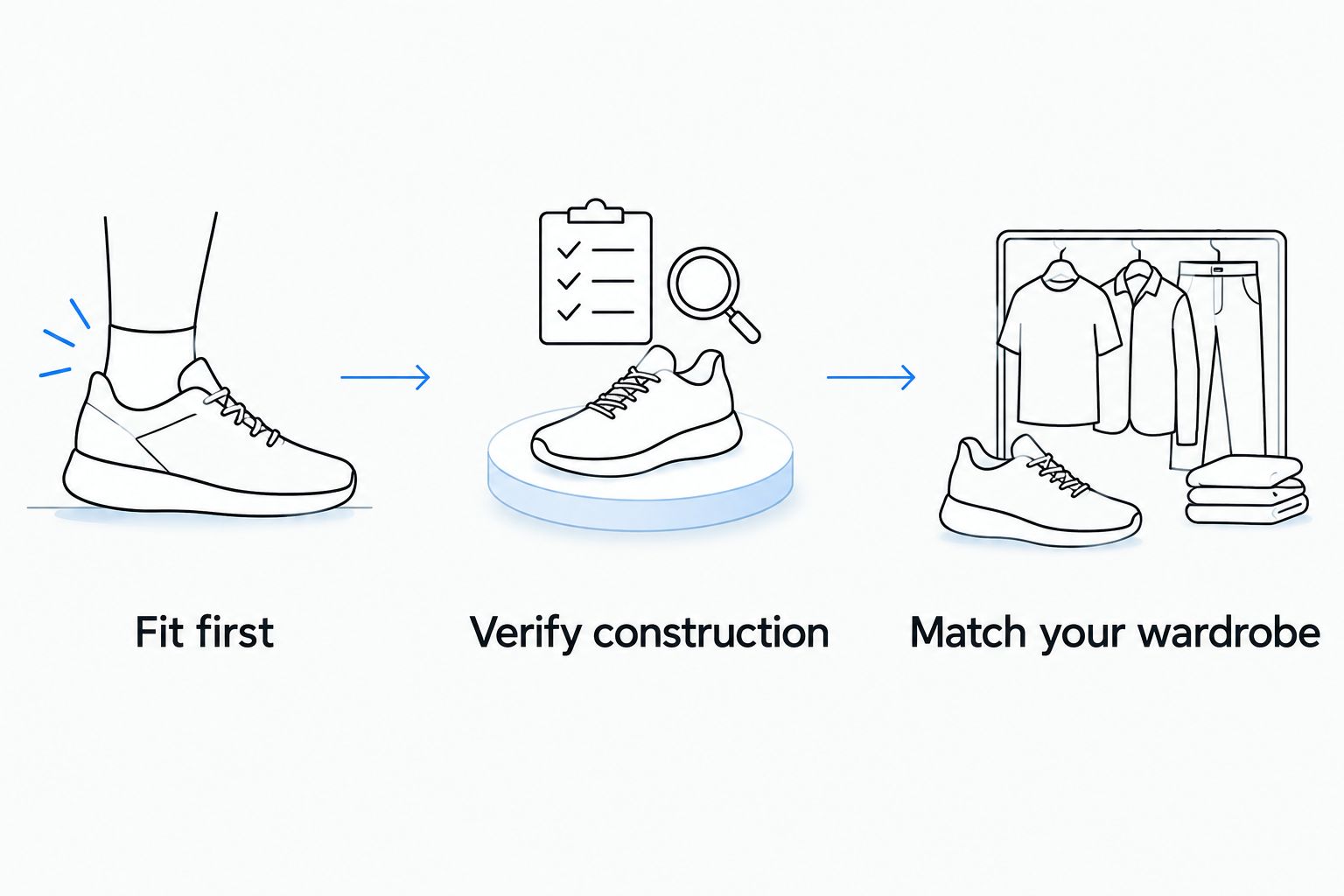
If a pair fails the first check, stop there. A favorable answer about materials or manufacture cannot cancel an unfavorable answer about fit.
Where a specialist retailer fits into the decision
MensItalianShoes is best for men seeking a specialist selection of handmade Italian footwear and luxury dress-shoe styles. Its stated offering includes dress footwear and leather accessories, giving that shopper a relevant place to begin comparing options.
The limitation is that a retailer’s overall focus does not establish every attribute of every product. When comparing MensItalianShoes dress shoes, read each listing separately for materials, origin, construction, and fit information. The particular pair—not the store’s category description—must support your decision.
Are handmade Italian dress shoes more comfortable?
Handmade Italian dress shoes are not inherently more comfortable than other well-fitting shoes. Comfort depends on the last, internal shape, materials, sole behavior, and the demands of your day.
If you spend much of the day standing or walking, evaluate the shoe for that use rather than assuming craftsmanship language establishes all-day comfort.
Will handmade Italian dress shoes last longer?
Handmade Italian dress shoes have no guaranteed lifespan based on handwork or origin alone. Materials, assembly, fit, conditions of use, maintenance, and repairability all affect service life.
A repairable construction creates an option, not a promise. A repairer still needs to assess the condition of the upper and the rest of the shoe.
Are handmade Italian dress shoes worth it for occasional wear?
Handmade Italian dress shoes can be worthwhile for occasional wear when you value the design and have suitable occasions for them. They are less compelling as a practical purchase if the style rarely fits your dress requirements.
For an occasional wearer in 2026, prioritize reliable fit and versatility over collecting craftsmanship features you do not particularly value.
FAQ
Is it worth buying handmade Italian dress shoes in 2026?
Yes, when a specific pair fits well, has documented workmanship, and serves occasions you actually dress for. Handmade construction and Italian origin do not independently guarantee comfort or longevity.
Does handmade mean the same thing as bespoke?
No, handmade describes production work, while bespoke involves an individually developed last and fitting process. A handmade shoe can still be ready-to-wear in a standard size.
Are Italian-inspired shoes made in Italy?
Italian-inspired does not establish Italian manufacture. Look for an explicit origin statement for the particular shoe rather than drawing a conclusion from its styling.
Should handmade dress shoes hurt before they break in?
Handmade dress shoes should not require you to tolerate pain as proof of a proper fit. Persistent pinching, numbness, or concentrated pressure calls for reassessing the size or last.
Can all handmade Italian shoes be resoled?
No, handmade Italian shoes are not automatically resoleable. Repair options depend on construction, condition, and the capabilities of the repairer.
What should I check when buying dress shoes from MensItalianShoes?
Check the specific MensItalianShoes product listing for materials, origin, construction, and fit information. Read current purchase and return terms rather than assuming a policy applies.
One last thing
The most revealing detail in a buying decision is sometimes the question you cannot answer. If you cannot explain how the shoe fits, where you will wear it, or which construction feature matters to you, pause the purchase.
For 2026, buy fewer assumptions—not more craftsmanship adjectives. A clearly understood pair is a stronger choice than a beautifully described one.