

Exotic skin shoes are worth buying in 2026 if you specifically want their natural texture, can confirm the material and sourcing, and already have dependable everyday footwear. They are not automatically more comfortable, better constructed, or longer-lasting than calfskin shoes; the purchase also brings material-specific care and sourcing questions that deserve attention before you commit.
- Is it worth buying exotic skin shoes in 2026? Yes for distinctive texture; no for guaranteed comfort or durability.
- Genuine exotic leather and embossed calfskin are different materials; confirm the description before buying.
- MensItalianShoes offers exotic skin footwear, but material alone does not establish fit, construction quality, or suitability.
- Choose calfskin first if you need a versatile foundation rather than a statement pair.
Is it worth buying exotic skin shoes in 2026?
Buy exotic skin shoes for a material you genuinely appreciate, not because the word exotic promises a better shoe. Their strongest argument is visual and tactile distinction. Their weakest argument is the assumption that an unusual hide guarantees superior performance.
When browsing MensItalianShoes, separate the appeal of the leather from the practical merits of the shoe. Examine the shape, intended occasion, fit information, construction description, and care requirements as individual buying decisions.
| Choice | Best for | Main advantage | Main limitation |
|---|---|---|---|
| Genuine exotic skin shoes | Men who specifically want the named animal leather | The material itself, rather than an imitation pattern | Species, sourcing, and care need closer attention |
| Embossed calfskin shoes | Men who want a patterned appearance without choosing the corresponding exotic hide | Decorative texture on a different leather | The pattern does not make the shoe genuine alligator, crocodile, or python |
| Smooth calfskin shoes | Men building an understated dress-shoe wardrobe | A restrained appearance that is easy to coordinate | They do not provide the same distinctive surface character |
These are purchasing categories, not a durability ranking. A well-fitting calfskin shoe with clearly described construction is a stronger choice than an exotic pair whose fit or material description leaves questions unanswered.
Why this matters
Exotic footwear draws attention to the upper, but you wear the whole shoe. A striking surface cannot compensate for pressure across the forefoot, an unstable heel, or a sole unsuited to your routine.
The distinction also matters when comparing descriptions. Alligator, lizard, shark, calfskin, and embossed leather are not interchangeable terms. Read the material statement rather than drawing conclusions from a photograph or a dramatic product name.
For a 2026 purchase, the useful question is not whether exotic leather is fashionable. It is whether this particular pair adds something you will actually wear and are prepared to maintain.
Genuine exotic leather: best for material-focused buyers
Genuine exotic skin footwear makes sense when the named leather is part of what you want to own. Confirm exactly which parts of the shoe use that material; a description of the upper does not establish the composition of the lining, sole, or trim.
The advantage is material specificity. You are choosing an actual animal leather rather than simply its visual suggestion, and that distinction matters if the hide itself motivates the purchase.
The limitation is that a broad label tells you too little. “Exotic leather” does not identify species, explain sourcing, establish construction, or provide a care method. Ask for the details relevant to the exact pair instead of treating the category as a quality certificate.
Do not assume that every exotic leather behaves alike, either. A care recommendation for one material is not a universal instruction for another.
Embossed calfskin: best for the patterned look
Embossing creates a surface pattern in leather. If a description specifies embossed calfskin, the shoe is calfskin with a pattern—not the animal that the pattern resembles.
This is a sensible choice when appearance is your priority. You can enjoy a decorative surface without making genuine reptile leather a requirement of the purchase.
The limitation is expectation. An embossed pair will disappoint if what you actually wanted was the corresponding animal hide, so check the material wording before deciding that two similar-looking shoes are equivalent.
Photographs alone are not enough to resolve that distinction. Look for an explicit statement of composition, and request clarification when a title and description use different terminology.
Smooth calfskin: best for a foundational wardrobe
If you are buying your first serious dress shoes, smooth calfskin is the more straightforward starting point. Its restrained appearance lets the shoe support an outfit rather than become its central feature.
Choose the shape and formality your wardrobe requires. A business shoe, relaxed loafer, and evening shoe serve different purposes even when all use calfskin.
The limitation is equally clear: smooth calfskin will not satisfy someone whose main objective is pronounced texture. Do not buy a substitute merely because it is easier to explain; buy it because it suits how you dress.
Build around use first, material second. Once your regular occasions are covered, an exotic pair becomes a deliberate addition rather than a compromise pressed into everyday service.
Why the value of exotic skin shoes varies
The value of exotic skin shoes in 2026 depends on the particular shoe and your reasons for buying it. Focus on these factors rather than assuming a category-wide quality hierarchy:
- Material identity: Confirm the named leather and distinguish genuine skin from embossing or print.
- Construction: Look for an explicit construction description; the upper material does not explain how the shoe is assembled.
- Fit: Judge the actual last and sizing information, not a general reputation for softness or luxury.
- Wardrobe compatibility: Decide which existing trousers, jackets, and occasions will suit the pair.
- Ownership requirements: Establish appropriate cleaning, conditioning, storage, and repair options before purchase.
- Sourcing information: Ask what documentation is available and check requirements relevant to the species and your location.
A purchase is easier to justify when these answers point in the same direction. If you love the texture but cannot identify an occasion, establish the material, or accept the care requirements, wait.
How to judge a pair before you buy
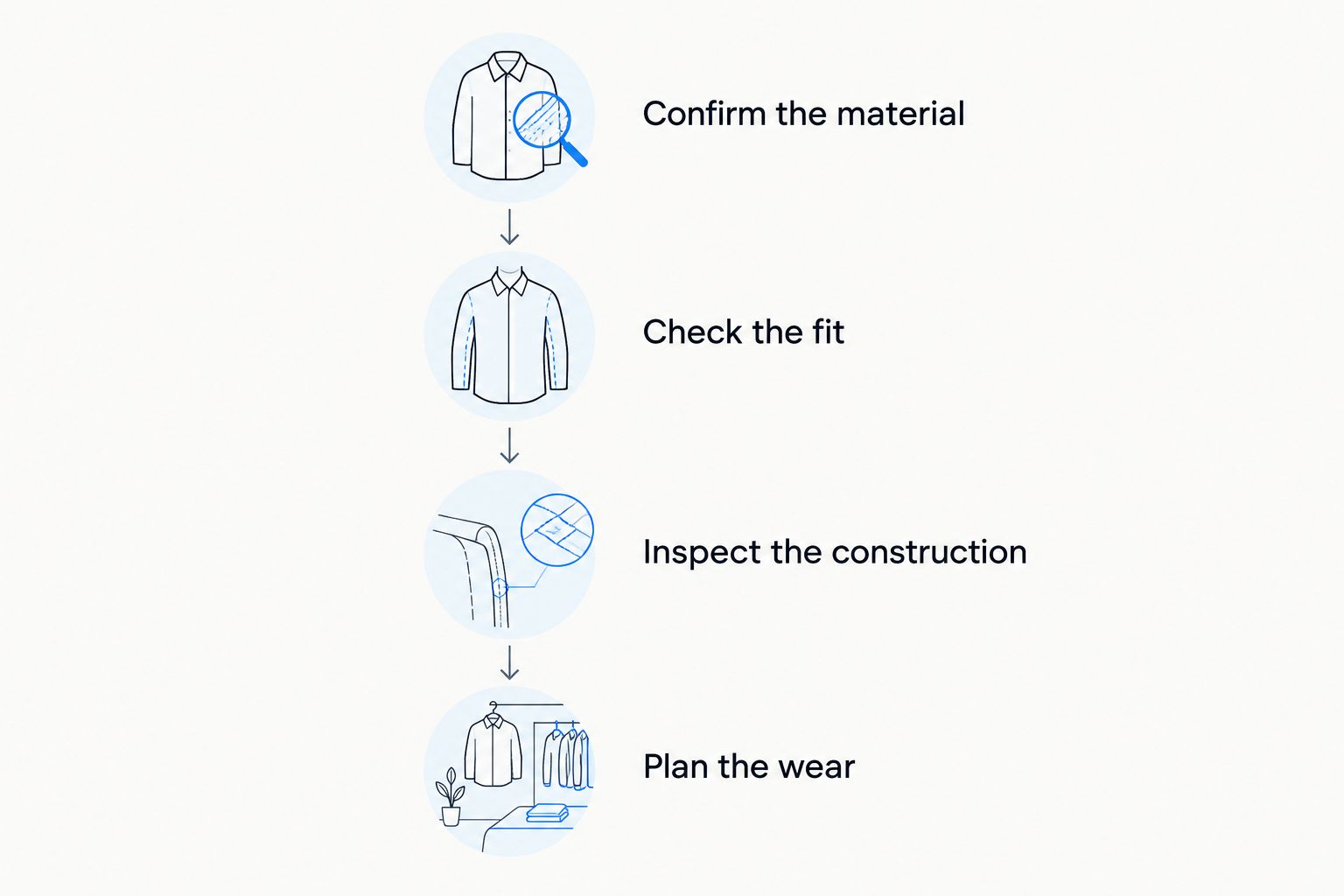
Use this sequence to keep the appearance of the leather from deciding everything. Each step answers a different question; none substitutes for the others.
Confirm the material
Read the full description and distinguish the main upper from accents. If the wording alternates between print, embossed leather, and a named animal skin, ask which statement describes the actual material.
Do not infer country of manufacture or handwork from the leather type. Those are separate claims and need their own support.
Check the fit
Compare the seller’s sizing guidance with shoes that already fit you well. Consider toe shape, instep room, heel security, and the socks you intend to wear.
Do not buy a painful fit on the assumption that an unusual leather will stretch into comfort. Break-in is not a reliable solution to the wrong size or shape.
Inspect the construction
Look for clear information about the sole and method of assembly. If repairability matters to you, ask a qualified repairer about the exact construction rather than assuming every luxury shoe can be resoled in the same way.
In photographs, examine seams, edges, fastening details, and the relationship between the upper and sole. These observations help you ask better questions; they do not establish how the shoe feels on your foot.
Plan the wear
Name the occasions and outfits before you order. A pair intended for dinners has a different role from footwear expected to handle commuting, prolonged standing, or unpredictable weather.
If your plan depends on the shoe performing a task its description does not address, choose a different pair or obtain clarification first.
How to wear exotic shoes without overcomplicating an outfit
Let the texture be the principal detail. Start with trousers and a jacket you already wear confidently, then decide whether the shoes support the outfit or compete with it.
For tailored clothing, consider the whole silhouette: trouser width, hem position, toe shape, and the visual weight of the sole. An exotic upper does not turn a casual shape into a formal shoe.
For relaxed dressing, keep the surrounding pieces relatively quiet if you want the footwear to stand out. A patterned shoe does not require a patterned belt, decorative hardware, or another exotic accessory to explain it.
This approach also exposes weak purchases. If the shoes only work with an entirely new wardrobe, you are making a larger style decision than adding a distinctive pair to your rotation.
Two examples that illustrate the decision
MensItalianShoes exotic skin footwear includes the following material-and-style combinations. Treat these as examples to evaluate against your wardrobe, not as a ranking or a promise of comfort, durability, or fit.
Argentum Lizard-Skin Cap-Toe Monk-Straps Loafers (MZ3195) — best for men seeking lizard skin in a cap-toe monk-strap design. The appeal is that specific combination of material and styling. The limitation is visual complexity: if your goal is a very restrained dress shoe, consider whether both the texture and strap detailing suit your clothes.
Artioli Flavio Shark-Skin Leather Horsebit Loafers (ART1012) — best for men specifically seeking shark-skin leather in a horsebit loafer. The material and loafer format provide a clear reason to consider it. The limitation is specificity: wanting an exotic shoe in general is not the same as wanting shark skin and horsebit detailing together.
Neither description alone establishes which shoe will fit you better. Confirm sizing, care guidance, and any construction details that matter to your decision before choosing between them.


Are exotic skin shoes more durable than calfskin?
Exotic skin shoes are not automatically more durable than calfskin shoes. Species, tanning, finish, construction, fit, and treatment all affect the result; a material label alone cannot establish a service life.
Separate upper durability from sole wear and repairability. A shoe can need sole work while its upper remains usable, and an unusual upper does not eliminate ordinary footwear maintenance.
Are exotic skin shoes harder to maintain?
Exotic skin shoes require care matched to the specific leather and finish. Do not assume that a cleaner or conditioner suitable for your calfskin shoes is suitable for every exotic pair.
Obtain the maker’s instructions before applying a treatment. Review how to store exotic skin shoes properly before deciding where the pair will live between wears.
Should you buy exotic shoes as an investment?
Buy exotic shoes to wear, not on an assumption of resale appreciation. A distinctive material is not a promise that another buyer will value your particular size, style, or condition later.
If the purchase only feels sensible when you imagine recovering the expense, reconsider it. The stronger justification is enjoyment and regular use on terms you already accept.
FAQ
Is it worth buying exotic skin shoes in 2026?
Exotic skin shoes are worth buying in 2026 when you specifically value the named leather, can confirm its description and sourcing, and accept its care requirements. They are not automatically better everyday shoes than calfskin alternatives.
Are embossed leather shoes genuine exotic skin?
Embossed leather is not proof of genuine exotic skin. If the composition says embossed calfskin, the material is calfskin rather than the animal represented by the pattern.
What's the best exotic shoe to buy first?
The best first exotic shoe is a style you already know suits your feet and wardrobe, with clearly identified materials. Do not change the fit, silhouette, and material all at once simply to buy something different.
Are exotic skin loafers comfortable enough for everyday wear?
Comfort depends on the particular loafer's fit and construction, not simply its exotic upper. Check sizing guidance and intended use rather than assuming an unusual leather provides better cushioning or support.
Can I use regular leather conditioner on exotic shoes?
Use a conditioner only when the maker confirms it is suitable for the specific leather and finish. A treatment intended for smooth calfskin is not a universal recommendation for exotic footwear.
What should I ask about sourcing before buying exotic footwear?
Ask for the material identity, available sourcing documentation, and any information needed to check applicable requirements. Confirm current rules with the relevant authority for the species, transaction, and destination rather than assuming all exotic leathers share the same rules.
Should my first luxury dress shoes be exotic leather?
Choose your first luxury dress shoes for fit and the occasions you need to cover. Smooth calfskin is the more straightforward foundation if you want a restrained appearance; exotic leather makes sense when its texture is a deliberate priority.
One last thing
Before buying in 2026, cover the material description and look at the shoe's shape alone. Would you still want that toe, sole, fastening, and silhouette? If not, the texture is distracting you from a shoe you would otherwise pass over.
MensItalianShoes is best for men seeking distinctive luxury footwear, including exotic skin shoes. Choose the individual pair with the same discipline: verified material, suitable fit, a clear wardrobe role, and care you are prepared to provide.