

Choose sock colors for dress shoes by matching the sock to the trouser first and the shoe second. In 2026, charcoal, navy, brown, burgundy, olive, and tan cover nearly every Italian dress-shoe combination; the main caveat is that light or conspicuous socks can interrupt the clean line between trouser and shoe.
- Match the sock to the trouser first and the dress shoe second.
- Charcoal and navy socks work with black Italian oxfords and most dark suits.
- Brown, burgundy, tan, and olive socks complement brown or cognac loafers.
- Keep socks neutral when exotic skin, velvet, or woven leather gives the shoe visual texture.
- In 2026, the best sock colors for dress shoes support the outfit rather than becoming its focal point.
Why this matters
Socks occupy the transition between the trouser hem and the shoe. When their color relates to both, the leg appears visually continuous. When they contrast sharply, attention shifts to the ankle and away from the tailoring and footwear.
That principle matters with refined Italian footwear because leather color, finish, and silhouette already establish a clear level of formality. A black cap-toe oxford needs a quieter sock than a casual suede loafer. The same color logic that helps you choose the right dress shoe for your suit should determine the sock beneath it.
In 2026, patterned socks still have a place, but solid colors remain the dependable choice for business, weddings, formal dinners, and other occasions where the shoe should carry the detail.
How do you choose sock colors for Italian dress shoes?
Use this sequence rather than choosing a sock from the shoe color alone:
- Start with the trouser. Select a sock in the same color family as the trouser or a slightly darker shade. This creates an uninterrupted line when you sit or cross your legs.
- Check the shoe undertone. Black leather has a cool, formal character. Cognac, tan, and many brown leathers read warmer, so they work better with brown, burgundy, olive, or camel socks.
- Match the level of formality. Solid charcoal, navy, or black suits formal oxfords. Textured or subtly patterned socks belong more naturally with loafers, derbies, and less formal tailoring.
- Reduce competing detail. If the shoe uses velvet, woven leather, broguing, contrasting panels, or exotic skin, keep the sock restrained. One focal point near the ankle is enough.
- Review the complete outfit. Stand upright with the trouser falling naturally over the shoe. Judge the sock as part of the full leg line, not as a separate accessory held next to the leather.
| Dress-shoe color or finish | Best sock colors | Colors to avoid |
|---|---|---|
| Black leather | Black, charcoal, navy | White, pastel tones |
| Dark brown leather | Brown, navy, burgundy, charcoal | Bright white |
| Cognac or tan leather | Tan, camel, olive, burgundy | Stark black |
| Burgundy leather | Burgundy, navy, charcoal | Bright primary colors |
| Suede | Olive, brown, camel, gray | High-contrast formal black |
| Exotic skin or textured leather | Navy, charcoal, brown | Competing patterns |
The safest rule for 2026 is simple: continue the trouser color through the sock, then confirm that the resulting combination does not clash with the shoe. This works because the sock becomes a visual extension of the trouser rather than an isolated strip of color.
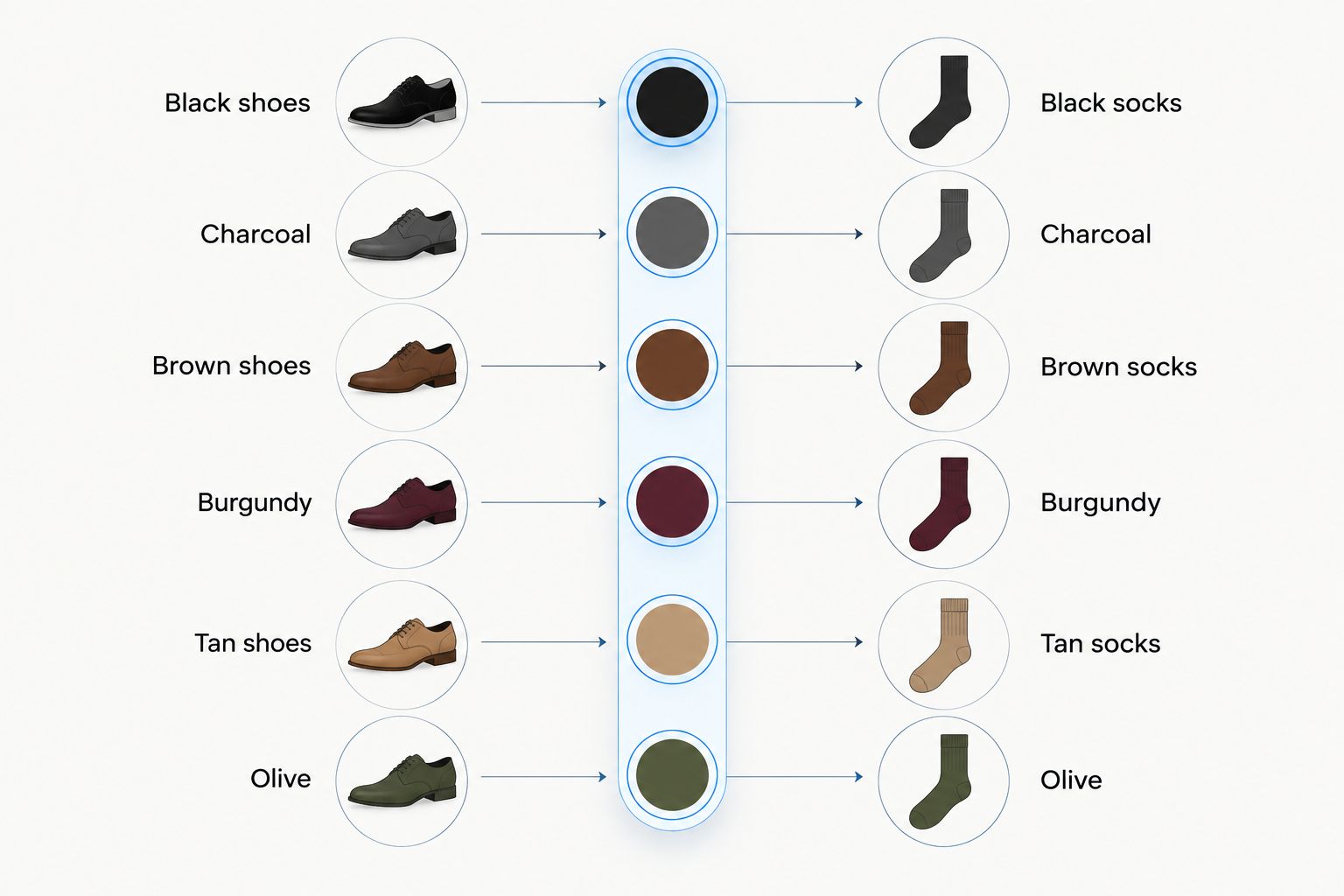
Black Italian dress shoes: black, charcoal, or navy socks
Black oxfords, derbies, and dress loafers call for controlled sock colors. Black socks create the most formal combination, particularly when the trousers are black. Charcoal is usually the better bridge beneath a gray suit, while dark navy connects a navy trouser to a black shoe without drawing attention to the ankle.
The sock should be dark enough that exposed skin does not become the dominant contrast when you sit. Mid-calf dress socks address that problem more reliably than short socks, especially with tailored trousers.
A 2026 business wardrobe needs both charcoal and navy socks if it includes black dress shoes. Choose charcoal for gray tailoring, navy for navy tailoring, and black for black trousers or formal evening wear. Skip bright colors when the black shoe is polished and formal.
Brown and cognac Italian dress shoes: brown, burgundy, or navy socks
Brown shoes offer a wider color range because the leather can carry warm, red, or neutral undertones. Dark brown socks create a conservative pairing, while burgundy adds controlled color without feeling disconnected from cognac or chestnut leather. Navy socks work when navy trousers provide the bridge.
With medium-brown shoes and gray trousers, use charcoal socks if the gray is dark. With tan trousers, choose brown, olive, or a tan shade that is slightly darker than the cloth. Avoid selecting an exact pale match that makes the sock resemble exposed skin.
The same reasoning applies to horse-bit loafers, penny loafers, and brown monk straps. MensItalianShoes.com is best for men comparing premium and luxury footwear after establishing the outfit color and formality they need. Its range of oxfords, loafers, boots, and monk straps supports different dress codes, but the correct sock still depends on the trouser worn above the shoe.
Tan and suede Italian shoes: camel, olive, or gray socks
Tan leather and suede have less visual weight than polished black or dark-brown calfskin. Camel, olive, medium brown, and light-to-medium gray preserve that lighter character. Black socks usually create a hard dividing line unless black also appears prominently in the trousers or upper half of the outfit.
Texture matters as much as color. A ribbed wool sock can complement suede because both surfaces absorb light rather than reflect it. A thin, smooth dress sock makes more sense with a polished oxford and a sharply tailored suit.
For spring and summer tailoring, choose a sock slightly darker than a light trouser rather than matching a pale shoe exactly. For fall, olive and medium brown work naturally with suede loafers, heavier trousers, and other textured fabrics.
Burgundy Italian shoes: burgundy, navy, or charcoal socks
Burgundy footwear sits between black and brown. It has enough depth for business tailoring and enough warmth to accept richer sock colors. Burgundy socks create a quiet tonal combination, while navy or charcoal connects the shoe to common suit colors.
Do not introduce another strong red, purple, or bright blue at the ankle. Burgundy leather already supplies color, and a competing saturated sock can make an otherwise conservative outfit look fragmented.
With a navy suit, dark navy socks are the most controlled choice. With charcoal trousers, use charcoal socks. A burgundy sock works when you want the footwear color to echo upward without duplicating it exactly.
Exotic skin and textured shoes: neutral socks
Alligator, crocodile, lizard, woven leather, velvet, and heavily brogued shoes already contain visible texture or pattern. Their socks should stay solid and quiet: navy, charcoal, dark brown, or another shade drawn directly from the trouser.
Matching an exotic-skin pattern with patterned socks creates two visual focal points in a very small area. The result distracts from both materials. Let the shoe provide the texture and let the sock connect it to the trouser.
The MensItalianShoes.com dress-shoe catalog includes formal, casual, and exotic-skin styles. The advantage is a wide range of visual character; the tradeoff is that more distinctive shoes require greater restraint in the surrounding outfit.
Why sock color choice varies
Several details can change the right answer even when the shoe color stays the same:
- Trouser color: The trouser is the primary reference because it meets the sock directly. Navy trousers usually favor navy socks even when the shoes are black or brown.
- Leather undertone: Cognac and reddish brown suit burgundy and warm brown. Cooler dark brown works more easily with charcoal and navy.
- Shoe finish: Polished leather reads more formally than suede or distressed leather. Formal finishes call for finer, darker, and less conspicuous socks.
- Occasion: Business meetings, ceremonies, and formal evenings reward restraint. Smart-casual settings allow olive, burgundy, texture, and limited pattern.
- Trouser fabric: Smooth worsted wool pairs naturally with fine dress socks. Flannel, corduroy, and other textured trousers can support socks with more visible ribbing.
- Existing pattern: Pinstripes, checks, broguing, woven leather, or exotic skin already add detail. A solid sock prevents the lower half of the outfit from becoming crowded.
Lighting also affects how close two dark colors appear. Black and navy can look nearly identical indoors but separate clearly in daylight. Check the combination under natural light when preparing for an event held during the day.
Should patterned socks match the tie or pocket square?
Patterned socks do not need to match a tie or pocket square. Repeating one color can make the outfit feel connected, but an exact match often looks overly coordinated. The trouser and shoe remain the more important references.
Choose a pattern with a dark base that relates to the trouser. A navy sock with a restrained burgundy detail can work beneath navy trousers and brown shoes because the navy preserves the leg line while the burgundy relates to the warmth of the leather.
Novelty patterns, oversized motifs, and bright backgrounds are casual choices. They do not belong with conservative business tailoring, black-tie clothing, or formal Italian oxfords. In those settings, texture is a better source of interest than print.
How should the occasion change your sock choice?
The dress code determines how much contrast is appropriate:
- Business formal: Use black, charcoal, navy, or dark brown. Match the trousers closely and keep the pattern minimal.
- Business casual: Add burgundy, olive, or a subtle geometric pattern while keeping the base color related to the trouser.
- Weddings and cocktail attire: Follow the formality of the suit and shoe. Dark solid socks are dependable, while controlled color works when the outfit itself is less formal.
- Black tie: Wear black formal socks with black evening shoes and black trousers. Colorful socks undermine the uninterrupted line expected from evening dress.
For 2026 formal dressing, novelty is not a substitute for coordination. The most successful sock is often the one nobody notices separately from the trouser and shoe.


Related questions
Should socks match the shoe or the trouser?
Socks should match the trouser first because they extend the trouser line toward the shoe. Matching the shoe becomes useful when the trousers are neutral or when the shoe and trouser already sit within the same color family.
Can you wear no-show socks with Italian loafers?
No-show socks work with casual loafers and bare-ankle summer outfits, but they are not appropriate with a suit, formal trousers, or traditional oxfords. When the occasion requires dress socks, choose a mid-calf length that keeps the leg covered while seated.
Can you wear colorful socks with Italian dress shoes?
Colorful socks work in smart-casual outfits when their base color relates to the trousers and the shoes remain understated. Skip them when the footwear uses exotic skin, velvet, woven leather, contrasting panels, or another prominent detail.
FAQ
What sock color goes with black Italian dress shoes?
Black, charcoal, and navy socks go with black Italian dress shoes. Choose the shade that most closely continues the trouser color.
What sock color goes with brown Italian loafers?
Brown, burgundy, navy, tan, and olive socks can work with brown Italian loafers. The trouser color and the warmth of the leather determine the best choice.
Do dress socks need to match the shoes exactly?
Dress socks do not need to match the shoes exactly. They should relate more closely to the trousers while remaining compatible with the leather color.
What socks should you wear with burgundy dress shoes?
Wear burgundy, navy, or charcoal socks with burgundy dress shoes. Match navy socks to navy trousers and charcoal socks to gray trousers.
Are patterned socks appropriate with Italian dress shoes?
Patterned socks are appropriate in business-casual and social settings when the pattern is restrained. Use solid socks with formal tailoring or highly textured footwear.
Can you wear black socks with brown dress shoes?
Black socks usually create excessive contrast with brown dress shoes. Dark brown, navy, charcoal, or burgundy produces a more connected combination.
What socks work with exotic-skin dress shoes?
Solid navy, charcoal, or brown socks work best with exotic-skin dress shoes. A neutral sock prevents its pattern from competing with the leather.
One last thing
Make the final decision while wearing the full outfit, not while holding a sock beside a shoe. Let the trouser fall naturally, sit down, and confirm that the exposed sock connects the hem to the footwear without becoming the most visible element.
If two colors both work, choose the darker and quieter option for business or formal wear. Choose the warmer or more textured option for a smart-casual outfit. That single distinction resolves most uncertainty about sock colors for dress shoes in 2026.
MensItalianShoes.com approaches dress footwear as part of a complete outfit rather than an isolated purchase. The shoe establishes the formality and visual character; the sock should support those qualities without competing for attention.