

Men with plantar fasciitis need Italian dress shoes built around a flexible outsole, a cushioned insole, and enough room through the forefoot to keep pressure off an inflamed arch — not a shoe marketed as "orthopedic." The right pair lets you meet a business dress code without trading comfort for polish; the wrong pair, especially a thin-soled cap-toe oxford, can turn a mild flare-up into a limp by the end of a workday.
- Italian dress shoes for plantar fasciitis need a flexible sole and cushioned insole, not a rigid formal oxford.
- Loafers and derbies, like the Bruno Magli Trieste horsebit loafer, flex more naturally than a lace-up cap-toe.
- A dress sneaker such as the Magnanni Arco carries more underfoot cushioning for days spent standing.
- Get measured for width in 2026 before buying online — length alone hides a tight, painful fit.
- Orthotic inserts fit better in loafers and derbies with removable insoles than in slim, fixed European lasts.
Why This Matters for Men with Plantar Fasciitis
Plantar fasciitis inflames the band of tissue running along the bottom of the foot, and up to one in ten adults deal with it at some point, according to the American Podiatric Medical Association. Dress shoes complicate the condition because most formal lasts are cut narrow and the sole is built stiff on purpose — the opposite of what a strained arch needs.
Standing through a full workday in a shoe that won't bend at the ball of the foot forces the plantar fascia to absorb shock it was never meant to take. Getting measured for width before you buy, instead of guessing from your usual size, solves more comfort problems than any insert added afterward.
Men's Italian Shoes carries dress shoes across enough constructions — loafer, derby, oxford, dress sneaker — that the fix is usually picking the right category, not abandoning Italian dress shoes altogether.
How to Choose Italian Dress Shoes for Plantar Fasciitis
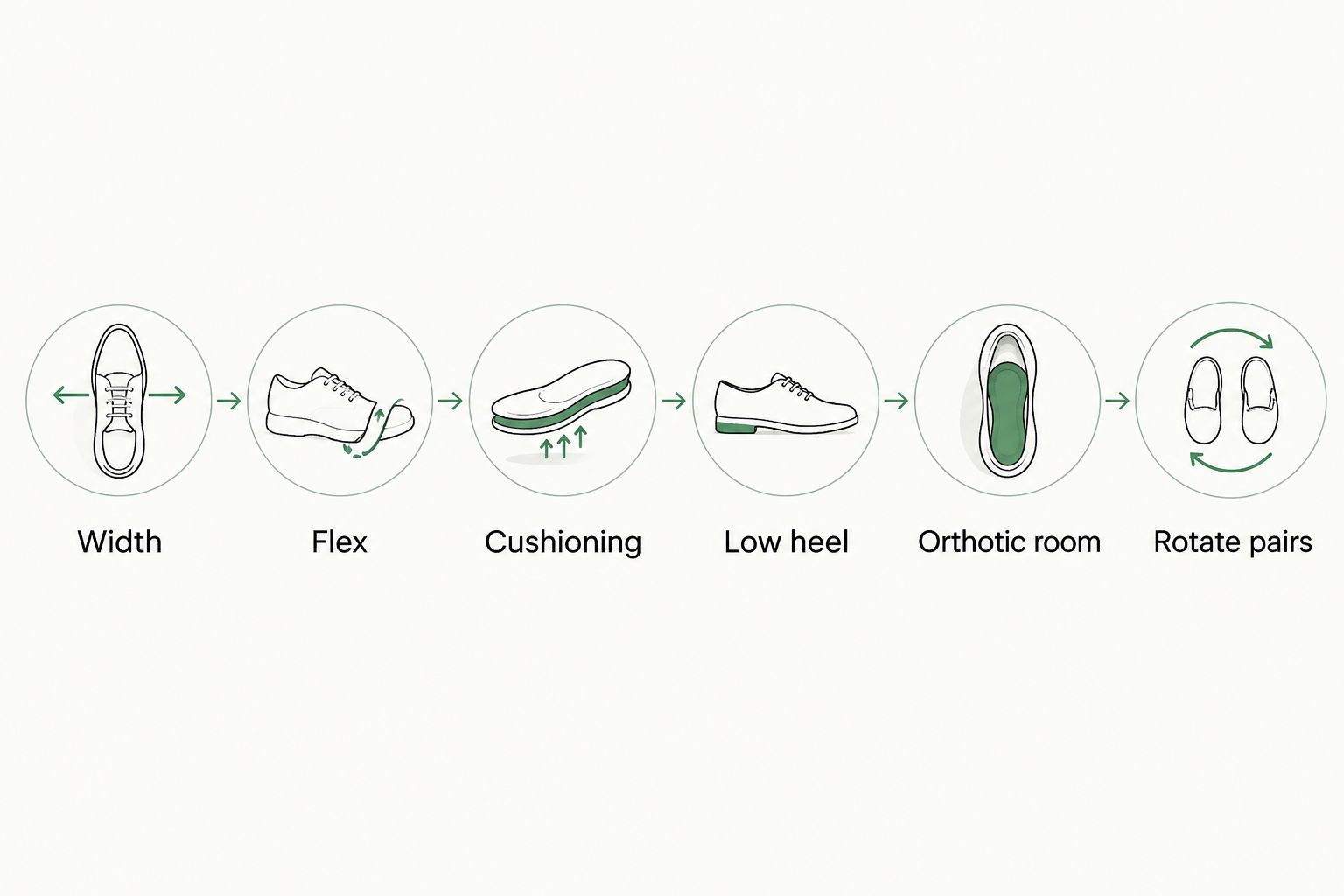
1. Get Measured for Width, Not Just Length
Length tells you almost nothing about how a shoe will feel on an inflamed arch. Width, especially through the ball of the foot, decides whether the shoe squeezes the exact tissue that's already irritated.
- Have both feet measured at the end of the day, when swelling peaks.
- Note ball-of-foot width, not just heel-to-toe length.
- Size up half a size if a last runs narrow through the vamp.
- Re-measure yearly — foot width shifts with age and weight changes.
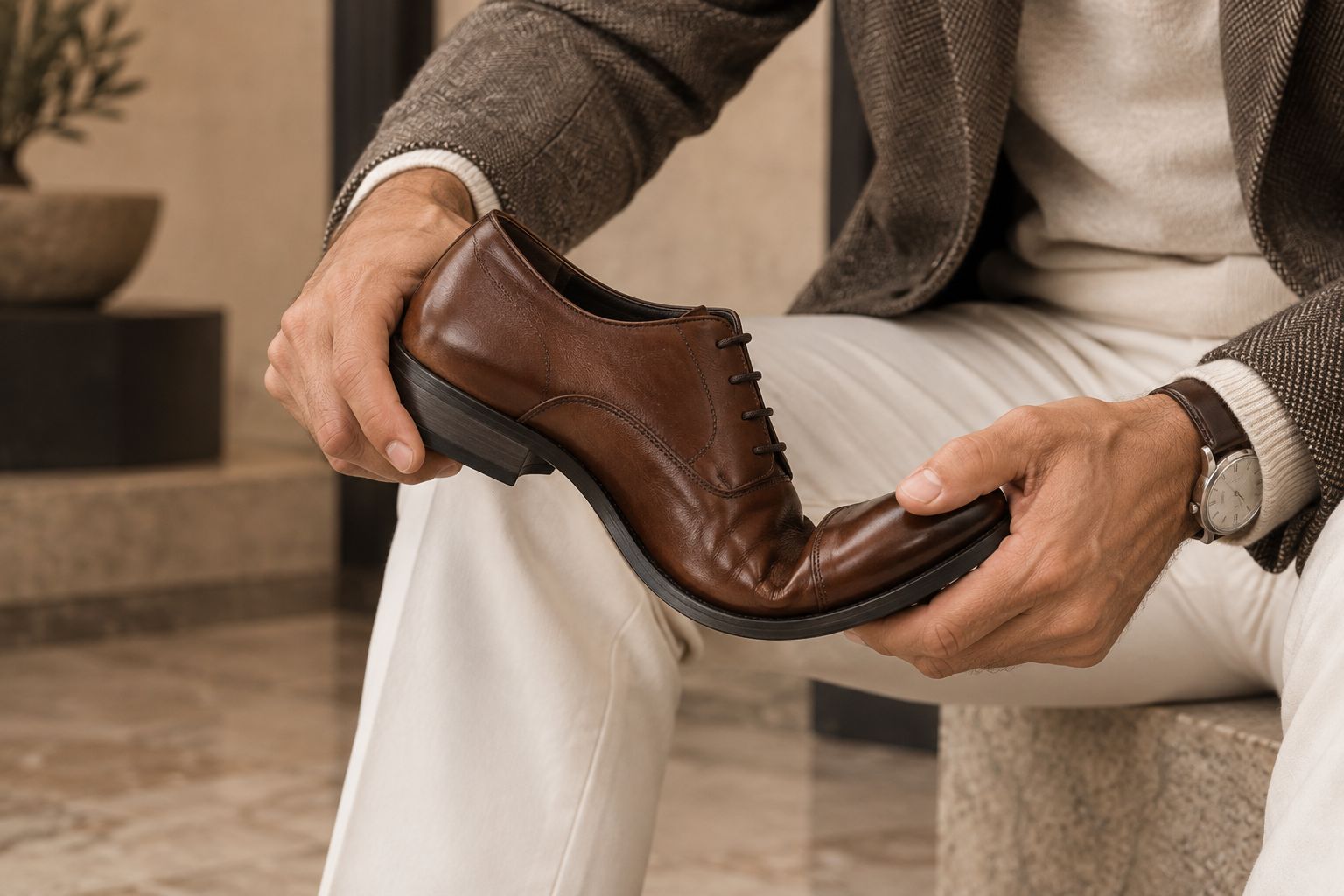
2. Test How the Sole Flexes at the Ball of the Foot
A sole that only bends at the shank forces the plantar fascia to stretch with every step, all day, every day. A single flex line at the forefoot does the opposite — it lets the foot move the way it wants to.
- Bend the shoe by hand in the store, or check the flex point on the product photos before buying online.
- Favor one clear flex line at the ball of the foot over a stiff, uniform sole.
- Avoid extended shanks that run the full length of formal oxfords.
- Choose a leather or lightweight rubber outsole over a stacked leather sole for daily wear.
3. Prioritize Cushioned or Removable Insoles
The insole is doing more work for a man with plantar fasciitis than for anyone else in the room. A thin leather sock lining looks refined but offers almost no shock absorption.
- Look for a cushioned footbed rather than a bare leather lining.
- A removable insole leaves room to add an orthotic later without buying a new pair.
- A leather dress sneaker, such as the Magnanni Arco, typically carries more underfoot cushioning than a formal oxford by design.
- Avoid a hard, unpadded heel counter that presses directly on the Achilles.
4. Choose Loafers and Derbies Over Rigid Cap-Toe Oxfords
Construction decides comfort more than country of origin does. Derbies and loafers use fewer rigid seams and a softer upper than a laced cap-toe oxford, and that difference shows up by mid-afternoon.
- Derbies open wider at the lacing, giving more room to adjust for swelling through the day.
- A slip-on loafer, like the Bruno Magli Trieste horsebit loafer, uses a softer upper with fewer stiff panels than a lace-up oxford.
- A monk-strap loafer with an adjustable buckle lets you loosen the fit mid-day without removing the shoe.
- Reserve whole-cut or cap-toe oxfords for occasions rather than daily office wear.
5. Keep the Heel Low and Stable
A completely flat sole is not automatically the safer choice. A heel roughly a half-inch to one inch high, sitting on a wide, stable base, is generally easier on the plantar fascia than either a flat sole or a taller block heel.
- Avoid a sharply tapered heel base — a wider base spreads pressure more evenly across the foot.
- Skip stacked leather heels, which wear unevenly and gradually tilt the foot.
- Check that the heel sits level on a flat surface before you buy.
6. Add an Orthotic Insert Where the Shoe Allows
An orthotic only works if the shoe has room for it. Cramming an insert into a fixed-insole shoe usually just pushes the foot up into a tighter toe box.
- Full-length inserts need a removable factory insole to fit without crowding the toe.
- Half-length heel cups fit inside most loafers without changing the fit through the forefoot.
- Bring the orthotic to any fitting so the shoe is sized around it, not around your foot alone.
7. Break In New Leather Gradually
New leather is stiffest exactly where a strained plantar fascia needs the most give. Rushing the break-in period undoes most of the benefit of choosing a flexible construction in the first place.
- Wear a new pair two to three hours at a time during the first week.
- Alternate with a broken-in pair instead of wearing new shoes for a full workday.
- Use a shoe tree overnight to help the leather settle to your foot's shape faster.
8. Rotate Pairs and Resole Before the Cushioning Packs Out
A compressed insole stops cushioning the moment it flattens, whether the shoe is a year old or five years old.
- Owning at least two pairs lets the insole and midsole recover between wears.
- Resole or replace a pair once the heel wears unevenly — an uneven strike reintroduces the exact strain you're trying to avoid.
- Check the insole for compression; a flattened footbed no longer cushions the way it did new.
Comparison: Dress Shoe Styles for Plantar Fasciitis
| Style | Best For | Key Limitation |
|---|---|---|
| Loafers | Daily wear, easy on and off, adjustable buckle options | Less structural support than a lace-up for all-day standing |
| Derbies | Wider lacing for swelling, room to add orthotics | Bulkier profile than a slim oxford |
| Dress sneakers | Maximum cushioning, business-casual settings | Not appropriate for traditional business formal dress codes |
| Cap-toe oxfords | Occasion wear, black-tie and formal dress codes | Stiffest sole and narrowest forefoot of the group |
| Boots | Cold-weather wear, added ankle support | Heavier and warmer for all-day office wear |


Common Mistakes Men with Plantar Fasciitis Make
- Buying by length alone. Ignoring width and then blaming the shoe for pain that's actually a fit problem.
- Picking a cap-toe oxford for daily wear because it reads as more "business appropriate," then switching to sneakers by lunch anyway.
- Skipping the break-in period. Wearing new leather for a full workday stiffens exactly where the fascia needs give.
- Forcing an orthotic into a fixed-insole shoe, which usually just pushes the foot up into a tighter toe box instead of adding support.
- Wearing the same pair every day, so the insole never gets a chance to decompress overnight.
FAQ
What is the best type of Italian dress shoe for plantar fasciitis?
A loafer or derby with a flexible sole and cushioned insole works better than a rigid cap-toe oxford for plantar fasciitis. Look for a removable insole so you can add an orthotic later if needed.
Are Italian dress shoes generally comfortable for plantar fasciitis?
Fit and construction matter more than country of origin — a well-made loafer with a flexible sole can be comfortable, while a stiff, narrow oxford from the same maker will not. Judge each pair on sole flex, width, and cushioning rather than the label alone.
Can I wear orthotic inserts inside Italian dress shoes?
Yes, as long as the shoe has a removable factory insole and enough toe-box room to fit the insert. Bring the orthotic to any fitting so the fit is judged with it already in place.
Is a flat heel better for plantar fasciitis?
Not necessarily — a low, stable heel between roughly a half-inch and one inch is generally more comfortable than either a flat sole or a tall block heel. Avoid a sharply tapered heel base regardless of height.
Should I size up for plantar fasciitis?
Sizing up half a size helps when a last runs narrow through the ball of the foot, but width matters more than length. Get measured for width specifically instead of assuming a longer size will fix the fit.
Are dress sneakers acceptable for business dress codes?
A leather dress sneaker, such as the Magnanni Arco, works in business-casual settings but is not appropriate for traditional business formal dress codes. Reserve sneakers for days without client meetings or courtroom appearances.
How long does it take to break in new dress shoes with plantar fasciitis?
Plan on two to three weeks of gradual wear, starting with two to three hours at a time, before a new pair feels fully broken in. Wearing new leather for a full workday too soon adds unnecessary strain to an already inflamed fascia.
Do loafers or oxfords work better for plantar fasciitis?
Loafers generally work better because their construction has fewer rigid seams and a softer upper than a lace-up oxford. Reserve oxfords, especially cap-toe styles, for occasions rather than daily wear if you have plantar fasciitis.
One Last Thing
Goodyear-welt construction matters more to a man with plantar fasciitis than to anyone else buying dress shoes in 2026, because it allows a full resole once the insole compresses instead of forcing a full replacement. The insole is the first thing to wear out on a foot that needs constant cushioning — buying a pair that can be rebuilt, rather than discarded, is the more practical long-term move.