

Men with high arches need Italian dress shoes built with adjustable or roomier closures across the instep, since a rigid, low-cut vamp presses directly on the arch and cuts off circulation within an hour of wear. A high instep changes fit math more than length or width does: the same size that fits a flat-arched foot can feel a full size too small once the arch pushes up against the tongue or vamp.
- Monk strap loafers and derbies beat oxfords for high arches because their vamps open wider over the instep.
- A shoe that fits at the toe but pinches at the arch is the wrong size, not the wrong brand.
- Half sizes up plus a wider width class solve more high-arch fit problems than any insole.
- Break-in time matters more with a raised instep — leather needs to stretch across a curve, not just flatten.
- Italian dress shoes for high arches should be tested standing and walking, never judged while seated.
Why this matters for men with high arches
A high arch lifts the middle of the foot and forces the top of the foot, the instep, higher off the ground than average. Dress shoes built on standard lasts assume a lower, flatter instep profile. When that assumption is wrong, the shoe's tongue or vamp digs into the top of the foot before the heel and toe box are anywhere near full.
This is why men with high arches often report a shoe feels "too small" in the middle even when the length and width read correctly on a Brannock device. The fix isn't a bigger shoe across the board — it's a shoe with more room specifically where the instep sits, which is a construction and closure question as much as a sizing one. If you haven't measured your foot properly in a while, start with a guide to measure your foot for Italian dress shoes before you assume you know your size.
Measure your instep height before you shop
Instep height is the missing number on most size charts, and it's the one that matters most for this foot type. Take it seriously before buying online.
- Wrap a flexible tape measure over the highest point of your arch, from one side of the foot to the other, while standing with weight on the foot.
- Compare that measurement across a few pairs you already own — the ones that pinch versus the ones that don't usually differ by a half inch or more at this point.
- Note whether the tight pairs share a low-cut vamp or a stiff, unlined leather upper.
- Try shoes on later in the day, when feet are slightly more swollen and closer to their largest natural state.
- Stand and shift weight onto the ball of the foot to see if the instep area tightens noticeably.
Choose closures that flex with a high instep
The closure style of a dress shoe decides how much the upper can adjust to a raised instep. Lace-up styles with more eyelets and open construction give more control than slip-ons with a fixed opening.
- Derbies open wider than oxfords because their lacing panels sit on top of the vamp rather than stitched into it, giving more room to loosen or tighten.
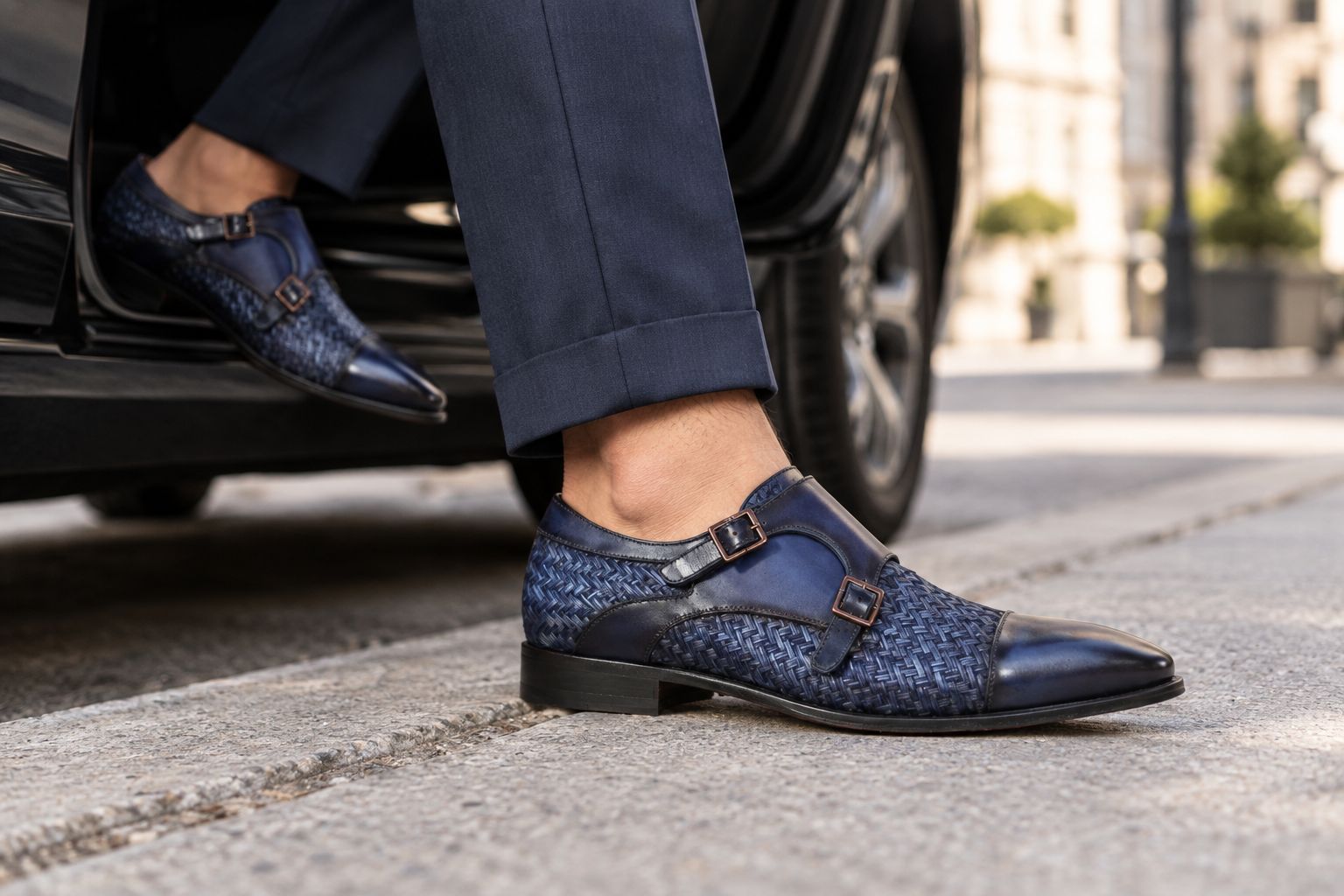
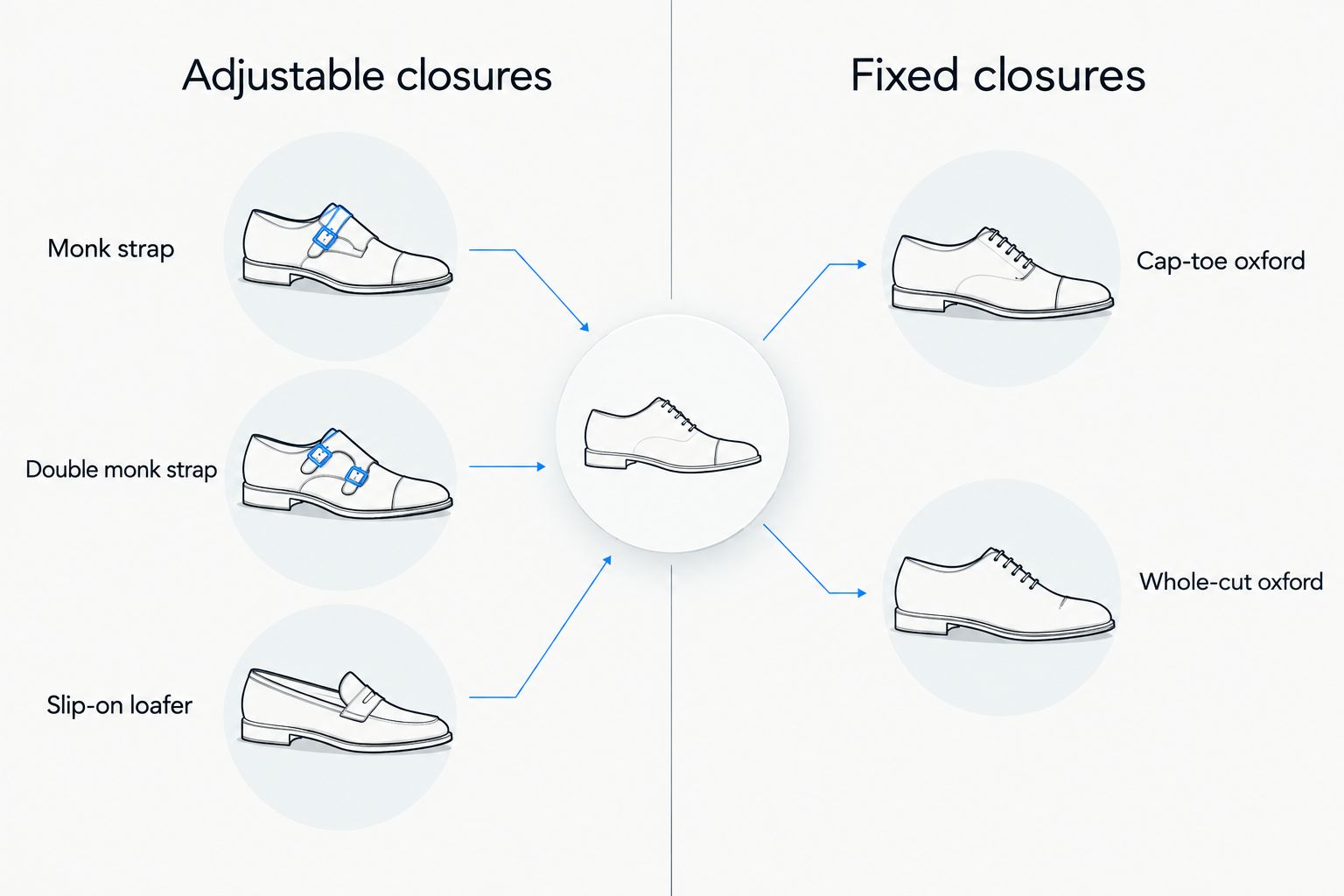
- Monk strap shoes use one or two buckled straps instead of laces, which lets you set the exact tension over the instep rather than relying on a fixed lace pattern.
- Slip-on loafers with elastic or stretch panels flex naturally over a raised instep without any adjustment needed.
- Cap-toe oxfords are the least forgiving option here — their closed lacing and low vamp are built for a flatter foot profile.
- Double monk straps give the widest adjustment range of any closure type, useful when instep height varies by the pound during the day.
If a loafer needs a shoehorn just to get your foot in, the vamp is too shallow for a high instep.
Pick the right width, not just a bigger length
Going up a full size to solve instep tightness usually creates a new problem: excess length at the toe. Width is the more precise lever.
- Ask for width sizing (C, D, E, EE) rather than assuming a men's 10 fits the same across every last.
- A wider width class adds room across the whole foot, including the instep, without lengthening the toe box.
- If width sizing isn't listed, look at the brand's known last shape — rounder, fuller lasts run roomier through the instep than narrow, pointed ones.
- Compare against a pair you already know runs true to size before ordering a new brand.
- Read the full breakdown on how to choose the right shoe width if you've never bought outside a standard D width.
Favor construction with give in the vamp
How a shoe is built affects how much the upper can move with your foot over time. Stiffer construction resists stretching in exactly the spot a high arch needs it.
- Soft, supple leather uppers stretch more readily over the instep than stiff or heavily lined leather.
- Unlined or lightly lined shoes flex faster than fully lined dress shoes, which hold their original shape longer.
- A Blake-stitched shoe generally sits lower to the ground and flexes more easily through the sole and upper than a heavier Goodyear-welted shoe.
- Suede has more natural give than smooth calfskin, which matters if your instep height changes throughout the day.


Break in new pairs before wearing them all day
A high instep needs the leather to stretch in a specific direction, over the arch, and that takes deliberate break-in rather than hope.
- Wear new shoes around the house for 30 to 60 minutes at a time before a full workday.
- Flex the shoe by hand at the vamp crease to loosen the leather before the first wear.
- If a pair is tight only at the instep after a week of light wear, a shoe stretcher with an instep bunion plug targets that exact spot.
- For leather that's still too tight after normal break-in, a professional stretch job that focuses on the vamp works faster than continued wear. Full guidance is in how to stretch leather shoes that are too tight.
Use insoles and shoe trees that respect the arch
Insoles solve arch support; they don't solve instep tightness, and confusing the two wastes money on the wrong fix.
- A thin, low-profile insole adds arch support without raising the foot enough to worsen instep pressure.
- Thick orthotic inserts can backfire in dress shoes by pushing the foot higher into an already-tight vamp.
- Cedar shoe trees inserted immediately after wear help the leather dry and hold its stretched shape rather than shrinking back overnight.
- Avoid trees with an aggressive instep hump if your shoes already fit snugly there — they can overstretch one spot unevenly.
Test the fit standing and walking, not just seated
Instep pressure often doesn't show up until weight and movement are involved, which is exactly why seated fitting rooms give false confidence.
- Stand fully upright and walk the length of a room before deciding on fit.
- Flex the foot as if climbing a step — this is when a tight vamp announces itself.
- Wear the socks you'd actually wear with the shoe, since sock thickness changes how much room the instep has.
- If your foot is swelling or tingling after five minutes of walking, that pair is not the right one regardless of size on the box.
Closure and style options for high insteps
| Option | Best for | Key limitation |
|---|---|---|
| Monk strap loafers | Precise instep tension control | Buckle placement varies by brand and last |
| Double monk straps | Widest adjustment range | Slightly more casual than a single strap |
| Derby dress shoes | Open lacing that loosens easily | Reads less formal than an oxford |
| Slip-on suede loafers | Natural stretch with no adjustment needed | Suede shows wear faster than smooth leather |
| Cap-toe oxfords | Formal events, low insteps | Fixed lacing rarely accommodates a high arch well |
Common mistakes men with high arches make
- Buying a half size up and stopping there. Length isn't the problem — instep height is, and a longer shoe with the same low vamp still pinches at the same spot.
- Choosing oxfords for formal events out of habit. A monk strap or derby reads nearly as formal in 2026 menswear and fits a high arch far better.
- Skipping the standing test. A shoe that feels fine seated in a shop chair can tighten noticeably once weight and walking are added.
- Adding a thick orthotic without checking vamp height first. This pushes the foot higher into a shoe that was already snug at the instep, making the problem worse, not better.
- Giving up on a brand after one bad-fitting last. Instep room varies by shoe model within the same brand — a different last from the same maker can fit completely differently.
FAQ
What are the best Italian dress shoes for high arches?
Monk strap loafers and open-lacing derbies work best for high arches because their closures adjust or open wider over the instep than a fixed oxford lacing does. Look for soft, lightly lined leather uppers, which flex more easily over a raised instep than stiff, fully lined construction.
Is a half size up enough to fix high-arch discomfort?
No, a half size up only adds length, not room across the instep. A wider width class or an adjustable closure like a monk strap solves instep tightness more directly than sizing up alone.
Do oxfords work for men with high arches?
Cap-toe and whole-cut oxfords are the hardest style for a high instep because their lacing is closed and low across the vamp. A derby with open lacing panels is a better formal alternative for the same occasion.
Should men with high arches use orthotic insoles in dress shoes?
Thin, low-profile insoles can add arch support without raising the foot much, but thick orthotics often push the instep higher into an already tight vamp. Fit the shoe to the instep first, then add support if needed.
How long does it take to break in a dress shoe for a high arch?
Most leather uppers need several short wear sessions of 30 to 60 minutes over one to two weeks before the vamp stretches over a raised instep. A professional stretch targeted at the vamp speeds this up if normal wear isn't enough after that period.
Are monk strap shoes better than laces for high insteps?
Monk strap shoes let you set exact tension over the instep with a buckle, which gives more control than a fixed lace pattern. Double monk straps offer the widest adjustment range of any closure style sold today.
Can suede loafers help with a high instep?
Yes, suede has more natural give than smooth calfskin and stretches more readily over a raised instep without formal stretching. This makes suede slip-ons a comfortable option for men who don't want a buckle or laces.
Do high arches need a different shoe width, not just a different size?
Width matters more than length for high-arch discomfort in most cases, since a wider width class adds room through the instep without lengthening the toe box. Ask for width sizing (C, D, E, EE) rather than assuming a standard D fits.
One last thing
The instep, not the toe box, is where most high-arch fit problems actually live — check that measurement first the next time you buy, and a lot of the guesswork around sizing disappears. A shoe with an adjustable buckle across the vamp will almost always outperform a laced oxford for this foot type, no matter how well the oxford is built.