

Italian dress shoes for men with small feet — generally U.S. sizes 5 through 7 — fit correctly when the last is built for those proportions, not sized down from a bigger pattern. A shoe scaled from a size 9 last carries a longer vamp, steeper toe spring, and a wider heel counter than a foot two sizes smaller actually needs, and no insole fixes that mismatch after the fact.
- Italian dress shoes for men with small feet fit best in true U.S. sizes 5 to 7, built on a last scaled to that size, not a large last sized down.
- A rounded or almond toe reads more proportionate on a small foot than a long, pointed oxford toe.
- Measure length and width before buying online; Italian sizing often runs differently than mainstream American brands.
- Loafers and single monk straps from Mezlan, Magnanni, and Ambrogio give a slimmer profile than heavy derby boots.
- Never size down a full number to fix width — that shifts toe spring and heel pitch and creates new fit problems.
Why Italian dress shoes matter for men with small feet
Mainstream department-store brands typically stop their standard run around a size 7, and the sizes below that are frequently the same last scaled down rather than redrawn for a genuinely smaller foot. That leaves men with small feet choosing between shoes that gap at the heel, bunch at the toe, or simply aren't stocked in a workable size at all.
Italian and Italian-inspired makers sold through MensItalianShoes.com — Mezlan, Magnanni, Bruno Magli, and Ambrogio among them — build across a wider size range on lasts drawn with length and width considered together. That matters more at the small end of a size chart, where a quarter inch of extra vamp or a half inch of extra heel width changes the entire look of the shoe, not just the comfort of it.
Italian dress shoes for small feet work when the last matches your proportions, not when you simply order a smaller number off a large-foot pattern.
Measure your foot length and width before you shop
Every decision below starts with an accurate measurement, not a size memorized from a different brand. Italian sizing runs on its own scale, and a size that fits a Bruno Magli loafer well can run a half size off a Mezlan derby.
- Measure both feet in the evening, when they're at their largest
- Stand on a printed chart or use a Brannock device rather than measuring seated
- Record width across the ball of the foot, not just heel-to-toe length
- Note any length difference between your left and right foot and size to the larger one
- Check your numbers against how to measure your foot for Italian dress shoes before you place an order, not after
Understand how last shape affects proportion
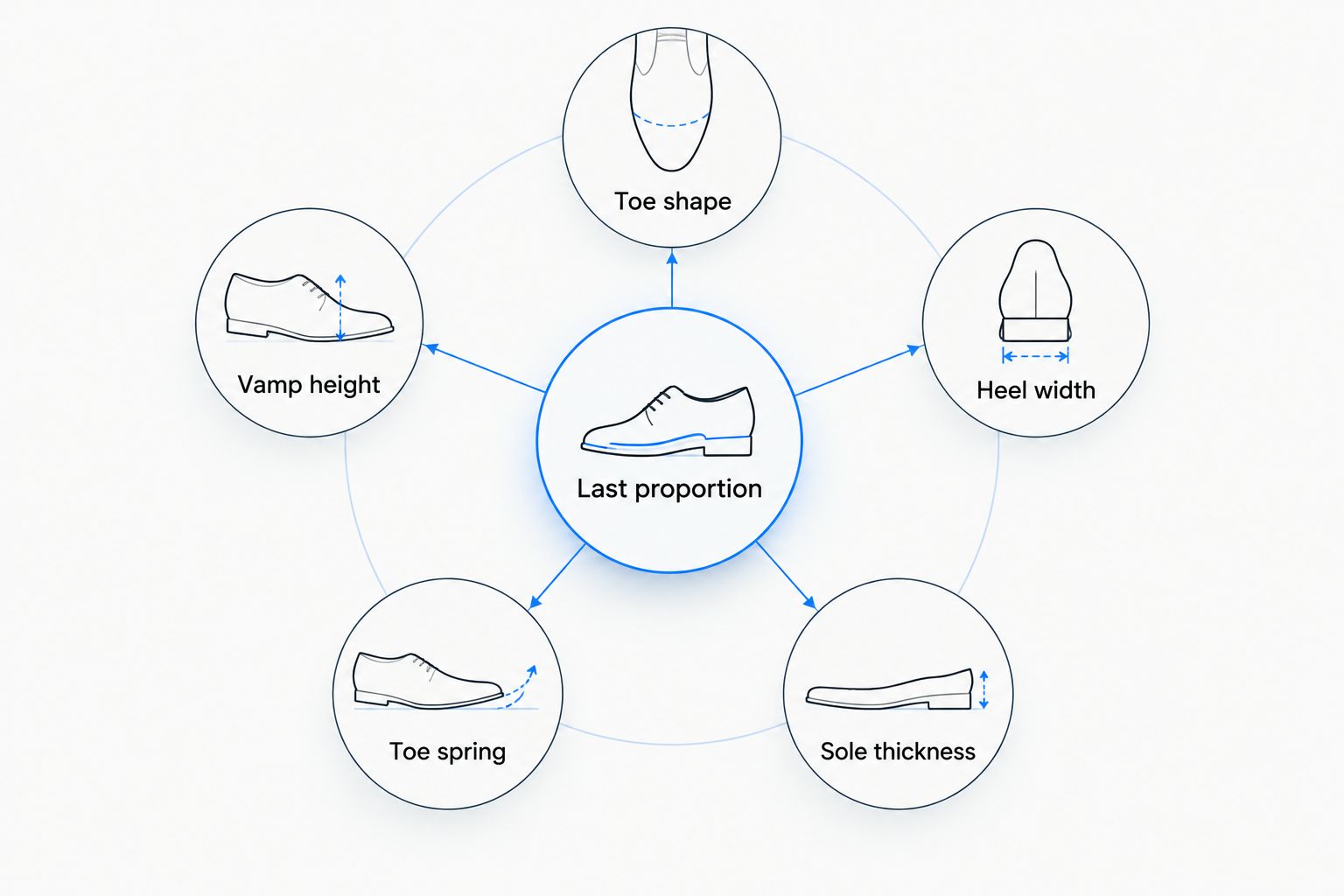
The last — the foot-shaped form a shoe is built on — decides how the finished shoe reads on your foot, and toe shape does more visual work than most buyers expect on a smaller size.
- A rounded or almond toe reads more proportionate on a small foot than a long, pointed toe
- A lower vamp exposes more of the foot and looks less bulky than a high-cut style
- Toe spring, the upward curve at the front, should stay moderate; a steep curve visually elongates the shoe
- A narrower heel counter keeps the back of the shoe in scale with the toe
- A thinner sole and welt keep the whole silhouette compact rather than adding visual length
Prioritize width alongside length, not size number alone
Small feet aren't automatically narrow feet, and treating the two problems as one leads to the wrong purchase more often than not.
- Check whether the brand publishes width options — narrow, medium, wide — rather than just numeric length
- If you're between sizes, size to length first and address width separately
- Read narrow-fit Italian dress shoes for men before assuming a small foot automatically means a narrow one
- Avoid ordering a full size down just to tighten width — it shifts toe spring and heel pitch, not just fit at the ball
- Ask the retailer for horizontal instep measurements if the published chart doesn't list them
Read the size chart in centimeters, not just the U.S. number
A chart built around actual foot length in centimeters is more reliable than a number carried over from a domestic brand.
- Compare your measured foot length in centimeters against the brand's own chart, not your last pair's size
- Check for brand-specific fit notes such as runs small, runs true, or runs narrow
- Confirm the retailer's exchange process before ordering online, since fit varies by last even within one brand
- Size from the chart, not habit, when trying a brand you haven't worn before
- Walk in the shoes indoors for an hour before deciding the fit is final
Adjust fit with tools before you downsize again
A shoe that's close but not perfect usually needs a small correction, not a different size entirely.
- Heel grips close gaps at the back without shortening the shoe
- Tongue pads tighten a loose vamp on an otherwise correct-length shoe
- A cobbler can stretch leather width a modest amount without touching overall length
- Insoles fill volume in a shoe that's correct in length but slightly roomy in width
- A too-small shoe bought to "grow into" never actually fits — return it rather than breaking it in
Choose styles built for compact proportions
Style choice affects how a smaller shoe reads on the foot as much as fit does.
- Penny loafers and horsebit loafers with a moderate toe stay proportionate on a smaller foot
- Single monk straps show less hardware than double monks, which can overwhelm a compact shoe
- Cap-toe oxfords with a shorter vamp read cleaner than long wingtip broguing
- Velvet and suede loafers in a rounded toe suit smaller feet well for evening wear
- Skip elongated whole-cut oxfords — the single unbroken vamp visually stretches the shoe
Comparing shoe options for smaller feet
Once length and width are dialed in, style choice decides how the shoe actually looks on a compact foot. The rounder, lower-vamp options below hold their proportion better than long lace-ups on a smaller last.
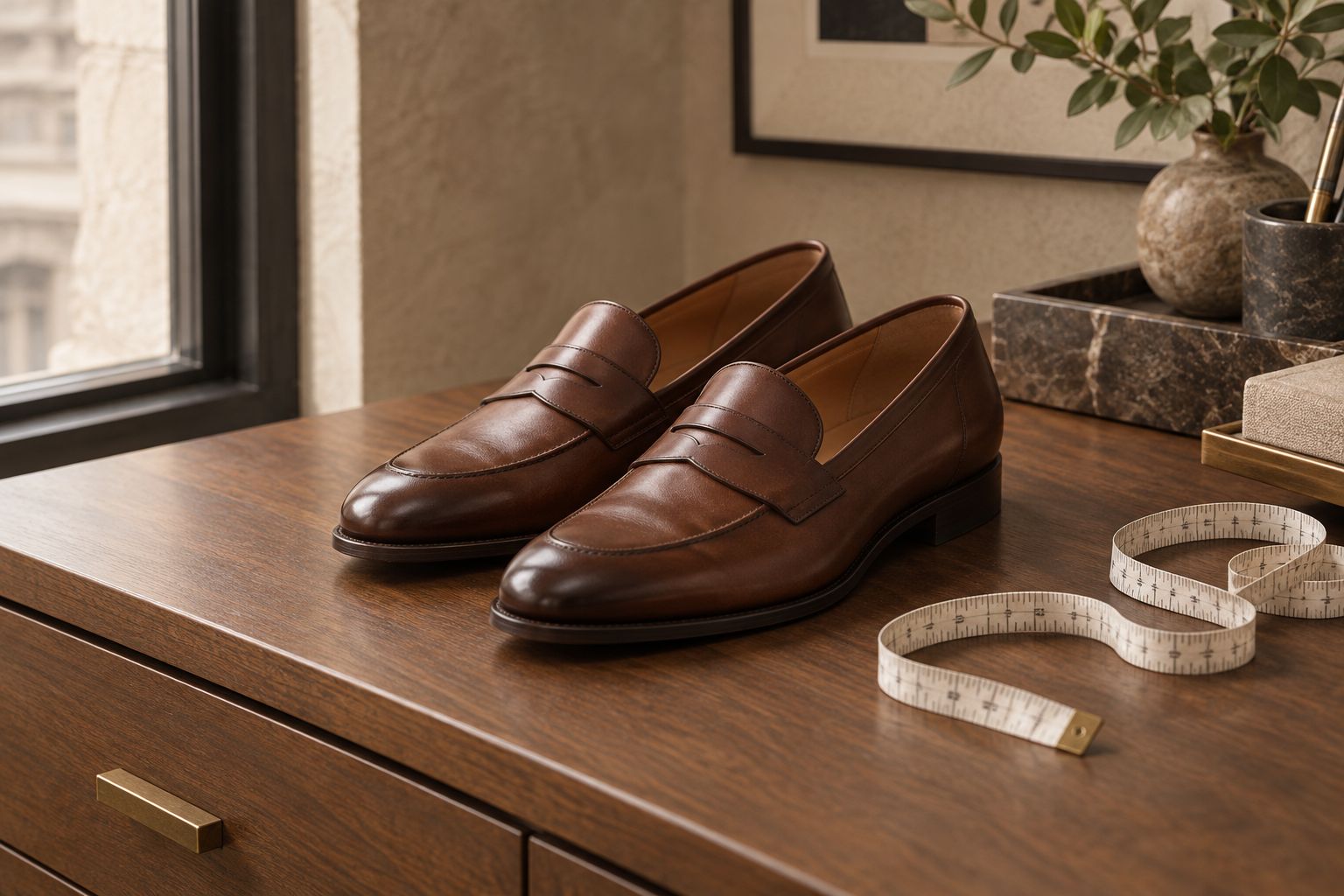
The table below compares four in-stock styles by toe shape and best use case, not by size availability, since fit still comes down to your own measurements.
| Style | Best for | Toe shape | Verdict |
|---|---|---|---|
| Ambrogio Glass Suede Slip-On Loafer | Smart-casual and evening wear | Rounded apron toe | Buy — the low-vamp suede build keeps a small foot from looking swallowed |
| Magnanni 22335 Black Velvet Loafer | Black-tie and formal evenings | Rounded velvet toe | Buy for a compact, dressy silhouette that suits a smaller frame |
| Mezlan Palomar 20688 Monk-Strap Loafer | Business formal, hybrid loafer-monk | Moderate round toe | Buy for a slimmer monk profile without bulky double buckles |
| Mezlan S20702 Woven Leather Oxford | Dressier lace-up occasions | Cap-toe, moderate length | Hold if you prefer loafers; the lace-up vamp adds length some smaller feet don't need |


Common mistakes men with small feet make
- Sizing down a full number to fix width — this shortens the toe box and moves toe spring, creating a new problem while barely solving the old one
- Choosing long, pointed toe styles — a sharp oxford toe exaggerates the disproportion between a small foot and a standard shoe length
- Ignoring vamp height — a high-cut vamp swallows a small foot visually, even when the length is correct
- Skipping heel-to-ball measurement — this leads to a loose heel even when the nominal length checks out on paper
- Substituting boys' or youth sizes for small men's dress shoes — proportions like heel width and arch support differ from adult men's lasts, and the fit rarely translates
FAQ
What's the best Italian dress shoe size for men with small feet?
There's no single best size — fit depends on your measured length and width against the specific brand's chart. Most men with small feet fall in U.S. sizes 5 through 7, and Mezlan, Magnanni, and Bruno Magli all build into that range.
Is sizing down a good fix for small feet?
No, sizing down a full number changes toe spring and heel pitch, not just length. Measure your actual foot and buy to that number rather than guessing down from a standard size.
How does Italian sizing compare to U.S. sizing?
Italian sizing often runs differently than mainstream American brands, so many men order based on centimeter charts rather than converted U.S. numbers. Always check the specific brand's own size chart before ordering.
Do loafers fit smaller feet better than oxfords?
Loafers with a low vamp and rounded toe generally read more proportionate on a small foot than long lace-up oxfords. A cap-toe oxford with a shorter vamp is a reasonable middle ground if you need a lace-up style.
Can boys' or youth shoe sizes work for a small-footed man?
Not reliably — youth lasts are built with different heel width and arch support than adult men's shoes. Stick to adult sizing from a brand that builds into smaller men's sizes instead.
How do I measure my foot for the most accurate fit?
Measure both feet in the evening using a printed chart or Brannock device, recording length and ball width separately. Size to the larger foot if there's a difference between the two.
What toe shape works best for a small foot?
A rounded or almond toe keeps the shoe's proportions closer to the actual size of a small foot than a long, pointed toe does. Pointed styles visually stretch the shoe beyond the foot inside it.
Should I buy narrow width if my feet are small but not narrow?
No — small and narrow are separate measurements, and a narrow-width shoe on a small-but-average-width foot will pinch at the ball. Check the brand's width options and size to your actual measurement, not an assumption.
One last thing
Small feet are frequently narrower at the heel than at the ball of the foot, which is why a shoe can measure correctly in length and still gap at the back. Snug heel counters and heel grips solve that far more reliably than going down a size — a shoe built one size smaller changes the whole last, not just the part that's loose.