

Men with diabetic feet buying Italian dress shoes need to prioritize depth, seam-free linings, and a wide, accommodating toe box well ahead of style. Standard European sizing and stiff toe caps built for a narrow silhouette work against a foot that swells during the day or has reduced sensation from neuropathy. The right pair still looks like a proper dress shoe — it just fits differently underneath.
- Italian dress shoes for diabetic feet need extra depth, soft calfskin or suede uppers, and minimal internal seams.
- Slip-on loafers and monk-strap loafers avoid the pressure points that tight laces create on a foot with reduced sensation.
- Measure both feet late in the day before ordering — diabetic-related swelling changes fit more than sizing charts account for.
- See a podiatrist before committing to a new dress shoe if you have neuropathy or circulation issues; fit outranks style.
Why Italian Dress Shoes Matter for Men with Diabetic Feet
Diabetes is commonly associated with peripheral neuropathy, a loss of sensation in the feet, and with reduced circulation. That combination means a shoe that rubs, pinches, or presses can cause a blister or sore that goes unnoticed until it's already a problem. A well-built Italian dress shoe with soft leather and generous depth reduces that risk; a stiff, narrow one built for a photograph rather than a foot increases it.
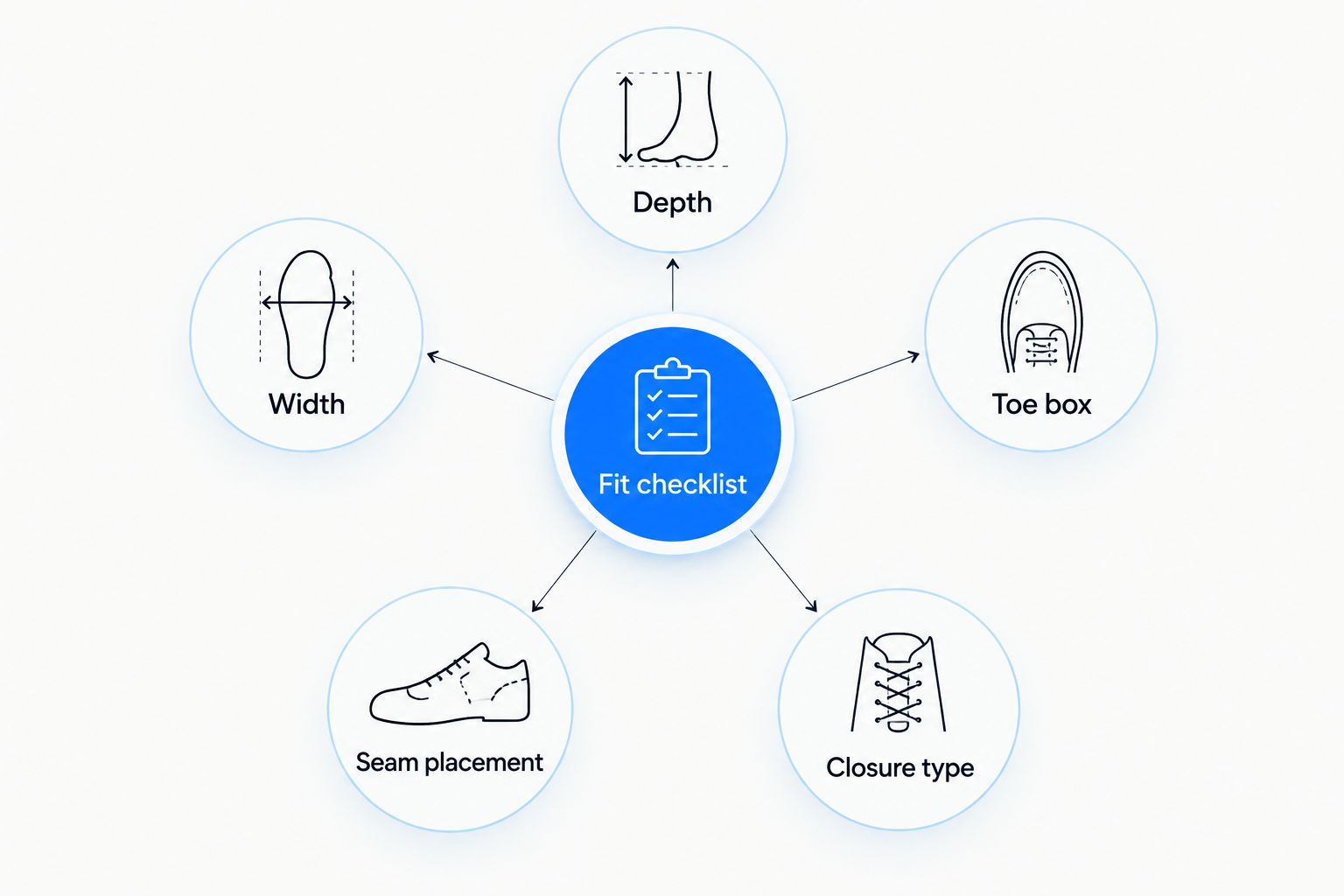
Before buying anything, measuring both feet properly matters more here than it does for the average buyer, because diabetic feet often swell unevenly or change size gradually. Length alone tells you almost nothing about whether a shoe will work — width, depth, and where the seams sit inside the shoe matter just as much in 2026 as they did a decade ago.
This guide covers what to look for, not medical advice. If you have diagnosed neuropathy or circulation problems, a podiatrist should weigh in on any new dress shoe before it becomes part of your regular rotation.
How to Choose Italian Dress Shoes for Diabetic Feet
The process below moves from the free steps — measuring, checking construction, inspecting your own feet — to the shoe choices that make the rest easier.
Measure Both Feet Late in the Day
Feet are smallest in the morning and largest by evening, and diabetic-related swelling exaggerates that swing. Measure in the afternoon or evening, not right after waking up.
- Trace both feet separately; most men have one foot slightly larger than the other
- Measure width at the widest part of the foot, not just heel-to-toe length
- Wear the socks you'd actually wear with dress shoes when measuring
- Re-measure every year or two, since foot shape shifts over time
- Note any swelling pattern (ankle, midfoot, toes) and mention it if buying in-store
Prioritize Depth and Width Over Style
A shoe with more internal volume accommodates swelling and orthotic inserts without cutting into the foot. Sleek, low-volume dress shoes look sharp but leave no margin.
- Look for wide-fit options before assuming a standard width will stretch to fit
- Favor rounder toe shapes over sharp, tapered lasts
- Check if there's room to add a thin insole without the shoe feeling tight
- Avoid shoes with a hard, structured toe cap if you have any loss of sensation
- Ask about half-sizes or wide widths rather than sizing down to "make it work"
“The old thumb's-width rule at the toe isn't enough for a diabetic foot — there should be no pressure anywhere across the width, not just room at the front.”
Choose Minimal-Seam, Soft-Lined Interiors
Internal stitching and seams are where blisters start on a foot that can't feel friction building. A shoe with a smooth, unlined interior or a soft leather lining reduces that risk.
- Run a hand inside the shoe before buying and feel for raised seams near the toes or heel
- Favor leather-lined interiors over synthetic linings, which tend to hold heat and moisture
- Check that the tongue and collar padding sits flush, not bunched
- Avoid shoes with visible topstitching running across the ball of the foot
- Break a new pair in gradually rather than wearing it for a full day right away
Favor Slip-On and Monk-Strap Closures Over Rigid Laces
Lace-up oxfords let you fine-tune tightness, but they also make it easy to cinch a shoe too tight without feeling it. Slip-on loafers and buckled monk straps remove that risk and are easier to put on without bending all the way down.
- Monk-strap loafers let you adjust for swelling day to day without retying laces
- Slip-on loafers avoid any lace pressure across the top of the foot entirely
- If you do wear lace-ups, loosen them fully before removing the shoe rather than forcing your foot out
- Soft suede and unstructured calfskin uppers flex with the foot instead of holding a rigid shape
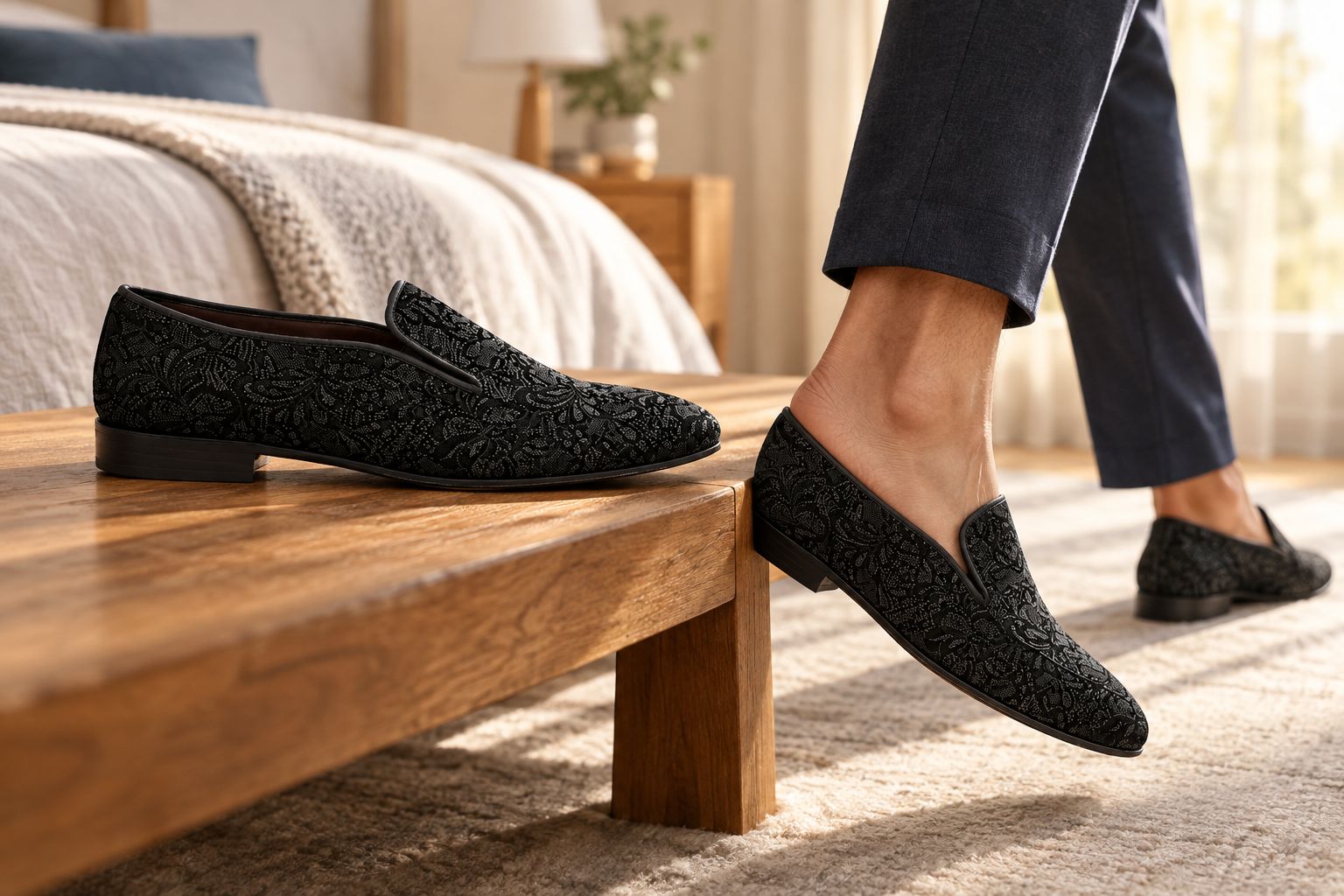
- Velvet and suede loafers tend to run softer out of the box than smooth calf leather
Ambrogio's Glass Suede Slip-On Formal Dress Loafers and Mezlan's Palomar monk-strap loafers are both built around this logic — soft uppers, no lace pressure, and an adjustable strap on the Mezlan pair for days when swelling varies.
Break In New Shoes Gradually and Inspect Your Feet Daily
Even a well-fitted shoe needs a break-in period, and that period is where problems on a numb foot go undetected. Wear new dress shoes for short stretches first.
- Wear a new pair for one to two hours the first day, then extend gradually
- Check both feet at the end of each day for redness, warmth, or marks
- If a shoe feels tight anywhere, stretch it properly rather than forcing repeated wear to break it in
- Keep a mirror near where you dress if bending to check your feet is difficult
- Stop wearing any shoe that leaves a mark that hasn't faded within 30 minutes
Rotate Shoes and Replace Worn Insoles
A single pair worn every day compresses in the same spots and stops cushioning evenly. Rotating two or three pairs spreads the wear and gives leather time to recover its shape.
- Keep at least two pairs in regular rotation rather than wearing one daily
- Replace factory insoles once they've flattened, even if the upper still looks new
- Use shoe trees between wears to help leather hold its shape and dry out fully
- Check that replacement insoles don't add so much volume the shoe becomes tight
- Retire any pair with a curling sole edge or a lining that's started to fray


Dress Shoe Styles for Diabetic Feet Compared
| Style | Best For | Closure | Key Limitation |
|---|---|---|---|
| Slip-on loafers | Easiest on/off, zero lace pressure | Pull-on | Less adjustable if swelling varies a lot through the day |
| Monk-strap loafers | Adjusting for daily swelling | Buckle strap | Buckle placement can rub the instep if sized wrong |
| Lace-up oxfords/derbies | Fine-tuning tightness precisely | Laces | Requires bending to tie; easy to over-tighten without feeling it |
| Velvet loafers | Softest, most flexible upper | Slip-on | Less structured for long days of standing |
| Leather sneakers | Extra cushioning, casual settings | Laces or slip-on | Not appropriate for most business dress codes |
Verdict: slip-on and monk-strap loafers are the safer default for diabetic feet in 2026 — lace-up oxfords still have a place, but only for men who can feel and adjust tightness reliably.
Common Mistakes Men with Diabetic Feet Make When Buying Dress Shoes
- Buying by length alone and assuming width and depth will work themselves out
- Choosing a narrow, tapered toe box because it photographs better than a rounder last
- Wearing a new pair for a full day before checking how the feet respond
- Ignoring a insole that's gone flat because the upper still looks presentable
- Assuming every leather upper flexes the same way — patent and stiff calf behave nothing like soft suede
FAQ
What are the best Italian dress shoes for diabetic feet?
Slip-on loafers and monk-strap loafers with soft suede or calfskin uppers and minimal internal seams work best, since they avoid the lace pressure and stiff toe caps that cause problems on a foot with reduced sensation. Depth and width matter more than the specific brand.
Are slip-on loafers better than lace-up shoes for diabetic feet?
Generally yes, because slip-on loafers remove the risk of over-tightening laces on a foot that may not feel the pressure building. Monk-strap loafers offer a middle ground, giving some adjustability without a lace running across the top of the foot.
How much extra depth do diabetic feet need in dress shoes?
There's no single number, since depth needs vary by foot and by whether an orthotic insert is used. The practical test is whether you can add a thin insole without the shoe feeling tight anywhere across the top or sides.
Can men with diabetes wear leather dress shoes?
Yes, leather itself isn't the issue — the construction is. Soft, unstructured leather with a smooth interior lining is fine; stiff, heavily structured leather with a narrow last is where problems start.
Is suede or calfskin better for diabetic feet?
Suede tends to flex softer right out of the box and needs less break-in time than smooth calfskin. Calfskin can work just as well once broken in, but it requires more patience during the first few wears.
Do Italian dress shoes come in wide widths?
Many styles are available in wider fits, though not every model offers every width. Checking a dedicated wide-fit guide before ordering saves a return.
How often should diabetic feet be checked after wearing new shoes?
Check both feet at the end of every day a new shoe is worn, looking for redness, warmth, or marks that haven't faded within 30 minutes. This matters most during the first two weeks of wearing any new pair.
Should I see a podiatrist before buying dress shoes for diabetic feet?
If you have diagnosed neuropathy or circulation problems, yes — a podiatrist can flag pressure points or fit issues before they turn into a wound. This guide covers general buying considerations, not medical advice.
One Last Thing
The detail most men skip is checking the inside of a shoe with a bare hand, not just trying it on with socks. A seam that feels fine through a sock can still cause trouble after eight hours on a foot that isn't sending clear signals — run a finger along the interior before you buy, every time, even on a brand you already trust.