

Not all Italian leather shoes treat sensitive skin the same way, and the difference usually comes down to how the hide was tanned and finished, not the leather itself. This guide ranks the styles from the Mens Italian Shoes catalog that carry the lowest irritation risk for men reacting to synthetic linings, glued overlays, or heavily treated leather, and explains what to check before buying in 2026.
- Full-grain calfskin loafers like the Bruno Magli Trieste beat synthetic leather for hypoallergenic Italian leather shoes in 2026.
- Chromium left over from tanning, not the hide itself, causes most footwear-related skin reactions.
- Suede and woven leather styles ventilate better, cutting the sweat buildup that makes any material more irritating.
- The Magnanni Arco swaps synthetic sneaker mesh for a leather upper without giving up casual styling.
Why this matters
Most men who blame a "leather allergy" for red, itchy feet are reacting to something else. How to spot genuine Italian leather shoes breaks down the difference between full-grain hide and bonded or PU-coated material, and that distinction matters here: full-grain and top-grain calfskin rarely cause skin reactions on their own.
The more common trigger is hexavalent chromium left over from certain tanning methods. The European Union's REACH regulation has capped hexavalent chromium in skin-contact leather goods at 3 mg/kg since 2015, specifically because the compound is a documented skin sensitizer. PU-coated "leather" sneakers, cemented linings, and heavy synthetic dyes add a second layer of risk that has nothing to do with the animal hide at all.
For 2026, the practical move is simple: buy full-grain or top-grain Italian calfskin, favor construction with minimal synthetic bonding, and treat suede or woven leather as your best option when ventilation matters as much as the material itself.
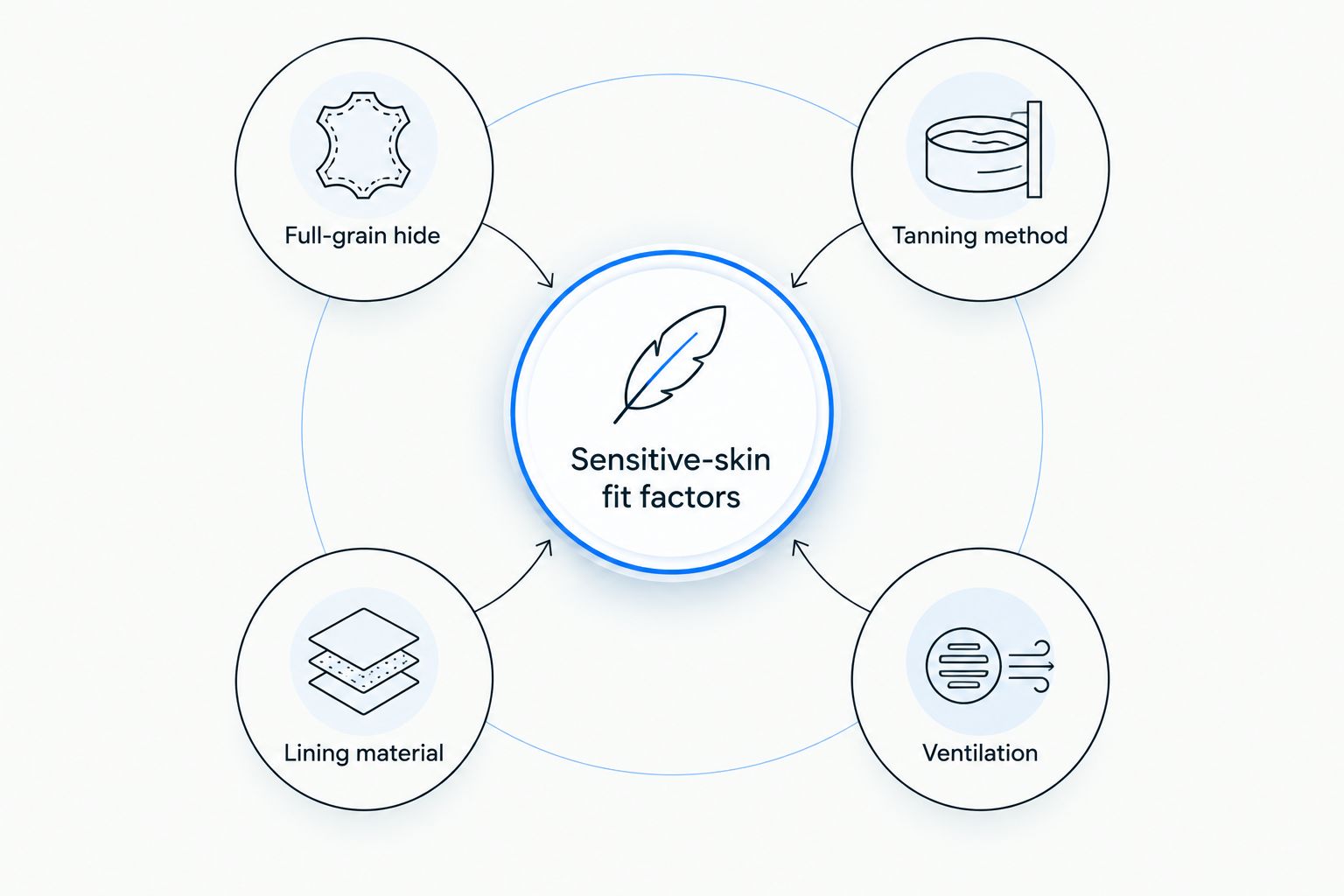
What makes a hypoallergenic Italian leather shoe
- Full-grain or top-grain hide — not bonded leather or PU-coated synthetic
- Tanning method — vegetable-tanned and low-chromium hides carry less sensitizer risk than heavily chrome-tanned leather
- Lining material — leather or breathable textile linings beat foam-backed synthetics glued directly to the footbed
- Dye and finish — aniline and light pigment finishes use fewer coating layers than glossy synthetic top-coats
- Ventilation — suede and woven leather uppers let feet breathe, cutting the sweat that makes any material more irritating
- Fit — a shoe that's too tight causes friction blistering that looks like an allergic reaction but isn't
Hypoallergenic Italian leather shoes at a glance
| Shoe | Best for | Standout feature | Key limitation |
|---|---|---|---|
| Bruno Magli Trieste Horse Bit Loafer | Full-grain calfskin loafer for daily sensitive-skin wear | Full-grain calf leather upper with horsebit hardware | Structured shape needs a break-in period |
| Magnanni Arco Casual Sneaker | Leather sneaker alternative to synthetic trainers | Black leather upper on a casual sneaker last | Less ventilated than an open-weave loafer |
| Zelli Italia Spettacolare Pebble Grain Sneaker | Breathable slip-on sneaker for warm climates | Pebble grain calf-skin leather, slip-on entry | Casual look limits it in business settings |
| Zelli Italia Tippa Suede Penny Loafer | Suede loafer for breathability in cooler months | Suede upper with calf-skin trim | Suede shows water spots faster than smooth leather |
| Ambrogio Solomeo Woven Penny Loafer | Ventilated woven-leather loafer for hot weather | Woven calfskin construction for airflow | Open weave is less structured in cold weather |
“The tanning process, not the leather itself, decides whether a shoe triggers a reaction.”
1. Bruno Magli Trieste Horse Bit Loafer: best full-grain calfskin loafer for daily wear
The Bruno Magli Trieste is built from full-grain calf-skin leather with a horsebit strap across the vamp. Full-grain hide keeps the outer layer of the skin intact, which means fewer of the coatings and adhesives that sit closer to a synthetic upper. It reads as a dress loafer, sits well under tailored trousers, and holds its shape through years of wear.
Bruno Magli Trieste pros:
- Full-grain calfskin upper limits synthetic contact points
- Horsebit hardware dresses up business casual and smart-casual outfits
- Structured last holds shape through repeated wear
Bruno Magli Trieste cons:
- Break-in period before the leather molds to your foot
- Less airflow than an open-weave or suede loafer
- Formal look limits it in hot, humid climates
Best for: men who want a full-grain leather loafer for daily office wear. Verdict: Buy.
2. Magnanni Arco Casual Sneaker: best leather sneaker for sensitive feet
The Magnanni Arco trades a rubber-and-mesh sneaker build for a black leather upper on a casual last. Swapping synthetic mesh for leather removes one of the more common irritants in athletic-style shoes: the foam lining glued to a synthetic knit upper.
Magnanni Arco pros:
- Leather upper instead of synthetic mesh or PU coating
- Casual silhouette works with denim and chinos
- Easier to clean and recondition than fabric sneakers
Magnanni Arco cons:
- Runs warmer than a mesh sneaker in summer
- Sneaker last offers less arch structure than a dress shoe
- Requires the same leather care as a dress shoe, which some men skip
Best for: men who want off synthetic sneakers without giving up casual styling. Verdict: Buy.
3. Zelli Italia Spettacolare Pebble Grain Sneaker: best breathable sneaker for warm climates
The Zelli Italia Spettacolare uses pebble grain calf-skin leather on a slip-on sneaker last. The pebbled texture and slip-on entry mean fewer overlays and less adhesive than a laced sneaker built from multiple stitched leather panels.
Zelli Italia Spettacolare pros:
- Pebble grain calf-skin leather upper
- Slip-on construction with fewer stitched panels and overlays
- Available in black, white and cognac
Zelli Italia Spettacolare cons:
- Slip-on fit runs less adjustable than a laced sneaker
- Pebble grain shows scuffs more visibly on lighter colors
- Casual enough that it won't cover business-formal occasions
Best for: warm-weather days when a full leather loafer feels too heavy. Verdict: Buy.
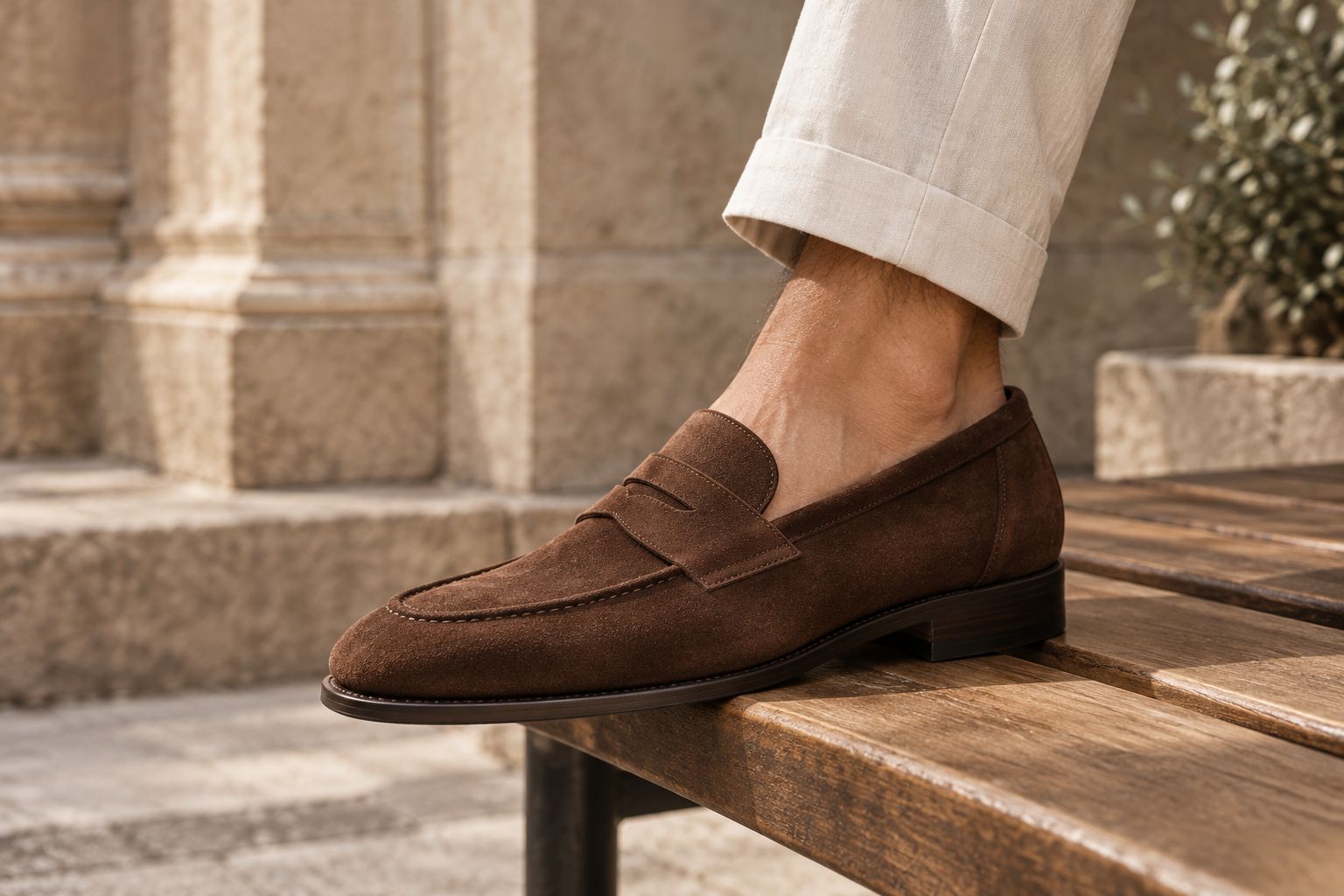
4. Zelli Italia Tippa Suede Penny Loafer: best suede loafer for breathability
The Zelli Italia Tippa pairs a suede upper with calf-skin leather trim on a penny loafer last. Suede's open nap ventilates better than smooth, finished leather, which matters when heat and sweat are the real trigger behind a foot irritation rather than the hide itself. For more on keeping suede in shape through cooler months, see suede loafers for fall and winter wear.
Zelli Italia Tippa pros:
- Suede upper breathes better than glazed or coated leather
- Calf-skin trim adds structure at the strap and sole edge
- Penny loafer shape works in business casual settings
Zelli Italia Tippa cons:
- Suede needs a protective spray before regular wear
- Water spots and salt stains show up faster on suede than smooth leather
- Not ideal for wet climates without upkeep
Best for: cooler months when ventilation matters more than a glossy finish. Verdict: Buy.
5. Ambrogio by Mezlan Solomeo Woven Penny Loafer: best ventilated loafer for hot weather
The Ambrogio by Mezlan Solomeo uses a woven leather construction across the vamp, opening the upper to more airflow than a solid-panel loafer. Woven leather also flexes differently than a single sheet of hide, so it breaks in faster around the ball of the foot.
Ambrogio Solomeo pros:
- Woven leather upper maximizes ventilation
- Penny strap detail keeps the silhouette dressy enough for smart casual
- Flexes and breaks in faster than solid-panel loafers
Ambrogio Solomeo cons:
- Woven construction is less water-resistant than smooth leather
- Open weave shows more wear at stress points over time
- Less versatile in cold weather than a closed loafer
Best for: hot-weather climates where airflow matters more than weatherproofing. Verdict: Buy.


How we ranked
Every shoe on this list earned its spot on one question: what happens where the leather meets your skin. Full-grain and top-grain construction ranked above bonded or coated alternatives, ventilated builds like suede and woven leather ranked above solid-panel styles for warm-weather use, and every pick avoided PU coatings and heavy synthetic linings. None of these carry a formal hypoallergenic certification — that label doesn't exist in footwear the way it does in skincare — but each addresses the material factors dermatologists point to most often.
Which hypoallergenic Italian leather shoe should you choose?
For most men shopping in 2026, the Bruno Magli Trieste Horse Bit Loafer is the default pick: full-grain calfskin, minimal synthetic contact, and a shape that works in most office settings. If you live somewhere hot or you sweat through shoes fast, move to the Ambrogio by Mezlan Solomeo or the Zelli Italia Spettacolare for the ventilation. If you're replacing a synthetic sneaker specifically because it irritates your feet, the Magnanni Arco is the more direct swap.
FAQ
What makes Italian leather shoes hypoallergenic?
No leather shoe carries a formal hypoallergenic certification, but full-grain or top-grain Italian calfskin with minimal synthetic lining and low chromium exposure causes far fewer skin reactions than PU-coated or heavily glued alternatives. Ask about the tanning method and lining material before buying.
Is genuine leather better than synthetic leather for sensitive skin?
Yes, in most cases. Genuine leather is a single natural material, while synthetic leather often layers PU coatings, adhesives and dyes directly against the skin, which raises the chance of irritation.
Can leather shoes cause allergic reactions?
They can, most often from residual hexavalent chromium left over from certain tanning processes. The EU's REACH regulation has limited chromium VI in skin-contact leather goods to 3 mg/kg since 2015 for this exact reason.
Are suede shoes good for men with sensitive feet?
Suede ventilates better than smooth, coated leather, which reduces the sweat buildup that makes any material more likely to irritate skin. The tradeoff is that suede needs more upkeep against water and salt stains.
How do I know if a shoe reaction is from the leather or the lining?
Check where the irritation starts. Reactions concentrated at the heel or tongue often trace to a synthetic foam lining or adhesive, while reactions across the whole foot more often tie back to the leather's tanning chemicals.
Do exotic-skin shoes cause more allergic reactions than calfskin?
Not inherently. Exotic skins like crocodile or python go through tanning processes similar to calfskin, so the same chromium and dye questions apply regardless of the animal source.
What should I look for when buying hypoallergenic Italian leather shoes in 2026?
Look for full-grain or top-grain calfskin, ask about the tanning method, and favor leather or breathable textile linings over foam-backed synthetics glued to the footbed.
One last thing
The 3 mg/kg hexavalent chromium cap set by EU regulation in 2015 applies to leather goods sold in the EU — it doesn't automatically extend to every non-EU import. Asking a retailer about tanning process still matters in 2026, even on Italian-made shoes, and it's a fair question to ask before you buy any pair from this list.